


Silicone Hose Manufacturing Process
Product Overview
Our silicone hose manufacturing process represents the pinnacle of precision engineering for producing high-quality, flexible silicone tubing tailored to demanding industrial applications. This meticulously controlled silicone hose manufacturing process begins with premium-grade silicone compounds, ensuring exceptional durability, flexibility, and resistance to extreme conditions. From initial compounding and extrusion to final inspection, every stage is optimized for consistency and performance.
The process yields silicone hoses that excel in environments requiring superior thermal stability, chemical resistance, and biocompatibility. Whether for automotive cooling systems, medical device fluid transfer, or food processing equipment, our silicone hose manufacturing process delivers products that meet or exceed international standards such as FDA, USP Class VI, and RoHS compliance. By integrating advanced automation and rigorous quality controls, we produce hoses with uniform wall thickness, precise inner diameters, and seamless constructions that minimize leaks and maximize longevity.
Key to our silicone hose manufacturing process is the use of platinum-cured silicone, which provides low extractables and high purity—critical for sensitive applications. The entire workflow, spanning extrusion, vulcanization, cooling, and secondary operations like cutting and printing, is conducted in a cleanroom environment to prevent contamination. This comprehensive approach not only enhances product reliability but also allows for extensive customization, including multi-layer reinforcements and specialty profiles, making our hoses a trusted choice for global B2B partners.
Key Features
- Advanced Extrusion Technology: Our silicone hose manufacturing process employs state-of-the-art extruders capable of handling complex cross-sections and multi-durometer materials for optimal flexibility and strength.
- Platinum-Cured Vulcanization: Ensures peroxide-free curing, resulting in hoses with minimal volatile content and superior aging resistance, a hallmark of our refined silicone hose manufacturing process.
- Customizable Dimensions: From 1mm to 100mm inner diameters and wall thicknesses as low as 0.5mm, tailored precisely to client specifications during the silicone hose manufacturing process.
- Reinforcement Options: Integration of braided polyester, stainless steel wire, or aramid fibers for high-pressure applications, seamlessly incorporated into our silicone hose manufacturing process.
- High Purity Standards: Cleanroom production eliminates particulates, with traceability from raw materials to finished product throughout the silicone hose manufacturing process.
- Temperature Extremes: Hoses withstand -60°C to +250°C continuously, thanks to the thermal stability engineered into every step of our silicone hose manufacturing process.
- Chemical and UV Resistance: Formulated compounds resist ozone, weathering, and aggressive media, validated through accelerated testing in the silicone hose manufacturing process.
Technical Specifications
| Parameter | Specification | Test Method/Standard |
|---|---|---|
| Material | Platinum-cured liquid silicone rubber (LSR) or high-consistency rubber (HCR) | ASTM D1418 |
| Hardness | 30-80 Shore A | ASTM D2240 |
| Temperature Range | -60°C to +250°C (continuous), up to +300°C (intermittent) | ASTM C177 |
| Inner Diameter (ID) | 1mm to 100mm | Custom per drawing |
| Wall Thickness | 0.5mm to 10mm | ISO 3302-1 |
| Pressure Rating | Up to 10 bar (unreinforced); up to 50 bar (reinforced) | SAE J343 |
| Tensile Strength | ≥10 MPa | ASTM D412 |
| Elongation at Break | ≥300% | ASTM D412 |
| Compression Set | ≤25% at 177°C for 22 hours | ASTM D395 |
| Volume Resistivity | ≥1x10^15 ohm-cm | ASTM D257 |
| Certifications | FDA 21 CFR 177.2600, USP Class VI, REACH compliant | Relevant regulatory bodies |
These specifications are integral to our silicone hose manufacturing process, ensuring hoses meet precise tolerances and performance benchmarks across diverse industries.
Application Scenarios
The versatility of hoses produced through our silicone hose manufacturing process makes them indispensable in numerous sectors. In automotive applications, they serve as turbocharger intercooler hoses, radiator lines, and PCV systems, enduring high vibrations and thermal cycling. For medical and pharmaceutical uses, our biocompatible hoses facilitate peristaltic pump tubing and catheter components, where sterility and low leaching are paramount during the silicone hose manufacturing process.
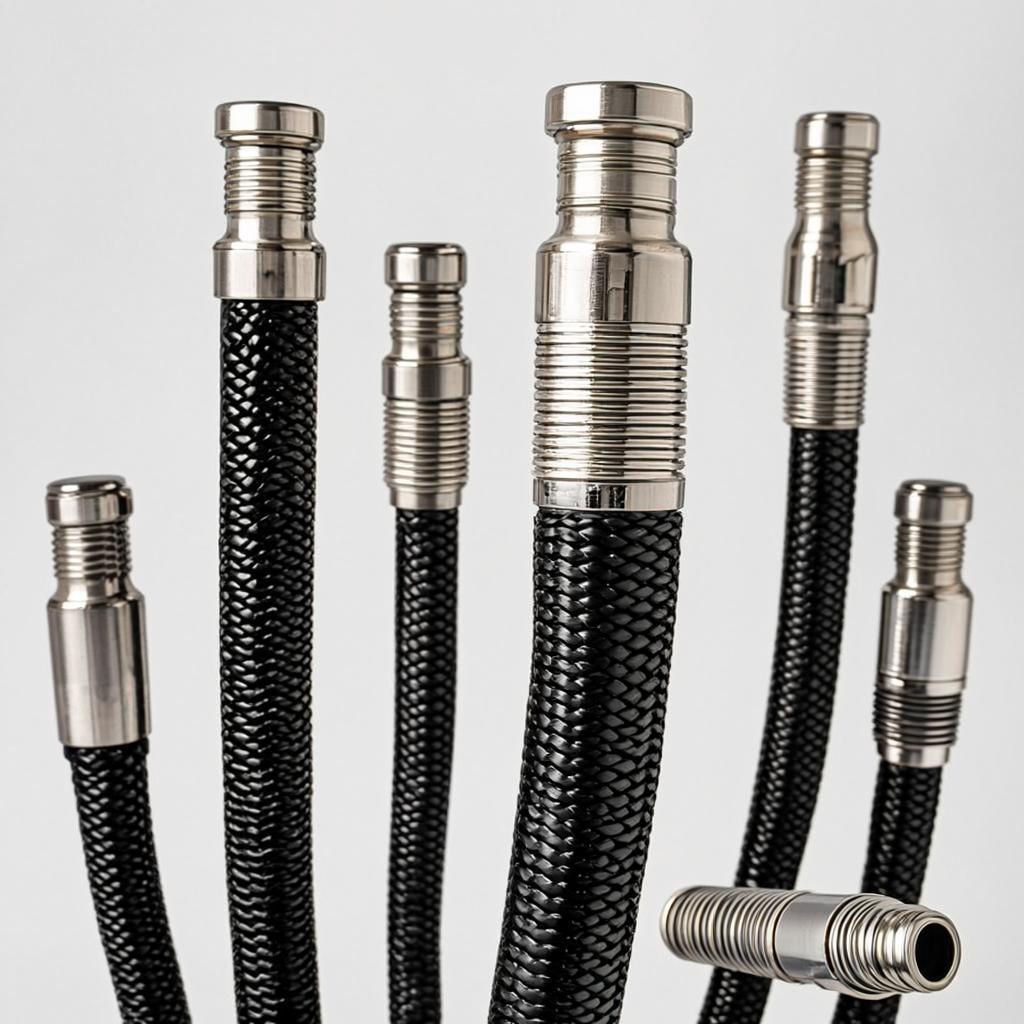
In food and beverage processing, FDA-grade hoses handle hot-fill beverages, dairy transfer, and steam lines, resisting cleaning agents and maintaining product integrity. Industrial robotics and automation benefit from our flexible, kink-resistant hoses in pneumatic controls and coolant lines. Aerospace sectors utilize them for fuel and hydraulic transfer due to their lightweight and flame-retardant properties. Additionally, in HVAC and refrigeration, they manage refrigerant gases and hot gases, while laboratory equipment relies on their chemical inertness for precise fluid handling.
Our silicone hose manufacturing process supports custom solutions for emerging fields like renewable energy (solar thermal systems) and semiconductors, where ultra-high purity is essential. Each application leverages the process's scalability, from prototype runs to millions of meters annually.
Advantages
Opting for our silicone hose manufacturing process provides distinct competitive edges. Firstly, the process's precision extrusion and inline curing eliminate defects like voids or inconsistencies, yielding 99.9% first-pass yield rates—far surpassing industry averages. This translates to reduced downtime and lower total cost of ownership for end-users.
Secondly, our eco-conscious approach incorporates recyclable compounds and energy-efficient ovens, minimizing waste while adhering to global sustainability standards. The silicone hose manufacturing process also enables rapid prototyping with lead times under 4 weeks, accelerating your product development cycles.
Superior material science integration ensures hoses outperform generic alternatives in accelerated life testing, with up to 5x longer service life in harsh environments. Comprehensive traceability via batch coding and digital logging guarantees compliance and quick issue resolution. Finally, the process's modularity allows seamless scaling, from low-volume custom orders to high-volume production, without compromising quality.
Why Choose Us
With over 20 years of specialization in the silicone hose manufacturing process, we stand as a global leader backed by ISO 9001, IATF 16949, and cleanroom ISO 14644 certifications. Our facilities feature cutting-edge equipment from renowned suppliers like KraussMaffei and Maillefer, ensuring the silicone hose manufacturing process remains at the forefront of innovation.
We collaborate closely with clients, offering design-for-manufacturability consultations, free sample prototyping, and full lifecycle support. Our engineering team, comprising material scientists and process experts, continuously refines the silicone hose manufacturing process through R&D investments exceeding 5% of revenue annually. This commitment delivers not just products, but reliable partnerships that drive your success in international markets.
Our global supply chain ensures consistent quality worldwide, with exports to over 50 countries and a defect rate below 0.1%. Choose us for a silicone hose manufacturing process that prioritizes your specifications, timelines, and performance needs.
FAQ
What is the silicone hose manufacturing process?
The silicone hose manufacturing process involves compounding silicone rubber, extruding it into tubular form, vulcanizing (curing) under controlled heat, cooling, and performing secondary operations like cutting, annealing, and packaging. Our process emphasizes platinum catalysis for purity and automation for precision.
Can the silicone hose manufacturing process accommodate custom colors and markings?
Yes, our silicone hose manufacturing process supports pigmentation for any Pantone color and inline laser printing or hot-stamping for logos, batch codes, and compliance markings, all without affecting material properties.
How does the silicone hose manufacturing process ensure biocompatibility?
By using platinum-cured silicone in Class 100k cleanrooms, with rigorous extractables testing per USP <661> and biological reactivity per USP <87>/<88>, our process guarantees medical-grade purity.
What is the minimum order quantity for the silicone hose manufacturing process?
We offer flexible MOQs starting at 100 meters for prototypes, scaling efficiently for production runs, optimized through our advanced silicone hose manufacturing process.
Is reinforcement available in the silicone hose manufacturing process?
Absolutely; we integrate single or multi-layer braids (polyester, fiberglass, steel) during extrusion, enhancing burst pressure while maintaining flexibility in the silicone hose manufacturing process.
How long does the silicone hose manufacturing process take for delivery?
Standard stock hoses ship in 1-2 weeks; custom orders via our streamlined silicone hose manufacturing process deliver in 4-6 weeks, with expedited options available.
Does the silicone hose manufacturing process comply with automotive standards?
Yes, our hoses meet SAE J20 R3/R4, FMVSS 106, and other specs, validated through our integrated silicone hose manufacturing process and third-party testing.