


oem sae hydraulic hose manufacturer Performance Analysis

Introduction
OEM SAE hydraulic hose manufacturing represents a critical segment within the fluid power industry. These hoses, conforming to standards set by the Society of Automotive Engineers (SAE), are essential components in a wide array of applications, including construction equipment, agricultural machinery, industrial hydraulics, and automotive systems. The core function of a hydraulic hose is to safely and efficiently transmit pressurized fluid, enabling the operation of hydraulic actuators and motors. A key differentiator for OEM manufacturers lies in the ability to provide customized hose assemblies – tailored lengths, end fittings, and reinforcement structures – directly to equipment manufacturers. This contrasts with the aftermarket, which generally focuses on standard, off-the-shelf replacements. Performance characteristics, including pressure rating, temperature resistance, and fluid compatibility, are paramount. The inherent risk associated with hydraulic fluid under high pressure demands stringent quality control and adherence to industry standards to prevent catastrophic failure. This guide provides an in-depth technical overview of OEM SAE hydraulic hose manufacturing, encompassing materials, processes, performance, and maintenance considerations.
Material Science & Manufacturing
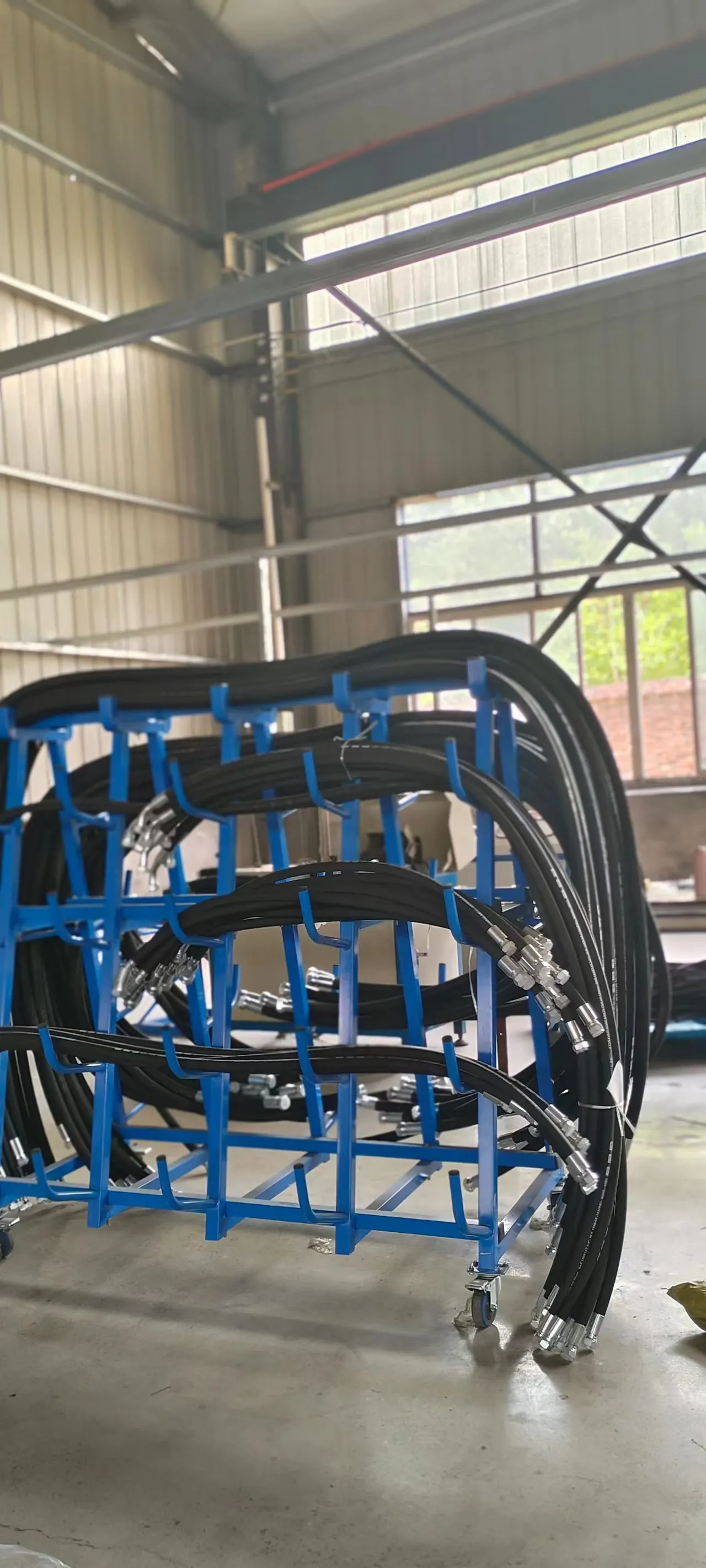
The construction of an SAE hydraulic hose involves several key material components: the inner tube, reinforcement layers, and the outer cover. The inner tube, directly exposed to the hydraulic fluid, is typically composed of synthetic rubbers such as nitrile (NBR), ethylene propylene diene monomer (EPDM), or fluorocarbon (FKM – Viton). NBR offers excellent resistance to petroleum-based hydraulic fluids, EPDM provides superior heat and weather resistance, and FKM delivers exceptional chemical compatibility and high-temperature performance. Reinforcement layers provide the hose's strength and pressure-bearing capability. These layers commonly consist of multiple plies of high-tensile steel wire, often spirally wound or braided. The wire gauge, ply count, and braiding angle significantly impact the hose's burst pressure and flexibility. The outer cover protects the reinforcement layers from abrasion, weathering, and chemical attack. Common cover materials include synthetic rubbers like chloroprene (CR – Neoprene) and polyurethane. The manufacturing process begins with extrusion of the inner tube, followed by the application of reinforcement layers using automated winding or braiding machines. Precise tension control during reinforcement application is critical to ensure uniform strength. Finally, the outer cover is extruded over the reinforcement, and the hose is vulcanized – a chemical process using heat and pressure to crosslink the rubber compounds, enhancing their physical and chemical properties. Critical process parameters include extrusion temperature, curing time, and pressure to ensure consistent material properties and dimensional accuracy. Post-vulcanization testing, including burst pressure testing, impulse testing, and dimensional inspection, validates the hose's performance.
Performance & Engineering
The performance of a hydraulic hose is dictated by its ability to withstand internal pressure, external damage, and environmental stressors. Burst pressure, defined as the pressure at which the hose fails catastrophically, is a primary specification. This is determined through hydrostatic testing, typically to four times the working pressure. Working pressure is the maximum continuous operating pressure specified by the manufacturer. Impulse pressure, representing pressure fluctuations, is a critical consideration for applications involving reciprocating machinery. Hose assemblies must withstand repeated pressure surges without failure. Fatigue life, quantified by the number of pressure cycles before failure, is a key engineering parameter. Environmental resistance – including resistance to ozone, UV radiation, and extreme temperatures – is also crucial, particularly in outdoor applications. The hose’s bend radius is an important factor affecting its longevity; exceeding the minimum bend radius can cause kinking and premature failure. Fitting selection is equally important; incompatible fittings can lead to leakage or hose blow-out. Force analysis during hose assembly and operation is essential to identify potential stress concentration points. Finite Element Analysis (FEA) is frequently used to model hose behavior under load. Compliance with SAE J517 (Hydraulic Hose – Specifications, Performance, and Test Procedures) is mandatory for OEM manufacturers to ensure product safety and reliability. Furthermore, adherence to ISO 14330 defines pressure testing methods and acceptance criteria.
Technical Specifications
| Parameter | SAE 100R1AT | SAE 100R2AT | SAE 100R6 | SAE 100R7 |
|---|---|---|---|---|
| Working Pressure (PSI) | 600 | 1200 | 600 | 750 |
| Burst Pressure (PSI) | 2400 | 4800 | 2400 | 3000 |
| Temperature Range (°F) | -40 to 212 | -40 to 212 | -40 to 212 | -40 to 212 |
| Inner Tube Material | NBR | NBR | NBR | Synthetic Rubber |
| Reinforcement | Single Wire Braid | Double Wire Braid | Single Wire Braid | Multiple Textile Layers |
| Cover Material | CR | CR | CR | CR |
Failure Mode & Maintenance
Hydraulic hose failures can manifest in several ways. Fatigue cracking, initiated by repeated flexing and pressure cycles, is a common failure mode, particularly in areas of high stress concentration (e.g., near fittings). Delamination, the separation of reinforcement layers from the inner tube or outer cover, can occur due to inadequate bonding during vulcanization or exposure to harsh chemicals. Abrasion damage, resulting from contact with abrasive surfaces, can erode the outer cover, exposing the reinforcement layers to corrosion. Oxidation, caused by exposure to oxygen and ozone, can degrade the rubber compounds, reducing their elasticity and strength. Internal erosion, often triggered by contaminated hydraulic fluid, can wear away the inner tube, leading to leakage. Pinholes, small punctures in the inner tube, can result from foreign objects. Preventive maintenance is crucial to extend hose life and prevent catastrophic failures. Regular visual inspections should be conducted to identify signs of damage, such as cracks, abrasions, and bulges. Hose assemblies should be routed to avoid sharp bends and contact with hot surfaces or abrasive materials. Hydraulic fluid should be regularly filtered to remove contaminants. Proper fitting torquing is essential to prevent leakage and hose deformation. If a hose shows signs of damage, it should be replaced immediately. Furthermore, periodic pressure testing can verify the hose's integrity. Detailed failure analysis, including metallurgical examination of fractured components, can identify the root cause of failures and inform design improvements.
Industry FAQ
Q: What is the significance of the 'AT' designation in SAE hose standards (e.g., 100R1AT)?
A: The 'AT' designation indicates that the hose meets specific requirements for heat and oil resistance, exceeding the performance of hoses without the 'AT' suffix. Specifically, it signifies enhanced resistance to degradation from exposure to high temperatures and common hydraulic fluids, critical for extended service life in demanding applications.
Q: How does wire braiding affect a hydraulic hose's performance?
A: Wire braiding significantly enhances the hose’s pressure-bearing capability and resistance to kinking. Increasing the number of braid layers directly increases the burst pressure. The braid angle influences flexibility – a steeper angle generally results in higher pressure rating but reduced flexibility.
Q: What type of fluid compatibility testing is performed on hydraulic hoses?
A: Fluid compatibility testing involves immersing the inner tube material in various hydraulic fluids (petroleum-based, synthetic, phosphate ester) for extended periods at elevated temperatures. The material's volume change, hardness, and tensile strength are then measured to assess its resistance to swelling, degradation, and embrittlement.
Q: What is the recommended practice for storing unused hydraulic hoses?
A: Unused hydraulic hoses should be stored in a cool, dry, and dark environment, away from direct sunlight, ozone sources (e.g., electric motors), and extreme temperatures. They should be coiled loosely and stored horizontally to avoid stressing the reinforcement layers. Avoid storing hoses in contact with other materials that could cause damage or contamination.
Q: What role does fitting selection play in hydraulic hose longevity?
A: Proper fitting selection is paramount. Fittings must be compatible with the hose material and rated for the same or higher pressure than the hose. Incorrectly sized or incompatible fittings can cause leakage, hose distortion, and premature failure. Crimping procedures must also adhere to manufacturer specifications to ensure a secure and leak-proof connection.
Conclusion
OEM SAE hydraulic hose manufacturing is a complex discipline requiring meticulous attention to material science, process control, and performance engineering. The selection of appropriate materials, precise control of manufacturing parameters, and rigorous testing are all essential to ensure the safety, reliability, and longevity of these critical components. Understanding the nuances of SAE standards and the various failure modes is paramount for both manufacturers and end-users.
Looking ahead, advancements in materials – such as thermoplastic hoses offering improved chemical resistance and reduced weight – and manufacturing techniques – including automated inspection and non-destructive testing – will continue to drive improvements in hydraulic hose performance and durability. Furthermore, increased emphasis on sustainability and environmentally friendly materials will likely influence future hose designs and manufacturing processes.