


odm hydraulic hose quotes Performance Engineering
Introduction
Hydraulic hoses, critical components in fluid power systems, facilitate the transmission of hydraulic fluid to actuators and other components. Original Design Manufacturer (ODM) hydraulic hose quotes represent a complex assessment of material composition, manufacturing capabilities, performance characteristics, and adherence to stringent industry standards. This guide provides a comprehensive technical overview of ODM hydraulic hose sourcing, focusing on the critical parameters engineers and procurement professionals must evaluate. The global hydraulic hose market is driven by demands from construction, agriculture, mining, and manufacturing sectors, with increasing requirements for higher pressures, broader temperature ranges, and enhanced durability. A thorough understanding of hose construction – including reinforcement types, cover materials, and fitting compatibility – is paramount to mitigating failure risks and ensuring operational efficiency. Evaluating an ODM’s capabilities necessitates deep technical knowledge, extending beyond price point to encompass long-term performance and lifecycle cost analysis.
Material Science & Manufacturing
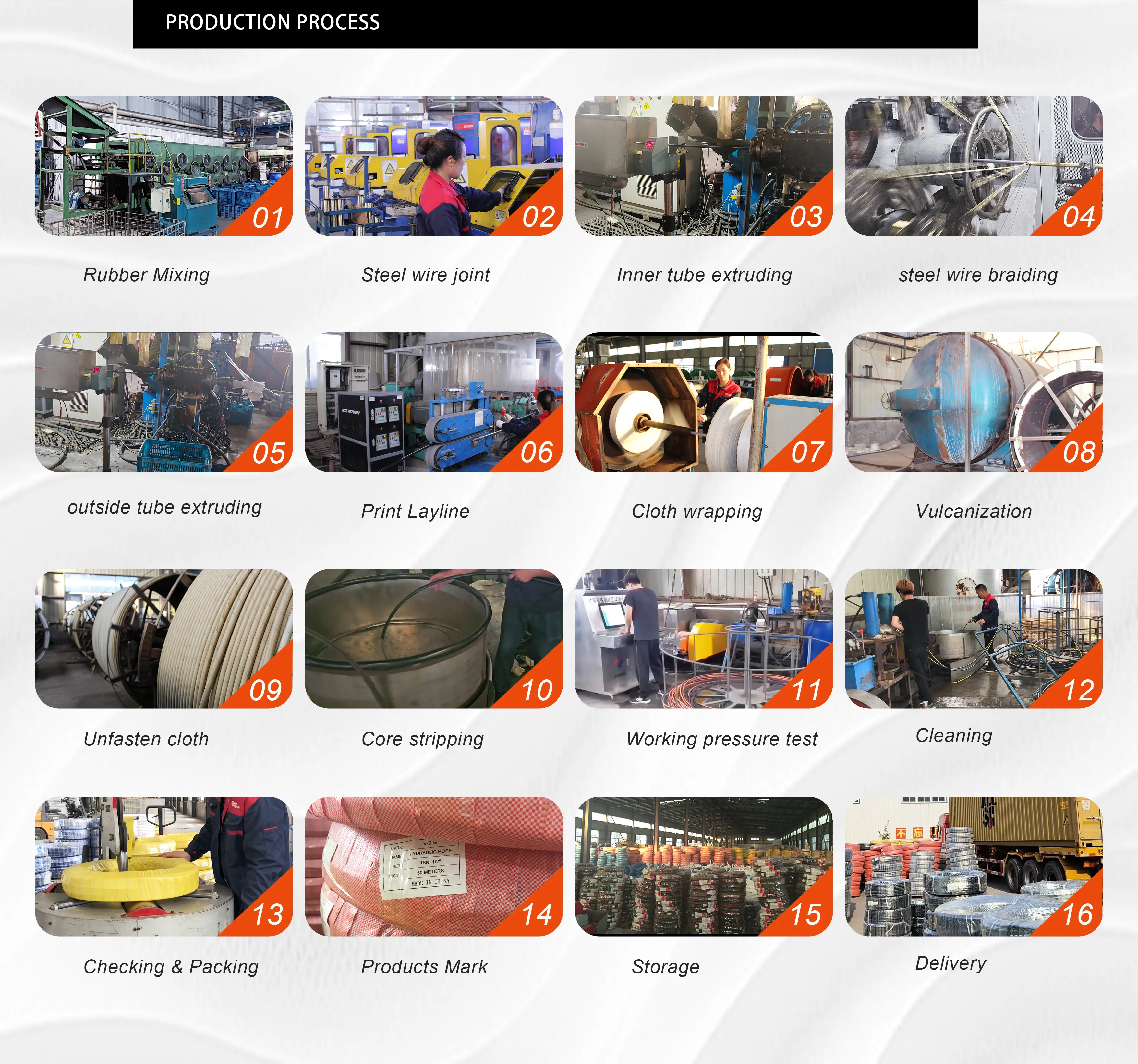
Hydraulic hose construction relies on a layered system designed for fluid containment and pressure resistance. The inner tube, typically composed of synthetic rubbers like Nitrile (NBR), Ethylene Propylene Diene Monomer (EPDM), or Fluorocarbon (FKM/Viton), dictates fluid compatibility. NBR provides excellent resistance to petroleum-based fluids, EPDM excels in phosphate ester applications, and FKM offers superior resistance to high temperatures and aggressive chemicals. Reinforcement layers are crucial for pressure containment. These commonly include one or multiple braids of high-tensile steel wire, or spiral-wound constructions utilizing steel wire or textile fibers (aramid, polyester). Spiral reinforcement offers higher pressure ratings and flexibility than braided hose. The outer cover, usually a synthetic rubber compound like Chloroprene (CR) or Polyurethane (PU), provides abrasion, ozone, and weathering protection. Manufacturing processes include extrusion for the inner tube and cover, followed by reinforcement application – braiding is automated, while spiral winding often involves specialized machinery. Critical parameters during manufacturing include maintaining precise rubber compound formulations, controlling wire tension during reinforcement application, and ensuring consistent adhesion between layers. Quality control involves burst pressure testing, impulse testing (to assess fatigue resistance), and dimensional checks to ensure compliance with specifications. Rubber curing is a critical stage impacting physical properties; undercuring leads to reduced tensile strength and elongation, while overcuring can embrittle the material.
Performance & Engineering
Hydraulic hose performance is governed by several key engineering principles. Burst pressure, the maximum pressure the hose can withstand before rupture, is a primary specification, typically exceeding the system’s operating pressure by a safety factor (often 4:1). Impulse pressure resistance is equally crucial, assessing the hose’s ability to withstand pressure pulsations common in hydraulic systems – these fluctuations can lead to fatigue failure. Tensile strength, the maximum stress the hose can bear before breaking, determines its resistance to pull-out forces during operation. Flexibility, or bend radius, is critical for installation in confined spaces and minimizing stress concentrations. Temperature range dictates the hose’s operational limits; elevated temperatures can degrade rubber compounds, while low temperatures can reduce flexibility and impact strength. Chemical compatibility is paramount; improper fluid selection can cause swelling, softening, or cracking of the inner tube. Finite Element Analysis (FEA) is increasingly used to model hose behavior under various loading conditions, optimizing reinforcement configurations and predicting potential failure points. Proper fitting selection and installation are vital; incorrect fittings can create leak paths or induce stress concentrations. Hose assemblies should be protected from abrasion, kinking, and excessive bending to maximize service life.
Technical Specifications
| Parameter | Units | Standard Specification | Typical Range (Hydraulic Hose) |
|---|---|---|---|
| Working Pressure | MPa | SAE J517, DIN EN 853 | 10 – 350 |
| Burst Pressure | MPa | SAE J517, DIN EN 853 | 40 – 1400 |
| Temperature Range | °C | SAE J517, DIN EN 853 | -40 to +100 (NBR), -30 to +150 (EPDM), -20 to +200 (FKM) |
| Inner Tube Material | - | SAE J517, DIN EN 853 | NBR, EPDM, FKM |
| Reinforcement Type | - | SAE J517, DIN EN 853 | Braided Steel Wire, Spiral Steel Wire, Textile Fiber |
| Cover Material | - | SAE J517, DIN EN 853 | CR, PU |
Failure Mode & Maintenance
Hydraulic hose failures typically stem from several root causes. Fatigue cracking, induced by repeated pressure pulsations and bending, is a common failure mode, particularly in braided hoses. Abrasion damage, resulting from contact with abrasive surfaces, degrades the outer cover, exposing the reinforcement layers to corrosion. Kinking, caused by excessive bending beyond the specified bend radius, weakens the hose structure. Chemical degradation, due to incompatible fluids, can cause swelling, softening, and cracking of the inner tube. Corrosion of the reinforcement wires, particularly in environments with moisture or corrosive fluids, reduces the hose’s strength. Improper installation, including incorrect fitting selection or over-tightening, can induce stress concentrations and lead to premature failure. Regular inspection is crucial; visual checks should identify abrasion, cracking, kinking, or leaks. Pressure testing can detect internal leaks or weakening of the hose structure. Preventative maintenance includes proper hose routing, protection from abrasion, and periodic replacement based on service life and operating conditions. When replacing hoses, always use the correct fittings and torque specifications. Record-keeping of hose replacements and failure analysis is essential for identifying recurring problems and optimizing hose selection.
Industry FAQ
Q: What is the impact of hose layline markings on traceability and warranty claims?
A: Layline markings, permanently imprinted on the hose cover, provide crucial traceability information including manufacturer, production date, and pressure rating. This is essential for warranty claims, failure analysis, and verifying compliance with specifications. A reputable ODM will provide clear and durable layline markings on all products.
Q: How does the selection of fitting material (e.g., carbon steel, stainless steel) affect hose performance and longevity?
A: Fitting material significantly impacts corrosion resistance and compatibility with the hydraulic fluid. Carbon steel fittings are cost-effective but susceptible to corrosion in certain environments. Stainless steel fittings offer superior corrosion resistance, particularly in aggressive applications. The fitting material must be compatible with both the hose and the fluid to prevent galvanic corrosion or other forms of degradation.
Q: What are the key considerations when specifying a hose for high-temperature applications?
A: For high-temperature applications, the inner tube and outer cover materials must be specifically designed to withstand the elevated temperatures without degradation. FKM (Viton) is typically preferred for its superior heat resistance. Reinforcement materials should also be evaluated for their thermal stability. The hose’s working pressure rating may be derated at higher temperatures.
Q: Can you explain the difference between impulse testing standards (e.g., SAE J343, DIN EN 853) and their significance?
A: Impulse testing simulates the effects of pressure pulsations on the hose. SAE J343 and DIN EN 853 are common standards that define the testing parameters (pressure amplitude, frequency, number of cycles). Higher impulse ratings indicate greater resistance to fatigue failure. Selecting a hose with an impulse rating appropriate for the application is critical to prevent premature failure.
Q: What role does the ODM play in ensuring compliance with relevant environmental regulations (e.g., RoHS, REACH)?
A: A responsible ODM should provide documentation confirming compliance with relevant environmental regulations such as RoHS (Restriction of Hazardous Substances) and REACH (Registration, Evaluation, Authorisation and Restriction of Chemicals). This ensures that the hose materials do not contain prohibited substances and are safe for use in various applications. Verification of compliance should be part of the supplier qualification process.
Conclusion
Selecting the appropriate hydraulic hose through an ODM requires a comprehensive understanding of material science, manufacturing processes, performance characteristics, and industry standards. A focus solely on price can lead to compromised reliability and increased lifecycle costs. By carefully evaluating the technical specifications, conducting thorough testing, and verifying compliance with relevant regulations, engineers and procurement professionals can mitigate failure risks and ensure optimal performance.
Moving forward, advancements in hose technology will continue to focus on enhancing durability, reducing weight, and improving fluid compatibility. The integration of smart sensors into hose assemblies will enable predictive maintenance and real-time monitoring of hose health. Collaboration between OEMs and ODMs will be crucial for developing customized hose solutions tailored to specific application requirements.