


manuli standard hydraulic rubber hose Performance Analysis
Introduction
Manuli standard hydraulic rubber hose constitutes a critical component in hydraulic power transmission systems across diverse industries, including construction, agriculture, manufacturing, and mining. These hoses are engineered to convey hydraulic fluid under substantial pressure, facilitating the operation of hydraulic machinery such as excavators, loaders, presses, and steering systems. Their technical position within the industry chain lies between the hydraulic fluid pump and the hydraulic actuator, requiring robust performance characteristics to ensure efficient and reliable power transfer. Core performance attributes include pressure capacity, temperature resistance, fluid compatibility, and resistance to abrasion and external damage. The performance of these hoses directly impacts system efficiency, operational safety, and overall equipment longevity. A critical industry pain point lies in premature hose failure due to improper specification, exceeding pressure limits, fluid incompatibility, and inadequate maintenance, leading to costly downtime and potential safety hazards.
Material Science & Manufacturing
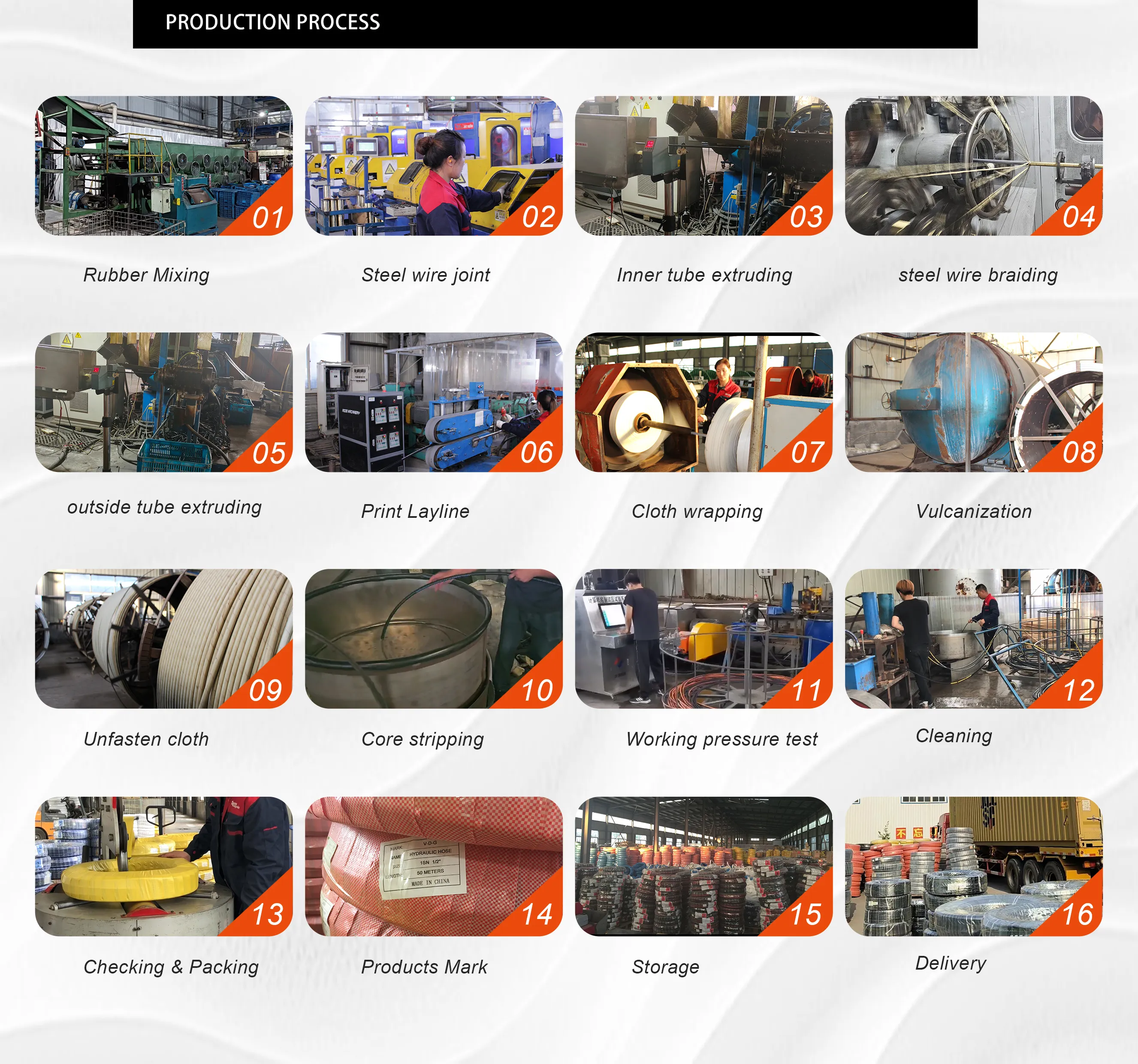
Manuli standard hydraulic rubber hoses are typically constructed from multiple layers, each contributing to specific performance characteristics. The inner tube, in direct contact with the hydraulic fluid, is commonly made from a synthetic rubber compound such as nitrile rubber (NBR), chloroprene rubber (CR – Neoprene), or ethylene propylene diene monomer (EPDM). NBR offers excellent resistance to petroleum-based fluids, while CR provides superior weather and ozone resistance. EPDM excels in phosphate ester fluid compatibility. The reinforcement layer is crucial for withstanding high pressures; this typically consists of multiple spiral plies of high-tensile steel wire, or a combination of steel wire and textile braiding (typically polyester or aramid). The outer cover provides protection against abrasion, weathering, and chemical attack, generally utilizing a synthetic rubber compound like CR or polyurethane (PUR).
Manufacturing involves a complex layering process. The inner tube is extruded, followed by the winding or braiding of the reinforcement layers. The outer cover is then extruded over the reinforcement. Critical parameter control during manufacturing includes consistent rubber compound mixing (to ensure uniform material properties), precise wire winding tension (to achieve the specified pressure rating), and proper vulcanization (curing) – a process involving heat and pressure to cross-link the rubber molecules, enhancing its strength, elasticity, and resistance to degradation. Vulcanization time and temperature are meticulously controlled to optimize these properties. Post-production, hoses undergo rigorous testing, including pressure testing to burst, impulse testing to assess fatigue resistance, and dimensional checks to ensure adherence to specifications.

Performance & Engineering
The performance of manuli standard hydraulic rubber hose is dictated by several key engineering considerations. Burst pressure is the maximum pressure the hose can withstand before rupture, determined by the reinforcement layer’s strength and construction. Working pressure is a fraction of the burst pressure, typically defined as 50% or 70%, representing the safe operating limit. Impulse pressure refers to the hose’s ability to withstand pressure pulsations, a common occurrence in hydraulic systems. Fatigue life is directly impacted by impulse pressure; repeated pulsations can lead to fatigue cracking in the reinforcement layer. Temperature range is critical; hydraulic fluids and hoses experience temperature fluctuations, impacting viscosity and material properties. Hose selection must consider both the minimum and maximum operating temperatures.
Force analysis involves calculating the hoop stress within the hose wall due to internal pressure. This stress is proportional to the pressure and radius, and inversely proportional to the wall thickness. Environmental resistance encompasses resistance to ozone, UV radiation, oil, and chemicals. Compliance requirements, dictated by standards such as SAE J517 and EN 853, specify minimum performance criteria for pressure rating, temperature range, and fluid compatibility. Proper hose assembly, including the selection of appropriate fittings and crimping procedures, is paramount. Improper crimping can lead to fitting slippage or hose deformation, compromising performance and safety.
Technical Specifications
| Parameter | Unit | Specification (Typical) | Test Standard |
|---|---|---|---|
| Working Pressure | MPa | 16 - 42 | SAE J517 / EN 853 |
| Burst Pressure | MPa | 48 - 126 | SAE J517 / EN 853 |
| Temperature Range | °C | -40 to +100 | SAE J517 / EN 853 |
| Inner Tube Material | - | NBR, CR, EPDM | ASTM D2000 |
| Reinforcement | - | Steel Wire Spiral (multiple plies) | SAE J517 / EN 853 |
| Outer Cover Material | - | CR, PUR | ASTM D2000 |
Failure Mode & Maintenance
Common failure modes for manuli standard hydraulic rubber hose include burst failure due to exceeding the working pressure, fatigue cracking in the reinforcement layer caused by prolonged exposure to impulse pressures, pinhole leaks in the inner tube resulting from fluid incompatibility or degradation, and abrasion damage to the outer cover. Delamination, the separation of hose layers, can occur due to inadequate bonding during manufacturing or exposure to extreme temperatures. Oxidation of the rubber compounds can lead to hardening and cracking over time, especially in applications exposed to ozone or UV radiation. Failure analysis often reveals root causes related to improper installation (e.g., tight bending radius), contamination of the hydraulic fluid, or inadequate hose protection.
Preventative maintenance is crucial for extending hose life. Regular visual inspections should identify signs of wear, abrasion, cracking, or leakage. Hose routing should avoid sharp bends and potential abrasion points. Hydraulic fluid should be regularly analyzed for contamination and maintained within the manufacturer’s specifications. Hose assemblies should be replaced at recommended intervals, or sooner if any signs of damage are detected. When replacing hoses, it is imperative to use compatible fittings and ensure proper crimping. Avoid twisting the hose during installation as it can induce stress and premature failure. Periodic pressure testing can proactively identify potential weaknesses before catastrophic failure occurs.
Industry FAQ
Q: What is the impact of hydraulic fluid type on hose selection?
A: Hydraulic fluid compatibility is paramount. Using an incompatible fluid can cause the inner tube to swell, soften, or degrade, leading to leaks and premature failure. NBR is generally suitable for petroleum-based fluids, CR for phosphate ester fluids, and EPDM for a wider range of fluids, including some synthetic types. Always consult the hose manufacturer’s compatibility chart.
Q: How does hose bending radius affect service life?
A: Exceeding the minimum recommended bending radius induces stress in the hose wall, particularly in the reinforcement layer. This stress can lead to fatigue cracking and premature failure. Maintain a bending radius that meets or exceeds the manufacturer’s specifications.
Q: What are the key considerations when selecting hose fittings?
A: Fittings must be compatible with the hose type and hydraulic fluid. Material compatibility (e.g., steel fittings for steel-reinforced hoses) and proper crimping are essential. Using incorrect fittings or improper crimping can lead to leaks and hose separation.
Q: How can I minimize the risk of impulse pressure-induced failure?
A: Select hoses specifically rated for the expected impulse pressure levels. Ensure the hose assembly is properly supported to minimize vibration and movement. Use pulsation dampeners in systems with significant pressure fluctuations.
Q: What is the role of the outer cover in hose performance?
A: The outer cover provides essential protection against abrasion, weathering, ozone, UV radiation, and chemical attack. Selecting a cover material appropriate for the operating environment is critical for maximizing hose life. A damaged or deteriorated cover can expose the reinforcement layer to corrosion and accelerate failure.
Conclusion
Manuli standard hydraulic rubber hose serves as a foundational element in countless hydraulic systems, demanding meticulous attention to material science, manufacturing precision, and engineering principles. The selection and proper implementation of these hoses are critical for ensuring system reliability, operational safety, and minimizing downtime. A thorough understanding of performance parameters such as working pressure, burst pressure, temperature range, and fluid compatibility is paramount.
Future trends will likely focus on the development of even more durable and chemically resistant hose materials, coupled with advanced manufacturing techniques to enhance layer bonding and dimensional accuracy. Increased emphasis on preventative maintenance programs, including regular inspections and fluid analysis, will further extend hose service life and reduce the risk of catastrophic failures. Adherence to international standards and best practices remains essential for maintaining the integrity and performance of hydraulic systems reliant on these critical components.