


high quality sae 100 r7 hose quotes Performance Analysis
Introduction
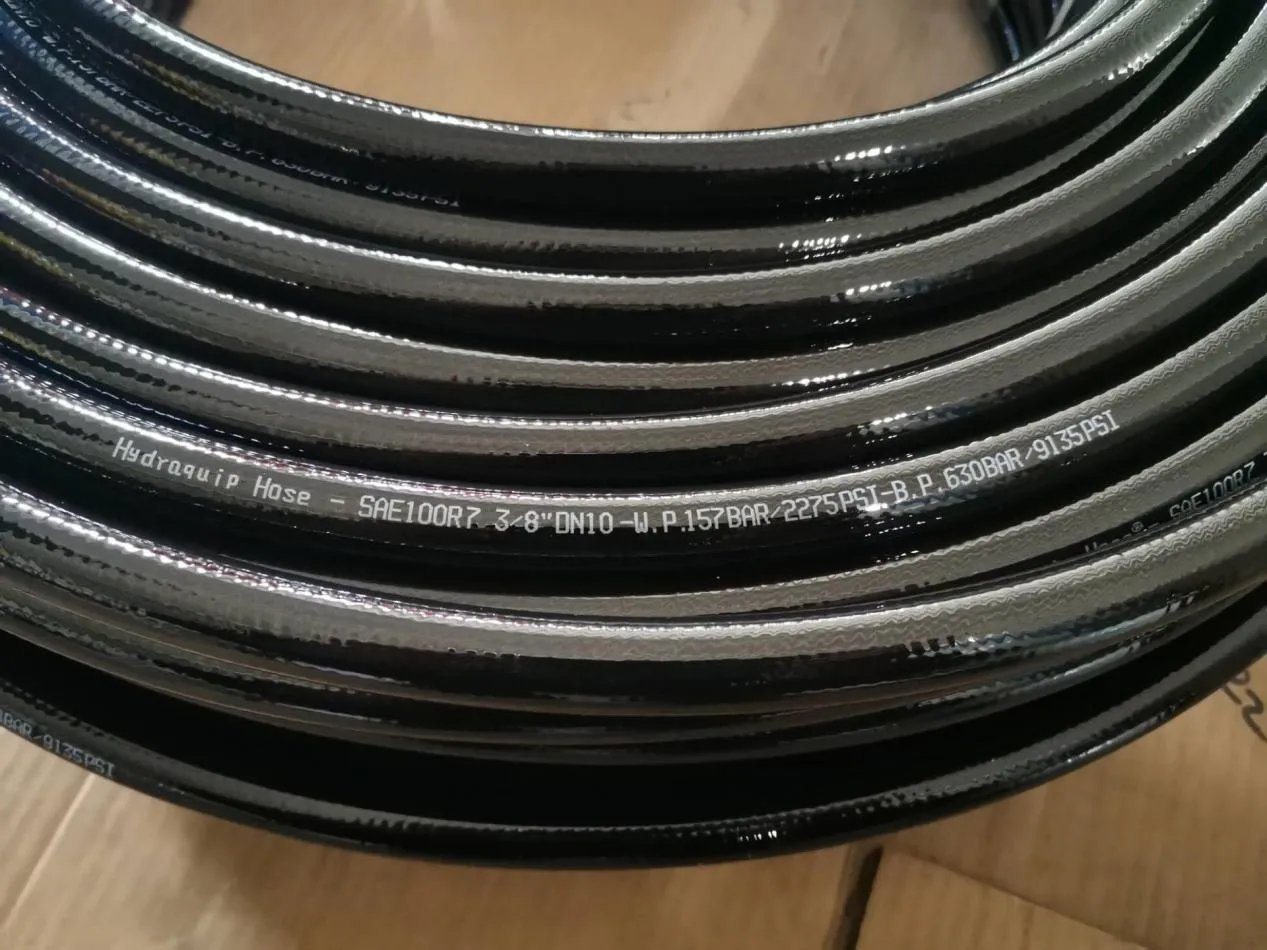
SAE 100R7 hose represents a critical component in hydraulic power transmission systems across diverse industries including construction, agriculture, and manufacturing. This standard specifies the requirements for non-reinforced rubber hose, designed for use with hydraulic fluids. Its widespread adoption stems from a balance of performance characteristics, cost-effectiveness, and availability. However, specifying ‘high quality’ SAE 100R7 hose requires a detailed understanding of material composition, manufacturing nuances, and performance parameters extending beyond the basic standard. This guide provides a comprehensive technical overview of SAE 100R7 hose, addressing material science, manufacturing processes, performance characteristics, failure modes, and relevant industry standards to enable informed procurement decisions and ensure system reliability. The core industry pain point revolves around premature hose failure due to inadequate material selection for specific fluid compatibility, insufficient pressure ratings for application demands, and inconsistencies in manufacturing quality among different suppliers. Accurate specification and robust quality control are paramount to mitigate these risks.
Material Science & Manufacturing
SAE 100R7 hose construction fundamentally relies on a synthetic rubber blend, typically a combination of nitrile (NBR) rubber for the tube, and a neoprene (CR) or a similar synthetic rubber for the cover. NBR provides excellent resistance to petroleum-based hydraulic fluids, a crucial characteristic for this application. The specific NBR formulation – acrylonitrile content – directly influences fluid resistance; higher acrylonitrile content generally equates to improved oil resistance but can reduce low-temperature flexibility. The cover material, typically CR, provides protection against abrasion, ozone, weathering, and heat. Its formulation dictates its resistance to environmental degradation and its service temperature range. Manufacturing begins with extrusion of the inner tube to the specified dimensions, followed by the application of reinforcement (typically braided textile or spiral-wound textile, although R7 is non-reinforced), and finally, extrusion of the cover. Critical process parameters include die temperature, extrusion speed, and cooling rates. Proper vulcanization (curing) is essential for achieving desired mechanical properties. Vulcanization time, temperature, and the type of curing agent significantly impact the hose's tensile strength, elongation, and resistance to permanent set. Dimensional control is maintained through precise die design and continuous monitoring during extrusion. Post-extrusion processes involve trimming, inspection, and pressure testing to verify compliance with SAE standards. Furthermore, the cleanliness of the rubber compounds and the avoidance of contaminants during manufacturing are crucial to prevent premature failure. Chemical compatibility of the rubber compounds with the target hydraulic fluid is validated via immersion testing, ensuring the hose does not swell, degrade, or leach harmful substances into the fluid.

Performance & Engineering
The performance of SAE 100R7 hose is primarily characterized by its pressure rating, temperature range, and fluid compatibility. The standard defines working pressures ranging from 1000 to 2500 psi, depending on hose diameter and construction. However, a safety factor is always applied, meaning the burst pressure significantly exceeds the working pressure. Engineering analysis focuses on stress distribution within the hose wall under pressure, considering the absence of reinforcement. This dictates the required wall thickness to prevent failure. Temperature limits are critical; exceeding the specified temperature range can lead to accelerated degradation of the rubber compounds, reducing their strength and flexibility. Hydraulic fluid compatibility is paramount; incompatible fluids can cause swelling, cracking, or softening of the rubber, leading to leaks or catastrophic failure. Furthermore, bend radius is a key engineering consideration. Exceeding the minimum bend radius induces stress concentration on the inner radius of the hose, accelerating fatigue failure. Installation practices – avoiding sharp bends, kinks, and twisting – are therefore vital. Dynamic applications, involving pulsating flow or vibration, impose additional stresses on the hose. Fatigue life analysis, using S-N curves derived from accelerated testing, is used to predict the hose's service life under these conditions. The hose’s ability to withstand external abrasion, impact, and ozone exposure should also be considered depending on the operating environment. Compliance with relevant safety regulations, such as those pertaining to fluid containment and worker protection, is also essential.
Technical Specifications
| Parameter | Unit | Specification (Typical) | Test Method |
|---|---|---|---|
| Working Pressure | psi | 1000 – 2500 | SAE J30R7 |
| Burst Pressure | psi | 3000 – 7500 | SAE J30R7 |
| Temperature Range | °F (°C) | -40 to 212 (-40 to 100) | SAE J30R7 |
| Tube Material | - | Nitrile Rubber (NBR) | ASTM D2000 |
| Cover Material | - | Neoprene (CR) | ASTM D2000 |
| Bend Radius (Minimum) | in (mm) | 6-12 (152-305) | Manufacturer’s Specification |
Failure Mode & Maintenance
SAE 100R7 hose is susceptible to several failure modes. Pinholes and cracks in the tube, often initiated by internal pressure fluctuations or fluid incompatibility, lead to leaks. Cover degradation, caused by ozone, UV exposure, or abrasion, can expose the reinforcement (if any, though R7 is non-reinforced) or tube to damage. Fatigue cracking, occurring at points of high stress concentration (e.g., near fittings, bends), is common in dynamic applications. Loss of flexibility, due to aging or temperature extremes, can lead to kinking and subsequent failure. Swelling or softening of the rubber, caused by incompatible fluids, reduces the hose's strength and resistance to pressure. Maintenance involves regular visual inspection for cracks, abrasions, and leaks. Hoses should be replaced if any signs of damage are observed. Proper storage is crucial; hoses should be stored in a cool, dry place, away from direct sunlight and ozone sources. Avoid twisting or kinking the hose during storage or use. When installing fittings, ensure they are properly crimped and compatible with the hose material. Regularly check the torque of fittings. A preventative maintenance schedule should be established, based on the severity of the operating environment and the hose’s duty cycle. Fluid analysis, to verify compatibility and identify potential contaminants, is also recommended. Following proper installation and maintenance procedures significantly extends hose service life and reduces the risk of catastrophic failure.
Industry FAQ
Q: What is the primary difference between SAE 100R7 and SAE 100R6 hose, and when would I choose one over the other?
A: SAE 100R6 hose incorporates braided reinforcement, significantly increasing its pressure rating and abrasion resistance compared to the non-reinforced SAE 100R7. R6 is selected for higher-pressure systems (typically exceeding 2500 psi) and applications demanding greater durability. R7 is preferred for lower-pressure systems where flexibility and cost are primary considerations.
Q: How does the acrylonitrile content in the NBR tube affect fluid compatibility?
A: Higher acrylonitrile content generally provides superior resistance to petroleum-based fluids but can reduce low-temperature flexibility and resistance to certain polar fluids. Lower acrylonitrile content offers better flexibility at low temperatures but may be less resistant to oil-based fluids. The optimal content depends on the specific hydraulic fluid used.
Q: What is the impact of exceeding the minimum bend radius on hose life?
A: Exceeding the minimum bend radius induces significant stress concentration on the inner radius of the hose, accelerating fatigue failure. Repeated bending beyond the specified radius weakens the hose structure, leading to cracks and leaks.
Q: What are the key considerations when selecting fittings for SAE 100R7 hose?
A: Fittings must be specifically designed for SAE 100R7 hose and must be properly crimped to ensure a secure and leak-proof connection. Material compatibility between the fitting and hose is also crucial to prevent corrosion and degradation. The fitting’s pressure rating must equal or exceed the hose’s working pressure.
Q: How can I determine the appropriate safety factor for a hydraulic system using SAE 100R7 hose?
A: Industry best practice dictates a minimum safety factor of 4:1. This means the burst pressure of the hose should be at least four times the maximum operating pressure of the system. Higher safety factors may be required for critical applications or systems subject to shock loads.
Conclusion
SAE 100R7 hose, while a seemingly simple component, requires careful consideration of material science, manufacturing quality, and application-specific requirements. Selecting ‘high quality’ hose extends beyond simply meeting the base SAE standard; it necessitates a thorough understanding of fluid compatibility, temperature limitations, and proper installation practices. Failure to account for these factors can lead to premature hose failure, resulting in costly downtime, safety hazards, and environmental damage.
Future advancements in rubber technology may focus on developing compounds with improved resistance to a wider range of fluids, enhanced durability, and reduced environmental impact. The implementation of advanced non-destructive testing methods during manufacturing will further improve quality control and reliability. Continued adherence to rigorous standards and a proactive approach to maintenance will remain essential for maximizing the service life and ensuring the safe operation of hydraulic systems utilizing SAE 100R7 hose.