


high impulse hydraulic hose factories Performance Analysis

Introduction
High impulse hydraulic hoses are critical components in fluid power systems, engineered to reliably transmit hydraulic fluid at extremely high pressures and withstand dynamic loading conditions. These hoses differentiate themselves from standard hydraulic hoses through enhanced construction techniques, utilizing multiple layers of reinforcement to achieve superior burst and impulse strength. Their application spans industries including construction, agriculture, mining, oil & gas, and manufacturing, powering heavy machinery like excavators, loaders, presses, and drilling equipment. The core performance characteristics – pressure rating, impulse capacity, temperature range, and fluid compatibility – are governed by stringent international standards, ensuring safety and operational longevity. A key pain point for end-users is premature hose failure leading to downtime, safety hazards, and costly repairs; therefore, understanding the intricacies of hose construction, material selection, and proper application is paramount. This guide provides a comprehensive overview of high impulse hydraulic hoses, covering material science, manufacturing processes, performance criteria, failure modes, and relevant industry standards.
Material Science & Manufacturing
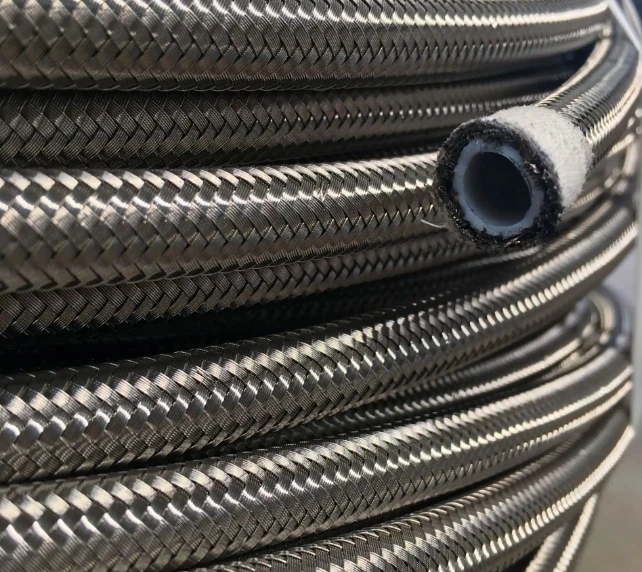
The construction of a high impulse hydraulic hose begins with the inner tube, typically made from a synthetic rubber compound – Nitrile (NBR) being the most common due to its excellent oil resistance, but other options include Chloroprene (CR) for improved weathering and EPDM for phosphate ester fluids. The rubber compound formulation dictates the hose’s fluid compatibility and temperature range. Next, multiple layers of reinforcement are applied. Traditionally, these layers consist of high-tensile steel wire, spirally wound or braided, providing the necessary burst and impulse strength. The wire gauge, number of layers, and winding/braiding angle directly influence the hose’s performance. More modern constructions utilize synthetic fiber reinforcements, such as aramid (Kevlar) or polyester, offering lighter weight and increased flexibility, although they generally have lower temperature resistance than steel wire. The outer cover, typically a synthetic rubber such as polyurethane or neoprene, provides abrasion resistance, weathering protection, and chemical resistance. Manufacturing processes include extrusion for the inner tube and cover, calendaring for reinforcement layers, and a combination of winding or braiding machines to apply the reinforcement. Key parameter control during manufacturing focuses on precise layer adhesion, consistent wire tension, and accurate dimensional control. Curing is a critical step, ensuring the rubber compounds vulcanize properly to achieve the desired mechanical properties. Quality control involves hydrostatic testing to verify burst pressure and impulse testing to assess fatigue life.
Performance & Engineering
High impulse hydraulic hose performance is dictated by a complex interplay of forces and environmental factors. Burst pressure, typically measured in PSI or bar, represents the maximum pressure the hose can withstand before rupturing under static conditions. Impulse pressure, measured in cycles to failure, is far more critical in dynamic applications, as repeated pressure fluctuations can lead to fatigue failure. The hose’s ability to withstand these fluctuations is determined by its reinforcement structure and the damping characteristics of the rubber compounds. Engineering calculations involve stress analysis of the hose wall under pressure, considering the material properties of each layer. Finite Element Analysis (FEA) is frequently employed to model complex loading scenarios and optimize hose design. Environmental resistance is another key consideration. Temperature variations can affect the rubber compounds’ flexibility and strength. Exposure to ozone, UV radiation, and chemicals can cause degradation and reduce the hose’s lifespan. Compliance requirements, such as those mandated by SAE (Society of Automotive Engineers) and EN (European Norms), dictate minimum performance standards and testing procedures. Functional implementation requires careful consideration of hose routing, bend radius, and fitting selection. Excessive bending or improper fitting installation can create stress concentrations and lead to premature failure. The hose must also be sized correctly for the flow rate and pressure drop requirements of the hydraulic system.
Technical Specifications
| Parameter | Unit | SAE J517 (100R2AT) | EN 853 1SN |
|---|---|---|---|
| Working Pressure | PSI | 2250 | 200 |
| Burst Pressure | PSI | 6750 | 600 |
| Impulse Cycles (R2AT) | Cycles | 200,000 @ 70% WP | N/A (Impulse tested separately) |
| Temperature Range | °F | -40 to +212 | -40 to +100 |
| Inner Tube Material | - | Synthetic Rubber (NBR) | Synthetic Rubber (NBR) |
| Reinforcement | Layers | Two Steel Wire Braids | Single Steel Wire Spiral |
| Outer Cover | - | Synthetic Rubber (CRM) | Synthetic Rubber (SBR) |
Failure Mode & Maintenance
High impulse hydraulic hoses are susceptible to several failure modes. Fatigue cracking, often initiated at the fitting crimp or at points of high stress concentration, is a common occurrence due to repeated pressure pulsations. Delamination, the separation of reinforcement layers, can occur due to inadequate bonding or corrosion of the wire. Rubber degradation, caused by ozone cracking, UV exposure, or chemical attack, reduces the hose’s flexibility and strength. Abrasion from external contact can wear through the outer cover, exposing the reinforcement layers to corrosion. Fitting failure, such as corrosion or loosening, can lead to leaks and hose rupture. Internal erosion, caused by abrasive particles in the hydraulic fluid, can damage the inner tube. Maintenance strategies include regular visual inspection for cracks, abrasions, and leaks. Hose routing should be optimized to minimize bending and contact with abrasive surfaces. Proper fitting installation and torque specifications are crucial. Fluid filtration is essential to remove abrasive particles and prevent internal erosion. Pressure testing should be performed periodically to verify hose integrity. Hoses should be replaced at recommended intervals, even if no visible damage is apparent, based on operating conditions and manufacturer’s guidelines. Avoid kinking or sharply bending the hose, as this concentrates stress and accelerates fatigue failure.
Industry FAQ
Q: What is the difference between R2AT and 1SN hose construction, and when should each be used?
A: R2AT hoses utilize two steel wire braids, offering superior impulse performance and generally higher working pressures, making them suitable for demanding applications with significant pressure fluctuations. 1SN hoses employ a single steel wire spiral, providing good flexibility and pressure capability for less dynamic systems. R2AT is preferred in applications like hydraulic hammers and loaders, while 1SN may suffice for simpler hydraulic circuits.
Q: How does temperature affect the performance and lifespan of a high impulse hydraulic hose?
A: Extreme temperatures – both high and low – can significantly impact hose performance. High temperatures can degrade the rubber compounds, reducing their elasticity and strength. Low temperatures can cause the rubber to become stiff and brittle, increasing the risk of cracking. Exceeding the specified temperature range will drastically shorten the hose’s lifespan.
Q: What is the importance of proper fitting selection and crimping?
A: Incorrect fitting selection or improper crimping can create stress concentrations at the hose-fitting interface, leading to premature failure. Fittings must be compatible with the hose type and fluid being conveyed. Crimping must be performed to the manufacturer’s specifications, ensuring a secure and leak-proof connection without over-stressing the hose.
Q: What role does hydraulic fluid compatibility play in hose selection?
A: The inner tube material must be compatible with the hydraulic fluid to prevent swelling, softening, or degradation. Using an incompatible fluid can cause the hose to fail prematurely. NBR is suitable for most petroleum-based fluids, but EPDM is required for phosphate ester fluids, and other materials may be necessary for specialized applications.
Q: How can I identify a hose that is nearing the end of its service life?
A: Signs of wear include visible cracks in the rubber, abrasions in the outer cover, leaking fluid, bulging or deformation of the hose, or stiffness and lack of flexibility. Regular visual inspection and pressure testing can help identify hoses that require replacement before failure occurs.
Conclusion
High impulse hydraulic hoses represent a critical engineering component demanding meticulous attention to material science, manufacturing precision, and operational best practices. Understanding the interplay between pressure, impulse, temperature, and fluid compatibility is essential for selecting the appropriate hose for a given application. Proper installation, regular maintenance, and adherence to industry standards are paramount to ensuring reliable performance and preventing catastrophic failures. The continued development of advanced materials and manufacturing techniques will further enhance the performance and longevity of these vital components.
Selecting a high impulse hydraulic hose is not simply a matter of choosing the lowest price; it's an investment in the safety, reliability, and productivity of the hydraulic system. A comprehensive understanding of the technical specifications, potential failure modes, and applicable industry standards allows for informed decision-making and minimizes the risk of costly downtime and hazardous incidents. Future trends point towards the increasing use of composite materials for lighter weight and enhanced corrosion resistance, and the implementation of smart hose technology for real-time monitoring of hose health and predictive maintenance.