


discount customized hydraulic hoses Performance Analysis

Introduction
Discount customized hydraulic hoses represent a critical component within fluid power systems, serving as the arterial pathways for transmitting pressurized fluids to actuators and other hydraulic machinery. These hoses are not merely conduits; they are engineered assemblies designed to withstand significant pressure, temperature variations, and exposure to a range of fluids. The market for customized hydraulic hoses is driven by the need for application-specific solutions, where standard hoses may not meet the dimensional, performance, or environmental requirements of complex industrial equipment. This guide provides an in-depth technical overview of discount customized hydraulic hoses, encompassing material science, manufacturing processes, performance characteristics, failure modes, and relevant industry standards. The 'discount' aspect indicates a focus on cost-effective solutions without necessarily compromising core performance requirements, often achieved through optimized material selection, efficient manufacturing, and direct-to-consumer or streamlined distribution models. The primary pain points within the industry center around ensuring long-term reliability, preventing catastrophic failures, and maintaining consistent performance across diverse operating conditions.
Material Science & Manufacturing
The core construction of a hydraulic hose revolves around several key material selections. The inner tube, responsible for fluid containment, is commonly composed of synthetic rubbers such as Nitrile (NBR), Ethylene Propylene Diene Monomer (EPDM), or Fluorocarbon (FKM/Viton). NBR offers excellent resistance to petroleum-based fluids, EPDM provides superior resistance to heat and weathering, and FKM is chosen for its broad chemical compatibility and high-temperature performance. The reinforcement layer, crucial for pressure containment, typically consists of one or more braids or spirals of high-tensile steel wire. The number of layers and wire gauge directly influence the hose’s working pressure rating. Outer cover materials are generally synthetic rubbers like Chloroprene (Neoprene) or Polyurethane, providing abrasion, ozone, and UV resistance.
Manufacturing processes vary based on hose type and construction. Braided hoses are produced by interlacing steel wire helically around a mandrel, followed by vulcanization of the rubber layers. Spiral hoses utilize a single, continuously wound steel wire, offering higher pressure ratings and greater flexibility. Critical parameters during manufacturing include precise control of rubber compound mixing ratios, consistent wire winding tension, proper vulcanization temperature and time, and rigorous dimensional inspection. Skiving, the controlled removal of outer cover and reinforcement layers at the hose ends, is a vital step for proper fitting installation, preventing extrusion and ensuring a secure seal. Quality control measures include burst pressure testing, impulse pressure testing, and dimensional verification to ensure compliance with industry standards. For customized hoses, specialized tooling and process adjustments are implemented to achieve the desired length, fitting configurations, and material combinations.
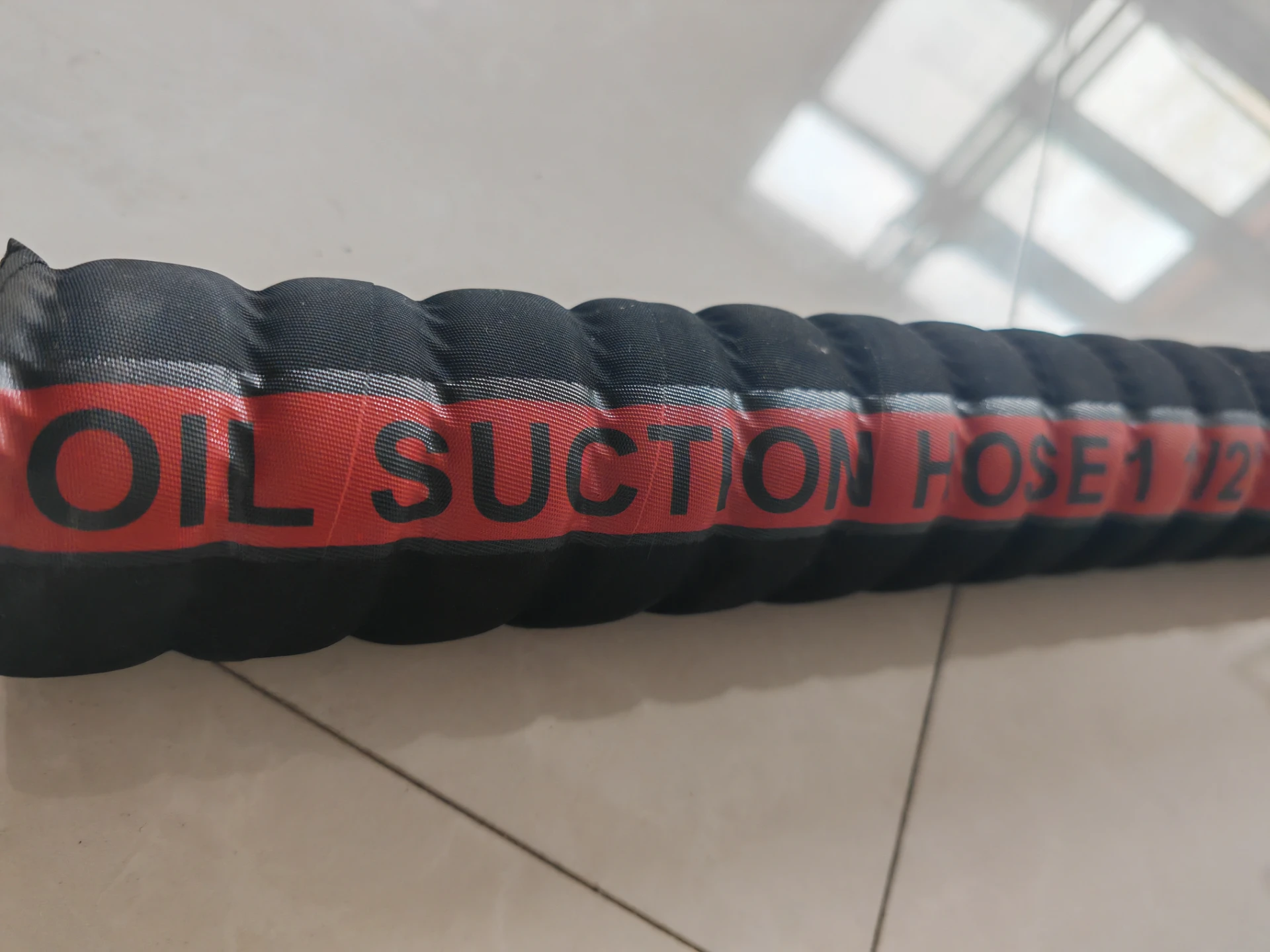
Performance & Engineering
Hydraulic hose performance is governed by several key engineering considerations. Burst pressure, the maximum pressure the hose can withstand before rupture, is a primary specification. Working pressure is significantly lower, typically 50-75% of the burst pressure, providing a safety factor. Impulse pressure, representing pressure surges and fluctuations within the hydraulic system, demands high fatigue resistance from the reinforcement layer. Hose flexibility, or bend radius, is crucial to prevent kinking and stress concentration. Temperature range compatibility is paramount, as both extreme heat and cold can degrade rubber compounds and reduce hose life.
Force analysis involves evaluating the tensile stress within the reinforcement layers under pressure, the shear stress between the rubber and reinforcement, and the bending stress induced by hose deflection. Finite Element Analysis (FEA) is often employed to optimize hose design and predict performance under various loading conditions. Environmental resistance considerations include exposure to oils, chemicals, ozone, UV radiation, and abrasion. Compliance requirements vary by industry and region, with standards such as SAE J517, EN 853, and ISO 6898 dictating performance criteria and testing procedures. Proper hose routing and support are essential to minimize stress and prevent premature failure, utilizing clamps, sleeves, and spiral guards as needed.
Technical Specifications
| Parameter | Unit | Typical Value (NBR/Steel Wire/Neoprene) | Typical Value (FKM/Stainless Steel/Polyurethane) |
|---|---|---|---|
| Working Pressure | psi | 2000 | 5000 |
| Burst Pressure | psi | 8000 | 20000 |
| Temperature Range | °F | -40 to 212 | -20 to 275 |
| Inner Diameter | inches | 0.25 - 2.0 | 0.125 – 1.5 |
| Outer Diameter | inches | 0.40 – 2.5 | 0.25 – 2.0 |
| Bend Radius | inches | 4 – 12 | 3 – 8 |
Failure Mode & Maintenance
Hydraulic hose failures commonly stem from several mechanisms. Fatigue cracking, induced by repeated pressure cycling and bending, is a prevalent issue, particularly near fittings. Extrusion, the outward movement of the inner tube through the reinforcement, occurs when the hose is subjected to excessive pressure or improper fitting installation. Abrasion, caused by external contact with abrasive surfaces, degrades the outer cover, exposing the reinforcement to corrosion. Chemical degradation results from incompatibility between the hose material and the conveyed fluid, leading to swelling, softening, or cracking. Fitting corrosion, especially with dissimilar metals, can compromise the integrity of the connection.
Preventative maintenance is crucial for extending hose life. Regular visual inspections should identify signs of abrasion, cracking, swelling, or leakage. Proper hose routing and support minimize stress and prevent contact with hot surfaces or sharp edges. Correct fitting selection and installation are essential, ensuring proper crimping and avoiding over-tightening. Fluid contamination, including particulate matter and water, accelerates hose degradation; therefore, regular fluid filtration is vital. Periodic pressure testing can detect subtle leaks or weakening of the hose. When replacing hoses, it is imperative to use compatible fittings and adhere to manufacturer's recommendations. For severely degraded hoses, complete replacement is the only viable solution.
Industry FAQ
Q: What is the impact of impulse pressure on hose life, and how is it mitigated?
A: Impulse pressure, the rapid fluctuations in pressure within a hydraulic system, introduces cyclic stress on the hose reinforcement. Over time, this can lead to fatigue failure. Mitigation strategies include selecting hoses with higher impulse pressure ratings, utilizing surge suppressors in the hydraulic circuit, and employing hose guards to dampen vibrations.
Q: How do different hydraulic fluids affect hose compatibility and longevity?
A: Hydraulic fluids vary significantly in their chemical composition. Incompatible fluids can cause the inner tube to swell, soften, or crack, leading to premature failure. It's critical to select a hose with an inner tube material specifically rated for the intended fluid. For example, petroleum-based fluids are generally compatible with NBR, while phosphate ester fluids require Viton (FKM).
Q: What are the best practices for selecting the appropriate hose fitting?
A: Fitting selection must consider pressure rating, fluid compatibility, and hose end connection type (e.g., crimped, threaded, flanged). The fitting material should be compatible with both the hose and the fluid to prevent corrosion. Crimping specifications must strictly adhere to the hose manufacturer's recommendations to ensure a secure and leak-proof connection.
Q: Can a hose with a damaged outer cover still be used safely?
A: A hose with a damaged outer cover should not be used. The outer cover provides crucial protection against abrasion, ozone, UV radiation, and oil degradation. Damage to the cover exposes the reinforcement layer to corrosion and increases the risk of catastrophic failure. Immediate replacement is necessary.
Q: How does temperature affect the performance and lifespan of a hydraulic hose?
A: Both high and low temperatures can significantly impact hose performance. High temperatures can degrade rubber compounds, reducing their elasticity and strength. Low temperatures can cause the rubber to become brittle and crack. It's essential to select a hose with a temperature rating that encompasses the expected operating range of the application.
Conclusion
Discount customized hydraulic hoses are vital components demanding careful consideration of material science, manufacturing precision, and operational conditions. The selection process must move beyond simple cost optimization and focus on achieving a balance between performance, reliability, and cost-effectiveness. Understanding the potential failure modes – fatigue, extrusion, abrasion, and chemical degradation – coupled with implementing a robust preventative maintenance program, is crucial for maximizing hose lifespan and minimizing costly downtime.
Future trends in hydraulic hose technology will likely focus on the development of advanced materials with improved chemical resistance, higher temperature capabilities, and enhanced fatigue life. Smart hoses, incorporating embedded sensors for real-time pressure and temperature monitoring, may become increasingly prevalent, enabling predictive maintenance and improved system safety. The continued emphasis on sustainability will drive innovation in eco-friendly materials and manufacturing processes, reducing the environmental impact of hydraulic hose production and disposal.