


Custom Smooth Cover Hydraulic Hose Quotes Performance Analysis
Introduction
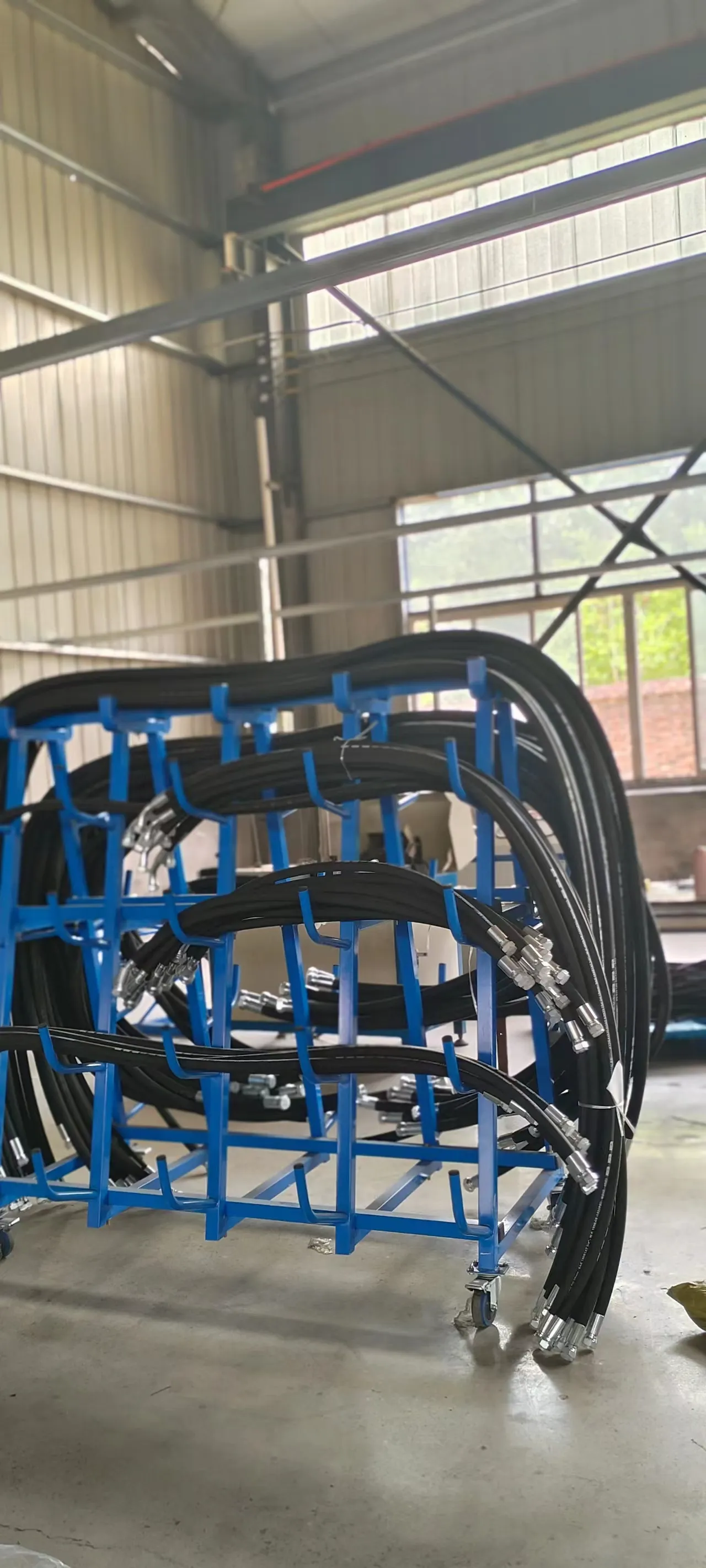
Custom smooth cover hydraulic hoses represent a critical component in fluid power systems across diverse industrial applications, ranging from heavy construction equipment and agricultural machinery to aerospace and manufacturing. These hoses are engineered to transmit hydraulic fluid under high pressure, and the smooth cover configuration offers enhanced abrasion resistance and ease of routing in confined spaces. Unlike standard layflat hoses, smooth cover designs prioritize durability in dynamic environments and minimize friction losses. The demand for customization arises from the specific pressure, temperature, fluid compatibility, and length requirements of individual applications. A proper specification, and thus accurate quoting, relies on a detailed understanding of these parameters and the associated material science. This guide provides an in-depth technical overview of custom smooth cover hydraulic hose specifications, manufacturing considerations, performance characteristics, potential failure modes, and relevant industry standards. Procurement professionals and engineers will benefit from this resource in optimizing hose selection and ensuring system reliability.
Material Science & Manufacturing
The construction of a smooth cover hydraulic hose necessitates careful selection of materials at each layer. The inner tube, in direct contact with the hydraulic fluid, is typically composed of synthetic rubbers such as Nitrile (NBR), Ethylene Propylene Diene Monomer (EPDM), or Fluorocarbon (FKM - Viton). NBR provides good resistance to petroleum-based fluids, EPDM excels in phosphate ester fluids, and FKM offers superior resistance to high temperatures and aggressive chemicals. Reinforcement layers, providing the hose’s pressure capacity, commonly consist of multiple plies of high-tensile steel wire, spirally wound or braided. The number of layers and wire diameter dictate the working pressure. The cover, crucial for abrasion resistance and environmental protection, is generally a synthetic rubber blend, often a polyurethane-based compound, providing a smooth, low-friction surface. Manufacturing begins with extrusion of the inner tube and cover materials. The reinforcement layers are then applied, followed by vulcanization – a process involving heat and pressure to chemically crosslink the rubber compounds, creating a durable and sealed assembly. Key parameter control during manufacturing includes precise wire tension during winding/braiding, consistent rubber extrusion thickness, and accurate vulcanization time and temperature. Improper vulcanization can lead to under-cured rubber (low tensile strength) or over-cured rubber (embrittlement). Post-production testing includes pressure testing to verify burst pressure, impulse testing to assess fatigue life, and dimensional verification.
Performance & Engineering
The performance of a smooth cover hydraulic hose is dictated by several engineering considerations. Working pressure, defined as the maximum continuous operating pressure, is a primary concern. This is directly related to the reinforcement layer configuration and material properties. Burst pressure, typically four times the working pressure, represents the point of catastrophic failure. Impulse pressure, or pressure spikes, introduces cyclic stress on the hose and is a critical factor in determining fatigue life. The hose must withstand repeated pressure surges without failure. Temperature range is another key parameter, as both high and low temperatures can degrade rubber compounds. Fluid compatibility dictates the inner tube material selection to prevent swelling, softening, or chemical attack. Bend radius is crucial; exceeding the minimum bend radius induces stress concentration and potential failure. Hose elongation under pressure must be considered in system design to allow for proper fitting alignment. Finite element analysis (FEA) is often employed during the design phase to simulate stress distribution and optimize hose geometry. The hose’s external diameter must be precisely controlled for proper fitting compatibility. Industry standards, such as SAE J517, dictate performance requirements for different hose types and pressure ratings. Furthermore, consideration must be given to the potential for electrostatic discharge (ESD) in certain applications, necessitating the use of conductive hose constructions.
Technical Specifications
| Parameter | Unit | Typical Value (NBR Inner Tube, Steel Wire Reinforcement) | Tolerance |
|---|---|---|---|
| Working Pressure | PSI | 3000 | ±10% |
| Burst Pressure | PSI | 12000 | ±15% |
| Inner Diameter | Inch | 0.5 | ±0.01 |
| Outer Diameter | Inch | 0.75 | ±0.02 |
| Temperature Range | °F | -40 to 212 | N/A |
| Minimum Bend Radius | Inch | 4 | N/A |
| Reinforcement Layers | Number | 4 | N/A |
Failure Mode & Maintenance
Hydraulic hose failures are frequently categorized into several modes. Fatigue cracking, resulting from repeated pressure cycles and flexing, is a common failure mechanism, often initiated at the reinforcement layer. Abrasion damage, particularly in exposed areas, can erode the cover, leading to reinforcement exposure and eventual rupture. Pinholing, caused by localized damage to the cover, can result in fluid leakage. Blowout, occurring when the inner tube separates from the reinforcement, is often caused by excessive pressure or damaged reinforcement. Kinking, resulting from exceeding the minimum bend radius, can induce localized stress and cracking. Chemical degradation, caused by incompatible fluids, can soften or swell the inner tube. Oxidation, particularly in hoses exposed to high temperatures and oxygen, can embrittle the rubber compounds. Maintenance practices are crucial to extending hose life. Regular visual inspections should identify signs of abrasion, cracking, and leakage. Proper hose routing and support are essential to prevent kinking and abrasion. Fluid contamination should be minimized through filtration. Hose assemblies should be replaced at recommended intervals or after experiencing significant damage. Correct fitting installation and torque are critical to prevent leakage and premature failure. Pressure testing should be periodically performed to verify hose integrity.
Industry FAQ
Q: What is the impact of fluid velocity on hose life?
A: Higher fluid velocities increase the intensity of fluid-induced vibrations within the hose, accelerating fatigue failure. Increased velocity also contributes to increased heat generation, potentially degrading rubber compounds. Proper hose sizing and system design are essential to maintain acceptable fluid velocities.
Q: How does hose layline affect performance?
A: The layline (the spiral pattern of reinforcement wires) influences hose flexibility and resistance to twisting. A tighter layline generally provides greater flexibility but may be more susceptible to twisting. A looser layline offers greater stability but reduced flexibility.
Q: What is the significance of impulse testing?
A: Impulse testing simulates the effects of pressure surges and cyclic loading, providing a realistic assessment of the hose’s fatigue life under dynamic conditions. It helps determine the hose’s ability to withstand repeated pressure fluctuations without failure.
Q: What are the advantages of a polyurethane cover over a rubber cover?
A: Polyurethane covers offer superior abrasion resistance, cut resistance, and oil resistance compared to traditional rubber covers. They are particularly well-suited for applications where the hose is exposed to harsh environments or abrasive materials.
Q: How should I determine the appropriate safety factor for working pressure?
A: A safety factor of 4:1 is generally recommended, meaning the burst pressure should be at least four times the working pressure. However, the appropriate safety factor may vary depending on the application, fluid type, and operating conditions. Critical applications may require higher safety factors.
Conclusion
Custom smooth cover hydraulic hoses are complex engineered products demanding meticulous material selection, precise manufacturing control, and a thorough understanding of application-specific requirements. Accurate specification, driven by considerations of pressure, temperature, fluid compatibility, and environmental factors, is paramount to ensuring reliable performance and preventing premature failure. The selection process should prioritize a hose’s ability to withstand the dynamic stresses inherent in hydraulic systems, considering not only static pressure but also impulse loads and potential for abrasion.
Ongoing maintenance, including regular inspections and proper installation practices, is essential for maximizing hose lifespan and minimizing the risk of catastrophic events. By adhering to industry standards and employing robust engineering principles, procurement managers and engineers can effectively leverage the benefits of custom smooth cover hydraulic hoses and optimize the overall performance and safety of fluid power systems.