


custom r7 twin hose supplier Performance Engineering

Introduction
Custom R7 twin hose assemblies represent a critical component in hydraulic systems across diverse industrial applications. Defined by their robust construction and adherence to SAE J518 R7 standards, these hoses are engineered for medium-to-high pressure fluid conveyance. Their "twin" configuration, comprising two hoses joined by a common fitting or protective sleeve, facilitates dual-line applications for functions like pilot operation, return lines, and pressure compensation. The market demand stems from the increasing need for reliable, adaptable, and custom-configured hydraulic solutions in sectors like construction equipment, agricultural machinery, material handling, and industrial manufacturing. Key performance characteristics include burst pressure, working pressure, temperature resistance, and fluid compatibility, all of which are critical considerations for engineers and procurement professionals. The core pain point within this market lies in achieving consistently high quality, short lead times for custom lengths and fittings, and demonstrable compliance with stringent industry regulations.
Material Science & Manufacturing
R7 twin hose construction typically begins with an inner tube of synthetic rubber, often a blend of nitrile (NBR), ethylene propylene diene monomer (EPDM), or fluorocarbon (FKM), chosen based on the fluid compatibility requirements of the application. NBR offers excellent resistance to petroleum-based fluids, while EPDM is preferred for phosphate ester fluids and high-temperature applications. FKM provides superior chemical resistance, particularly to aggressive media. The reinforcement layer is crucial for pressure containment and typically consists of multiple spiraled, high-tensile steel wire layers. The number of layers directly correlates with the hose’s rated working pressure and burst pressure. An outer cover, generally a synthetic rubber such as Chloroprene (CR), provides abrasion resistance, weather protection, and resistance to ozone degradation. Manufacturing involves a multi-stage process: inner tube extrusion, reinforcement layer winding, outer cover extrusion, and subsequent curing. Critical parameters during extrusion include temperature control to ensure consistent rubber properties, and precise winding tension to maintain dimensional stability and prevent separation of reinforcement layers. Curing temperature and time are optimized to achieve maximum rubber crosslinking and mechanical strength. Quality control measures include burst pressure testing, impulse testing, dimensional verification, and visual inspection for defects. Fitting attachment, whether crimped or field-attachable, is another critical process requiring precise tooling and operator training to ensure a secure, leak-free connection.
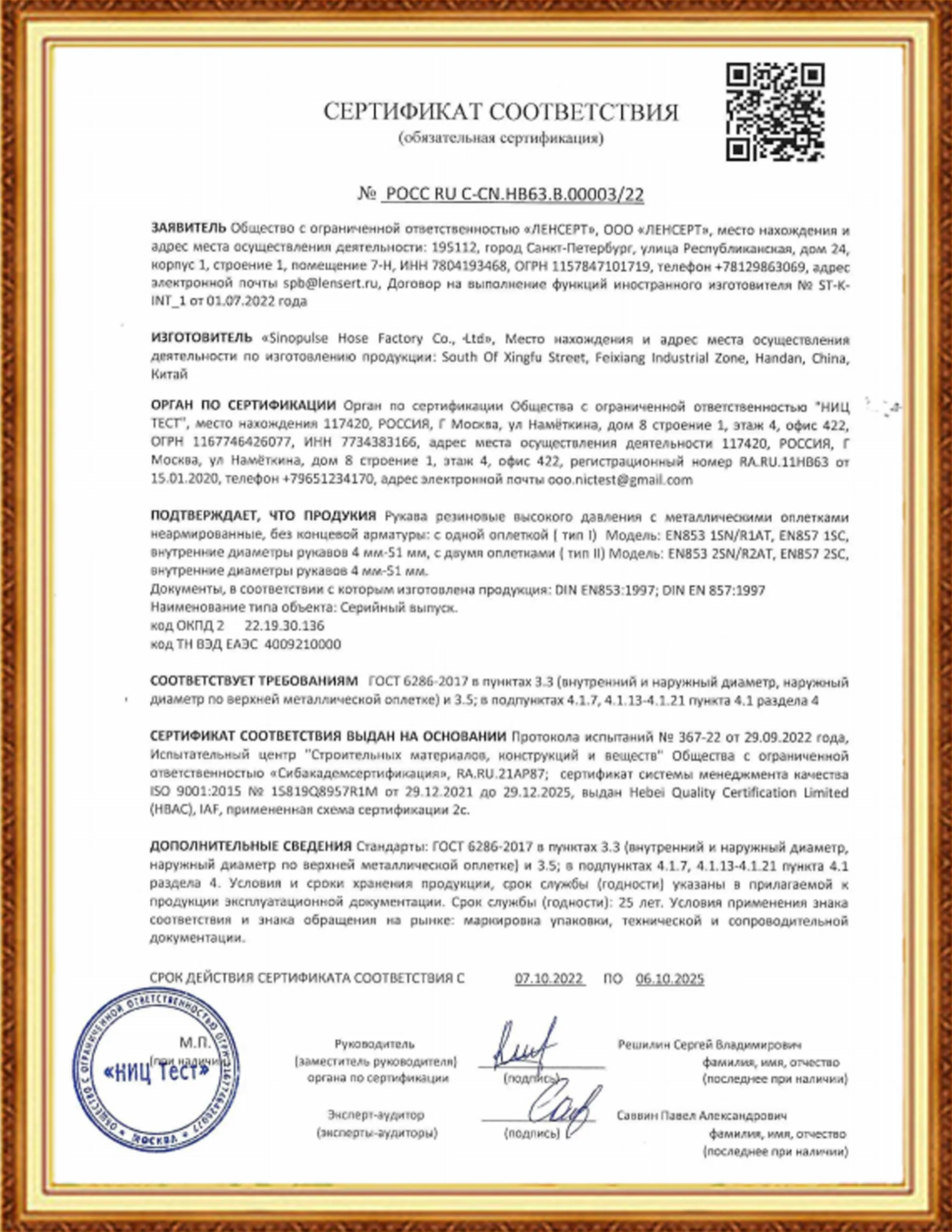
Performance & Engineering
The performance of R7 twin hose assemblies is governed by fundamental principles of fluid mechanics and material strength. Burst pressure is determined by the tensile strength of the reinforcement layers and the adhesion between layers. Working pressure is a fraction of the burst pressure, typically defined as 50% by SAE J518. Fatigue life is a critical consideration, particularly in applications involving cyclical pressure fluctuations. Fatigue failure is initiated by crack propagation in the reinforcement layers and can be exacerbated by factors such as vibration, bending, and exposure to corrosive environments. Environmental resistance is another crucial aspect. Exposure to extreme temperatures (both high and low) can affect the flexibility and mechanical properties of the rubber compounds. Ozone cracking, caused by atmospheric ozone, can degrade the outer cover, leading to premature failure. Fluid compatibility is paramount; incompatible fluids can cause swelling, softening, or cracking of the inner tube, compromising its integrity. Proper hose routing and support are essential to prevent excessive bending and abrasion. Minimum bend radius specifications must be adhered to avoid kinking and reduced flow area. Furthermore, careful consideration must be given to hose assembly length, as excessive length can introduce slack and increase the risk of abrasion. Compliance with relevant safety standards, such as those mandated by OSHA and other regulatory bodies, is also a vital engineering consideration.
Technical Specifications
| Parameter | Units | Typical Value (R7) | Tolerance |
|---|---|---|---|
| Working Pressure | PSI | 2000-3000 | ±10% |
| Burst Pressure | PSI | 8000-12000 | ±15% |
| Temperature Range | °F | -40 to +212 | ±5°F |
| Inner Tube Material | - | NBR, EPDM, FKM | Per SAE J200 standard |
| Reinforcement | Layers | 4-6 Spiral Wire | ±1 Layer |
| Outer Cover | - | CR (Chloroprene) | Per SAE J200 standard |
Failure Mode & Maintenance
R7 twin hose assemblies are susceptible to several failure modes. Fatigue cracking, as previously mentioned, is a common issue, particularly in high-vibration applications. This often initiates at the fitting crimp or at points of high stress concentration. Abrasion damage to the outer cover can expose the reinforcement layers, leading to corrosion and eventual failure. Pinholes in the inner tube can result from chemical attack or mechanical damage, causing fluid leakage. Kinking, caused by excessive bending, can restrict flow and create localized stress concentrations. Loss of fitting attachment, due to improper crimping or corrosion, is another frequent failure point. Degradation of the rubber compounds, due to exposure to extreme temperatures, ozone, or incompatible fluids, can lead to hardening, cracking, and loss of flexibility. Maintenance practices are crucial to maximizing hose life. Regular visual inspections should be conducted to identify signs of damage, such as cracks, abrasions, bulges, or leaks. Hoses should be replaced immediately if any damage is detected. Proper hose routing and support should be maintained to prevent excessive bending and abrasion. Fluid compatibility should be verified, and incompatible fluids should be avoided. Fittings should be inspected for corrosion and tightness. Periodic pressure testing can help identify potential leaks before they lead to catastrophic failure. Implement a preventative maintenance schedule based on operating conditions and manufacturer recommendations.
Industry FAQ
Q: What is the impact of fluid velocity on the service life of an R7 twin hose?
A: Higher fluid velocities can significantly reduce hose life due to increased erosion of the inner tube and increased heat generation. Excessive heat can accelerate the degradation of rubber compounds. Consider velocity limitations specified by the hose manufacturer and optimize system design to minimize fluid velocity where possible. Proper sizing of the hose and fittings is crucial.
Q: How does the choice of fitting material affect the corrosion resistance of the assembly?
A: Fitting material selection is critical. Carbon steel fittings are prone to corrosion, especially in the presence of moisture and salt. Stainless steel (304 or 316) fittings offer superior corrosion resistance. Consider plating options like zinc nickel or epoxy coating for carbon steel fittings to enhance their corrosion protection. Ensure compatibility between the fitting material and the fluid being conveyed.
Q: What are the key differences between a crimped fitting and a field-attachable fitting?
A: Crimped fittings offer a more secure and reliable connection, providing excellent resistance to vibration and pressure surges. They require specialized crimping equipment and are typically installed by trained technicians. Field-attachable fittings, such as those using swaging or bite-the-wire technology, can be assembled on-site without specialized equipment but generally offer lower pressure ratings and may be more susceptible to leaks.
Q: How do I determine the correct hose length for my application?
A: Accurate hose length calculation is essential. Measure the direct distance between connection points, and then add allowances for bend radius and fitting insertion depth. Avoid excessive hose length, as it can increase the risk of abrasion and vibration. Consult manufacturer guidelines for recommended bend radius and fitting insertion depth.
Q: What is the significance of the "layline" marking on the hose?
A: The layline marking on the hose typically includes the manufacturer's name, hose type (R7), pressure rating, manufacturing date, and batch number. This information is crucial for traceability, quality control, and warranty claims. It allows for identification of the hose in case of failure or recall.
Conclusion
Custom R7 twin hose assemblies remain a foundational element in hydraulic power transmission. Their performance and longevity are directly influenced by material selection, manufacturing precision, and adherence to rigorous engineering principles. Understanding the interplay between fluid compatibility, pressure ratings, temperature limitations, and environmental factors is paramount for ensuring reliable operation and minimizing downtime. Careful consideration of potential failure modes, coupled with proactive maintenance practices, will maximize the service life of these critical components.
The ongoing trend towards more demanding applications and stricter regulatory requirements will continue to drive innovation in R7 twin hose technology. Future developments are likely to focus on advanced materials with enhanced chemical resistance and temperature stability, as well as improved manufacturing processes to achieve tighter tolerances and higher burst pressures. Furthermore, the integration of smart sensing technologies into hose assemblies could enable real-time monitoring of pressure, temperature, and vibration, providing valuable insights for predictive maintenance and improved system performance.