


china mining hydraulic hose service Performance Analysis

Introduction
China mining hydraulic hoses are critical components in the extraction and processing of minerals, operating under extremely demanding conditions. These hoses are engineered to transmit hydraulic fluid, providing the power for heavy machinery utilized in drilling, excavation, material handling, and other essential mining operations. The industry faces specific challenges related to abrasion, high pressures, extreme temperatures, and exposure to corrosive substances. This guide provides an in-depth technical analysis of these hoses, covering material science, manufacturing processes, performance characteristics, failure modes, and relevant industry standards. Understanding these aspects is crucial for procurement managers, engineers, and maintenance personnel involved in mining operations to ensure operational efficiency, safety, and cost-effectiveness. A core pain point in the mining sector is hose failure leading to unscheduled downtime, which can incur significant financial losses and jeopardize worker safety. This analysis focuses on addressing this through superior hose selection, implementation and maintenance practices.
Material Science & Manufacturing
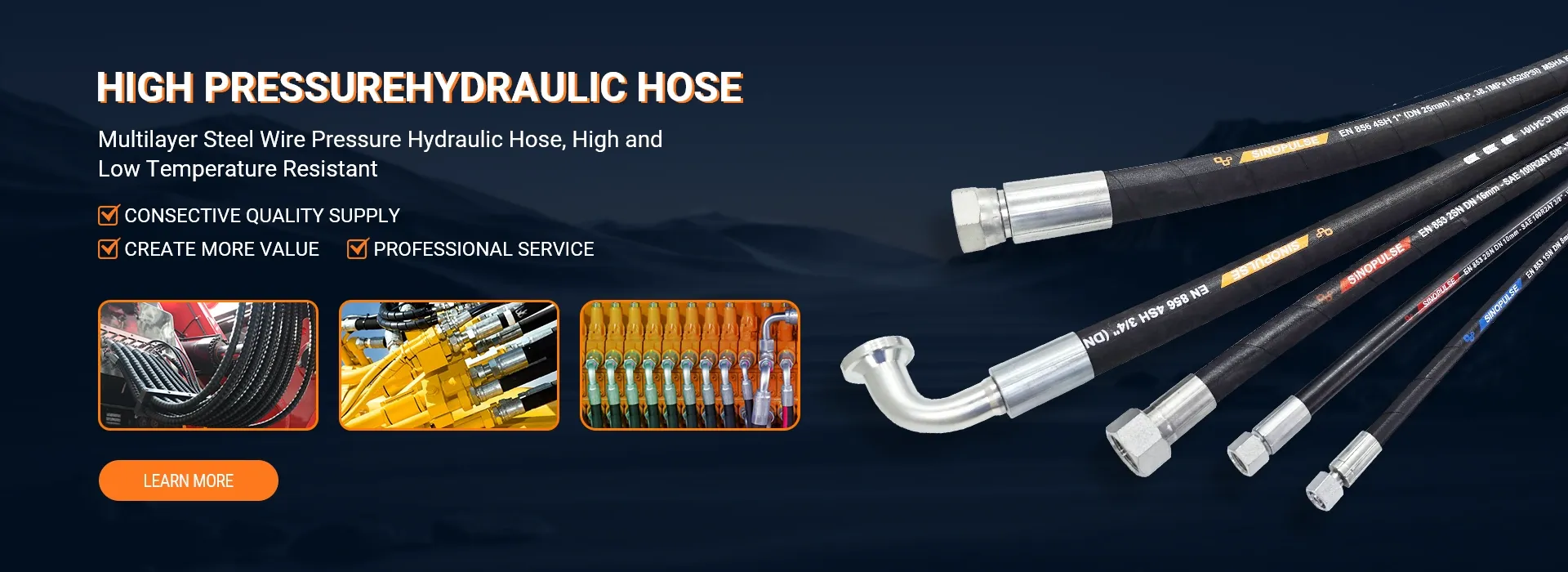
The construction of a mining hydraulic hose fundamentally relies on several key materials, each contributing to specific performance attributes. The inner tube is typically composed of synthetic rubber compounds, most commonly nitrile rubber (NBR) due to its excellent resistance to petroleum-based hydraulic fluids. However, for applications involving phosphate ester fluids, ethylene propylene diene monomer (EPDM) is preferred. The reinforcement layer is a critical element; it traditionally consists of multiple plies of high-tensile steel wire, spirally wrapped to withstand high operating pressures. Increasingly, aramid fiber braiding is used, offering a higher strength-to-weight ratio and improved flexibility, although with lower abrasion resistance compared to steel. The outer cover is generally made of chloroprene rubber (CR) for its resistance to abrasion, weathering, ozone, and oil. For extreme environments, polyurethane (PU) covers are utilized, offering superior abrasion and cut resistance.
Manufacturing processes begin with the extrusion of the inner tube, followed by the precise winding of the reinforcement layers. Automated winding machines are essential for maintaining consistent layer tension and helix angle, directly influencing burst pressure. After reinforcement, the outer cover is extruded over the assembly. Critical parameter control involves monitoring rubber compound viscosity and temperature during extrusion, maintaining consistent wire tension during winding, and ensuring proper vulcanization (curing) of the rubber compounds. Vulcanization temperature, time, and pressure are precisely controlled to achieve optimal cross-linking of the rubber molecules, resulting in the desired mechanical properties. Post-production, each hose undergoes rigorous hydrostatic testing to verify its ability to withstand specified pressure levels. Fitting attachment involves swaging or crimping, utilizing specialized tooling and quality control procedures to ensure a secure, leak-proof connection. Poorly crimped fittings are a common source of hose failure.
Performance & Engineering
The performance of a mining hydraulic hose is governed by several critical engineering parameters. Burst pressure, defined as the pressure at which the hose fails catastrophically, is a primary specification. Working pressure is typically specified as 50-70% of burst pressure, providing a safety margin. Hose flexibility, or bend radius, is crucial for ease of installation and operation in confined spaces. Excessive bending can lead to premature fatigue failure. Abrasion resistance is paramount in mining applications due to contact with abrasive materials such as rocks, soil, and ore. This is quantified using tests like the Taber Abrasion Test, measuring volume loss after a specified number of cycles. Temperature resistance is another critical factor; hydraulic fluids can reach high temperatures during operation, and extreme ambient temperatures are common in mining environments. Hose materials must maintain their mechanical properties over a wide temperature range.
Force analysis involves evaluating stresses within the hose structure under pressure. Hoop stress, acting circumferentially, is primarily resisted by the reinforcement layers. Longitudinal stress, acting along the hose axis, is influenced by end fittings and hose length. Finite Element Analysis (FEA) is often employed to model stress distributions and optimize hose design. Environmental resistance considers the hose’s ability to withstand exposure to chemicals, oils, and UV radiation. Compliance requirements vary depending on the mining jurisdiction, but generally include adherence to safety standards regarding hose construction, testing, and labeling. Fatigue resistance is essential, as hoses are subjected to repeated pressure cycles and flexing during operation. The number of cycles to failure under specified conditions is a key performance metric. Selection of appropriate fitting materials compatible with the hose and hydraulic fluid is also crucial to prevent corrosion and leakage.
Technical Specifications
| Parameter | Typical Value (Mining Hose) | Test Standard | Unit |
|---|---|---|---|
| Working Pressure | 400-700 | SAE J517 | bar |
| Burst Pressure | 1200-2100 | SAE J517 | bar |
| Temperature Range | -40 to +100 | SAE J517 | °C |
| Inner Tube Material | NBR/EPDM | ASTM D2000 | - |
| Reinforcement | Steel Wire Spiral / Aramid Braid | ISO 6807 | - |
| Outer Cover Material | CR/PU | ASTM D2000 | - |
Failure Mode & Maintenance
Mining hydraulic hoses are susceptible to several failure modes. Fatigue cracking, induced by repeated pressure cycles and flexing, is a common cause of failure, especially in high-stress areas near fittings. Abrasion, resulting from contact with abrasive materials, leads to gradual wear of the outer cover and eventual failure of the reinforcement layers. Corrosion, caused by exposure to corrosive fluids or environmental factors, can weaken the reinforcement wires and lead to leakage. Improper installation, such as excessive bending or twisting, can induce stress concentrations and premature failure. Fitting failure, including loosening, cracking, or corrosion, is another frequent issue. Internal degradation of the rubber compounds, due to oxidation or chemical attack, can reduce hose flexibility and burst pressure.
Preventative maintenance is crucial to extend hose life and prevent catastrophic failures. Regular visual inspections should be conducted to identify signs of wear, abrasion, cracking, or leakage. Hose assemblies should be properly supported to prevent excessive bending and abrasion. Hydraulic fluid should be regularly analyzed to ensure it is free of contaminants that can accelerate hose degradation. Fittings should be periodically checked for tightness and corrosion. When replacing hoses, it’s critical to use compatible fittings and ensure proper crimping. Implementing a hose management program, including tracking hose age and usage, can help identify potential failure points and optimize replacement schedules. Proper storage of hoses, protected from sunlight and extreme temperatures, is also essential to prevent premature degradation. Consider using hose guards and sleeves in high-wear areas.
Industry FAQ
Q: What is the impact of hydraulic fluid type on hose selection?
A: Hydraulic fluid compatibility is paramount. Nitrile rubber (NBR) is suitable for most petroleum-based fluids, but phosphate ester fluids require EPDM inner tubes. Incompatible fluids can cause swelling, softening, or cracking of the inner tube, leading to premature failure and leaks. Always verify fluid compatibility with the hose manufacturer’s specifications.
Q: How does temperature affect hose performance?
A: Extreme temperatures degrade rubber compounds. High temperatures accelerate oxidation and reduce tensile strength. Low temperatures can cause hoses to become brittle and prone to cracking. Select hoses rated for the expected operating temperature range and avoid exceeding those limits. Consider using hoses with specialized temperature-resistant compounds for extreme environments.
Q: What are the key considerations for selecting hose reinforcement?
A: Steel wire reinforcement provides high burst pressure and abrasion resistance, suitable for harsh mining conditions. Aramid fiber reinforcement offers a higher strength-to-weight ratio and improved flexibility, but is less abrasion-resistant. The choice depends on the application's pressure, flexibility, and abrasion requirements.
Q: What preventative maintenance practices are most effective?
A: Regular visual inspections, proper hose support, fluid analysis, and fitting checks are essential. Implement a hose replacement schedule based on usage and age. Protect hoses from abrasion with guards and sleeves, and ensure proper installation procedures are followed.
Q: What is the role of fitting quality in hose reliability?
A: Fittings are a critical failure point. Use high-quality fittings that are compatible with the hose and hydraulic fluid. Ensure proper crimping using calibrated tooling and quality control procedures. Inspect fittings regularly for signs of corrosion, cracking, or loosening.
Conclusion
The selection and maintenance of hydraulic hoses in mining operations represent a critical factor in operational efficiency and safety. Understanding the intricacies of material science, manufacturing processes, and potential failure modes is essential for mitigating risks and maximizing hose service life. The emphasis on high-quality materials, precise manufacturing control, and robust preventative maintenance programs significantly reduces the incidence of catastrophic failures, minimizing downtime and associated costs.
Future advancements in hydraulic hose technology will likely focus on the development of more durable and abrasion-resistant materials, improved fitting designs, and smart hose monitoring systems. These innovations will further enhance the reliability and longevity of hydraulic hoses in the demanding environment of mining, ultimately contributing to safer and more productive operations. Prioritizing a holistic approach to hose management, encompassing selection, installation, maintenance, and continuous improvement, is the key to long-term success.