


cheap yarn braid r7 hose products Performance Analysis
Introduction
Yarn braid R7 hose represents a widely utilized fluid conveyance solution in low to medium pressure hydraulic systems. Categorized under reinforced rubber hose, its construction prioritizes flexibility and cost-effectiveness. This guide provides a comprehensive technical overview of yarn braid R7 hose, detailing its material composition, manufacturing processes, performance characteristics, potential failure modes, and relevant industry standards. Unlike spiral-wound or wire-reinforced hoses, R7 hose achieves pressure containment through multiple plies of high-tensile yarn strategically braided around an inner rubber tube. This makes it a common choice for applications where extreme pressure resistance isn’t critical, but ease of routing and low weight are paramount. Core industry pain points relating to R7 hose include premature failure due to abrasion, exceeding pressure limits, improper fluid compatibility, and inadequate maintenance practices. Understanding these factors is crucial for maximizing service life and minimizing downtime.
Material Science & Manufacturing
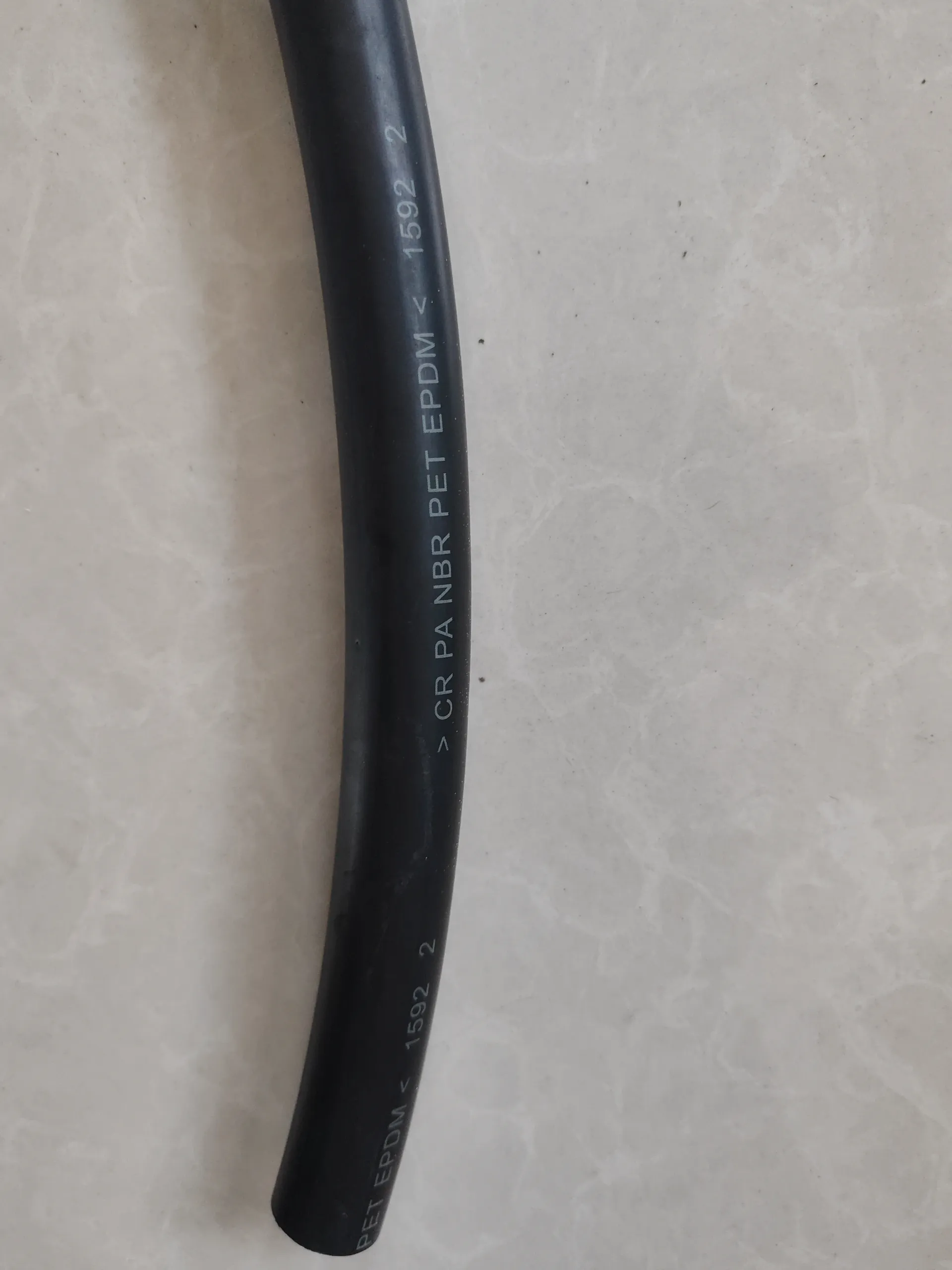
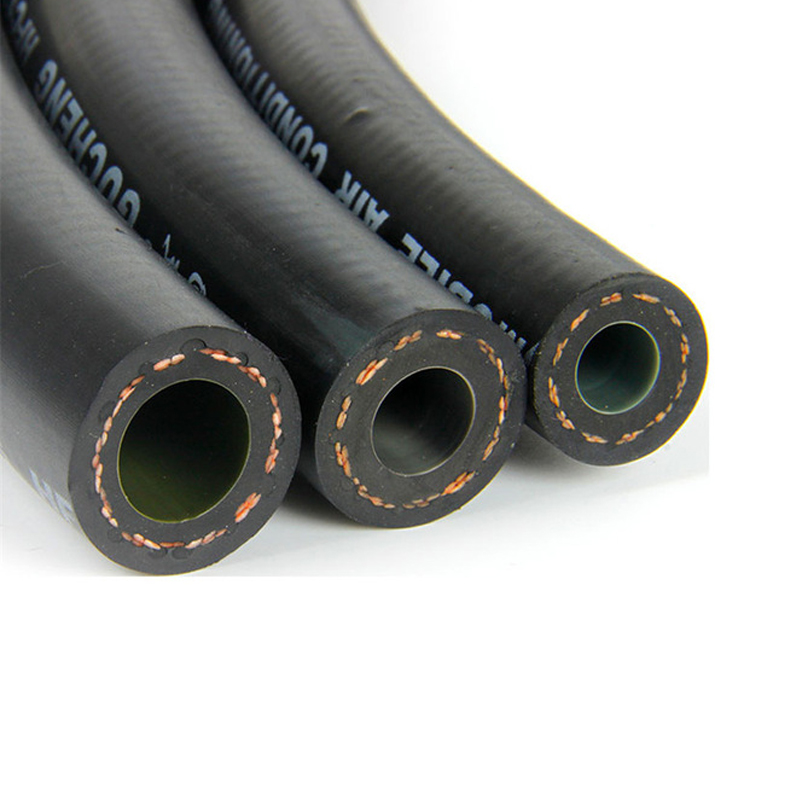
The core components of yarn braid R7 hose dictate its performance. The inner tube is typically composed of synthetic rubber, commonly nitrile (NBR) due to its excellent resistance to petroleum-based hydraulic fluids. Alternative elastomers like ethylene propylene diene monomer (EPDM) are used for applications requiring compatibility with phosphate ester fluids. The reinforcement layer consists of multiple plies of high-tenacity yarn, typically polyester or nylon. Polyester offers superior heat resistance and dimensional stability, while nylon provides higher tensile strength. The outer cover is usually a chloroprene (CR) rubber compound, providing protection against abrasion, weathering, and ozone degradation. Manufacturing begins with extrusion of the inner tube to precise dimensional tolerances. The yarn is then meticulously wound around the tube in a spiral fashion, followed by braiding to interlock the yarns and create a robust reinforcement structure. The braid angle is a critical parameter; steeper angles increase axial strength but reduce flexibility, while shallower angles prioritize flexibility but compromise strength. Finally, the outer cover is extruded over the braided structure, and the hose is cured under heat and pressure to vulcanize the rubber compounds and consolidate the layers. Parameter control during curing – specifically temperature, time, and pressure – directly impacts the hose’s ultimate mechanical properties and resistance to degradation.
Performance & Engineering
The performance of yarn braid R7 hose is fundamentally governed by its ability to withstand internal pressure, resist external damage, and maintain fluid containment. Burst pressure, working pressure, and impulse pressure ratings are critical engineering parameters. Working pressure is typically specified as 50% of the burst pressure, providing a safety margin. Impulse pressure refers to the hose's ability to withstand cyclical pressure fluctuations without failure. Force analysis reveals that the tensile stress within the yarn reinforcement increases proportionally with internal pressure. The braid angle and yarn count influence this stress distribution; optimized designs minimize stress concentration and maximize pressure containment. Environmental resistance is another crucial consideration. Prolonged exposure to elevated temperatures can lead to rubber degradation and reduced flexibility. Ozone cracking can occur in the outer cover if exposed to atmospheric ozone. Furthermore, fluid compatibility must be verified; incompatible fluids can cause swelling, softening, or chemical attack of the rubber compounds, leading to leaks or catastrophic failure. R7 hose is typically designed to meet or exceed relevant industry standards such as SAE J517 and EN 853, ensuring interchangeability and reliable performance. Compliance with these standards involves rigorous testing, including burst pressure testing, impulse pressure testing, and temperature cycling.
Technical Specifications
| Parameter | Unit | Typical Value (R7 Hose) | Test Standard |
|---|---|---|---|
| Working Pressure | MPa | 10 – 21 | SAE J517 / EN 853 |
| Burst Pressure | MPa | 20 – 42 | SAE J517 / EN 853 |
| Temperature Range | °C | -40 to +100 | SAE J517 / EN 853 |
| Inner Tube Material | - | Nitrile (NBR) / EPDM | ASTM D2000 |
| Reinforcement Material | - | Polyester / Nylon | ASTM D790 |
| Outer Cover Material | - | Chloroprene (CR) | ASTM D2000 |
Failure Mode & Maintenance
Yarn braid R7 hose is susceptible to several failure modes. Abrasion of the outer cover due to rubbing against adjacent components is a common cause of leaks. Excessive bending or kinking can damage the reinforcement layer, leading to fatigue cracking and eventual rupture. Over-pressurization exceeding the hose’s working pressure can cause catastrophic failure. Fluid incompatibility can cause swelling and degradation of the rubber compounds, compromising their sealing properties. Heat aging results in loss of elasticity and increased susceptibility to cracking. Failure analysis often reveals a combination of factors contributing to hose failure. Preventative maintenance is crucial for maximizing service life. Regular visual inspections should be conducted to identify signs of abrasion, cracking, or swelling. Hose routing should be designed to minimize bending and contact with abrasive surfaces. Ensure that the hydraulic fluid is compatible with the hose materials. Avoid exceeding the hose’s pressure rating. Properly store hoses in a cool, dry, and dark environment when not in use. Replace hoses at recommended intervals, even if no visible damage is apparent. When replacing a hose, verify the correct specifications (pressure rating, size, and fluid compatibility) and ensure proper installation with appropriate fittings.
Industry FAQ
Q: What is the primary difference between R7 and R13 hose in terms of application suitability?
A: R7 hose is designed for lower to medium pressure applications, typically up to 21 MPa. It excels in situations requiring flexibility and cost-effectiveness. R13 hose, featuring a spiral-wound reinforcement, is designed for significantly higher pressures and is suitable for demanding applications with greater dynamic loads. Choosing between them hinges primarily on the system’s operating pressure and the level of abrasion resistance needed.
Q: How does the yarn material (polyester vs. nylon) impact the hose's performance characteristics?
A: Polyester reinforcement offers superior heat resistance and dimensional stability, making it ideal for applications with fluctuating temperatures. Nylon reinforcement provides higher tensile strength, enhancing the hose’s ability to withstand pressure surges. The selection depends on the specific environmental and operational demands of the system.
Q: What fluid compatibility considerations are paramount when selecting an R7 hose?
A: Verify that the inner tube material (NBR or EPDM) is compatible with the hydraulic fluid being used. Incompatible fluids can cause swelling, softening, or chemical degradation of the rubber, leading to leaks and failure. Always consult a fluid compatibility chart before selecting the hose.
Q: What are the typical causes of hose 'kinking', and how can it be prevented?
A: Kinking occurs when the hose is bent beyond its minimum bend radius, damaging the reinforcement layer. Prevent kinking by ensuring proper hose routing, using appropriate bend supports, and avoiding sharp turns. Maintaining sufficient clearance around the hose is crucial.
Q: How frequently should R7 hoses be replaced as part of a preventative maintenance schedule?
A: Replacement frequency depends on the application and operating conditions. A general guideline is to replace hoses every 3-5 years, even if no visible damage is apparent. More frequent replacement is recommended for critical applications or harsh environments. Regular inspections are essential to identify potential issues and proactively replace hoses before failure occurs.
Conclusion
Yarn braid R7 hose remains a viable and cost-effective solution for a wide array of low to medium-pressure hydraulic applications. Its construction, utilizing a multi-ply yarn reinforcement, provides a balance between flexibility, durability, and affordability. However, realizing its full potential requires a thorough understanding of its material properties, manufacturing processes, performance limitations, and potential failure modes.
Proper selection, installation, and preventative maintenance are paramount to ensuring long-term reliability and minimizing downtime. Adhering to relevant industry standards and conducting regular inspections will significantly extend the hose’s service life and contribute to the overall safety and efficiency of the hydraulic system.