


cheap teflon/ptfe hose products Performance Analysis

Introduction
Polytetrafluoroethylene (PTFE), commonly known as Teflon, hoses are extensively utilized in fluid transfer applications across numerous industries. This technical guide focuses on cost-effective, or “cheap,” PTFE hoses, defining them not as inherently inferior, but as products optimized for price sensitivity while maintaining acceptable performance within specific operational parameters. These hoses typically employ a PTFE inner lining, offering excellent chemical resistance, coupled with a braided reinforcement—often stainless steel or synthetic fiber—for pressure handling. The core position within the industry chain involves serving applications where ultra-high purity or extreme temperature resistance are not critical, prioritizing cost-effectiveness in sectors like automotive, lawn and garden equipment, and general industrial fluid conveyance. Core performance characteristics center on fluid compatibility, operating pressure, temperature range, and burst pressure, factors that dictate suitability for specific duties.
Material Science & Manufacturing
The primary raw material, PTFE, is a synthetic fluoropolymer possessing exceptional chemical inertness, a low coefficient of friction, and a wide temperature range (-200°C to +260°C). Its manufacturing involves emulsion or suspension polymerization of tetrafluoroethylene monomer. The quality of the PTFE resin – measured by its molecular weight and purity – significantly impacts the final hose properties. Reinforcement materials commonly include 304/316 stainless steel for superior strength and corrosion resistance, or polyester/nylon braiding for reduced cost and flexibility. Manufacturing processes typically involve extrusion of the PTFE liner, followed by helical or braided reinforcement application. Parameter control is crucial: precise temperature control during extrusion prevents degradation and ensures dimensional accuracy. Braiding tension directly impacts burst pressure; uneven tension leads to localized weaknesses. Sintering – a heat treatment process – consolidates the PTFE particles, dictating permeability and mechanical strength. Quality control involves rigorous testing of liner thickness, reinforcement coverage, and dimensional conformity to industry standards. Lower-cost hoses frequently use PTFE with a slightly lower molecular weight and less stringent quality control procedures, resulting in minor compromises in long-term performance.
Performance & Engineering
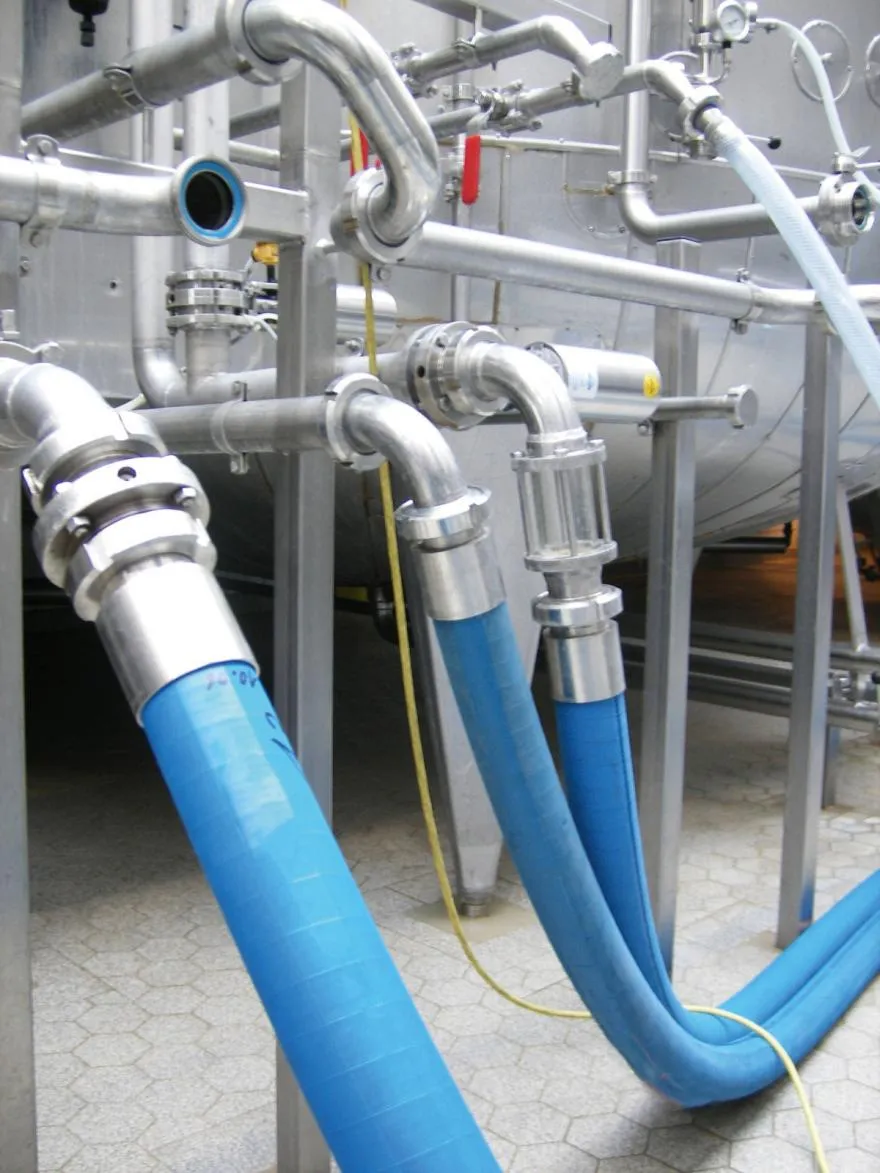
Performance analysis of PTFE hoses centers around pressure ratings, temperature limits, and chemical compatibility. Force analysis considers hoop stress in the liner under internal pressure, and axial stress in the reinforcement. Hose selection must account for both static and dynamic pressure fluctuations (pressure spikes). Environmental resistance is a key concern; while PTFE is chemically inert to most substances, prolonged exposure to certain highly alkaline or oxidizing agents can cause degradation. Compliance requirements often dictate hose certification to standards like SAE J517 (hydraulic hose) or FDA 21 CFR 177.1550 (food contact applications). Functional implementation necessitates proper fitting selection and installation. Incorrect fittings can create stress concentrations leading to premature failure. Hose assemblies should incorporate sufficient bend radius to avoid kinking and subsequent flow restriction. The influence of fluid velocity on pressure drop is also critical in system design. The reinforcement braid provides the structural integrity to resist burst pressure. Engineering considerations in low-cost hoses often involve optimizing braid density and liner thickness to balance cost and performance, potentially reducing safety margins compared to premium hoses.
Technical Specifications
| Parameter | Low-Cost PTFE Hose (Typical) | Mid-Range PTFE Hose | High-Performance PTFE Hose |
|---|---|---|---|
| Working Pressure (PSI) | 200-500 | 500-1000 | 1000-3000 |
| Burst Pressure (PSI) | 600-1500 | 1500-3000 | 3000-9000 |
| Temperature Range (°C) | -60 to +150 | -100 to +200 | -200 to +260 |
| Inner Liner Material | Virgin PTFE (Lower Molecular Weight) | Virgin PTFE (Standard Molecular Weight) | Modified PTFE / High Molecular Weight PTFE |
| Reinforcement | Polyester Braid | Stainless Steel Braid (Single Layer) | Stainless Steel Braid (Multiple Layers) |
| Chemical Compatibility | Broad; limited resistance to strong bases | Excellent; resistant to most chemicals | Exceptional; suitable for highly corrosive fluids |
Failure Mode & Maintenance
Common failure modes in low-cost PTFE hoses include pinhole leaks due to liner defects, braid failure from over-pressurization or fatigue, and permeation of fluids through the liner. Fatigue cracking occurs due to repeated flexing and pressure cycling, exacerbated by improper bend radius. Delamination can occur between the liner and reinforcement if bonding is inadequate during manufacturing. Degradation from exposure to incompatible fluids can lead to swelling and eventual rupture. Oxidation can affect the reinforcement material over time, reducing its strength. Maintenance involves regular visual inspection for cracks, abrasions, and leaks. Fittings should be checked for tightness and corrosion. Proper hose routing – avoiding sharp bends and contact with abrasive surfaces – is crucial. Avoid exceeding the maximum working pressure. Periodic pressure testing can identify weaknesses before catastrophic failure. Replacement is necessary if any signs of damage or degradation are observed. Use of appropriate thread sealant on fittings prevents leaks and corrosion. Flushing the hose periodically removes contaminants and extends its lifespan.
Industry FAQ
Q: What is the primary trade-off when selecting a cheaper PTFE hose over a premium option?
A: The primary trade-off is typically a reduction in burst pressure, temperature resistance, and longevity. Lower-cost hoses often utilize PTFE resins with lower molecular weights and less robust reinforcement materials, resulting in a reduced safety margin and shorter service life. The chemical resistance may also be slightly compromised.
Q: How does the reinforcement material impact the hose’s performance and cost?
A: Stainless steel reinforcement provides superior strength, corrosion resistance, and higher pressure ratings, but is more expensive. Polyester or nylon braiding offers a cost-effective alternative but has lower strength and is more susceptible to corrosion. The braiding angle and density also influence pressure handling capabilities.
Q: What fluid compatibility concerns should I be aware of when using PTFE hoses?
A: While PTFE is broadly chemically resistant, it can be affected by strong bases (e.g., sodium hydroxide), fluorinated solvents, and certain oxidizing agents. Prolonged exposure can lead to swelling, permeation, or degradation of the liner. Always consult a chemical compatibility chart before use.
Q: What is the acceptable bend radius for a PTFE hose to prevent kinking and failure?
A: The acceptable bend radius typically ranges from 5 to 10 times the hose's outer diameter. Exceeding this radius can create stress concentrations and lead to kinking, restricting flow and potentially causing rupture. Consult the manufacturer's specifications for the specific hose.
Q: What routine maintenance checks should be performed on PTFE hose assemblies?
A: Routine checks should include visual inspection for cracks, abrasions, leaks at fittings, and signs of degradation. Fittings should be tightened periodically. The hose should be flushed periodically to remove contaminants. Records of inspection and maintenance should be maintained.
Conclusion
Cheap PTFE hoses represent a pragmatic solution for fluid transfer applications where extreme performance characteristics are not paramount, offering a balance between cost and functionality. Their suitability hinges on a careful consideration of operating parameters—pressure, temperature, and chemical compatibility—relative to the hose’s specifications. Understanding the inherent limitations of lower-cost materials and manufacturing processes is critical for safe and reliable operation.
Proper installation, regular inspection, and adherence to recommended maintenance procedures are essential for maximizing the service life of these hoses. Selecting the appropriate fittings and ensuring adequate bend radius are equally important. While these hoses may not match the longevity or robustness of premium alternatives, they provide a viable and cost-effective option for a wide range of industrial applications.