


ce certification rubber hose supplier Performance Analysis

Introduction
Rubber hoses certified to CE standards represent a critical component across a broad spectrum of industrial applications, ranging from hydraulic systems and pneumatic tools to fluid transfer in automotive and agricultural machinery. This guide details the technical aspects of CE-certified rubber hoses, outlining material composition, manufacturing processes, performance characteristics, potential failure modes, and relevant industry standards. The CE marking signifies conformity with health, safety, and environmental protection standards as dictated by the European Union. Within the supply chain, consistent quality and documented compliance are paramount, directly impacting operational safety, system efficiency, and mitigating potential liabilities. Core performance attributes include pressure resistance, temperature tolerance, chemical compatibility, and flexibility—all rigorously assessed during the CE certification process. Understanding these factors is essential for procurement managers, engineers, and maintenance personnel involved in selecting and deploying rubber hose solutions.
Material Science & Manufacturing
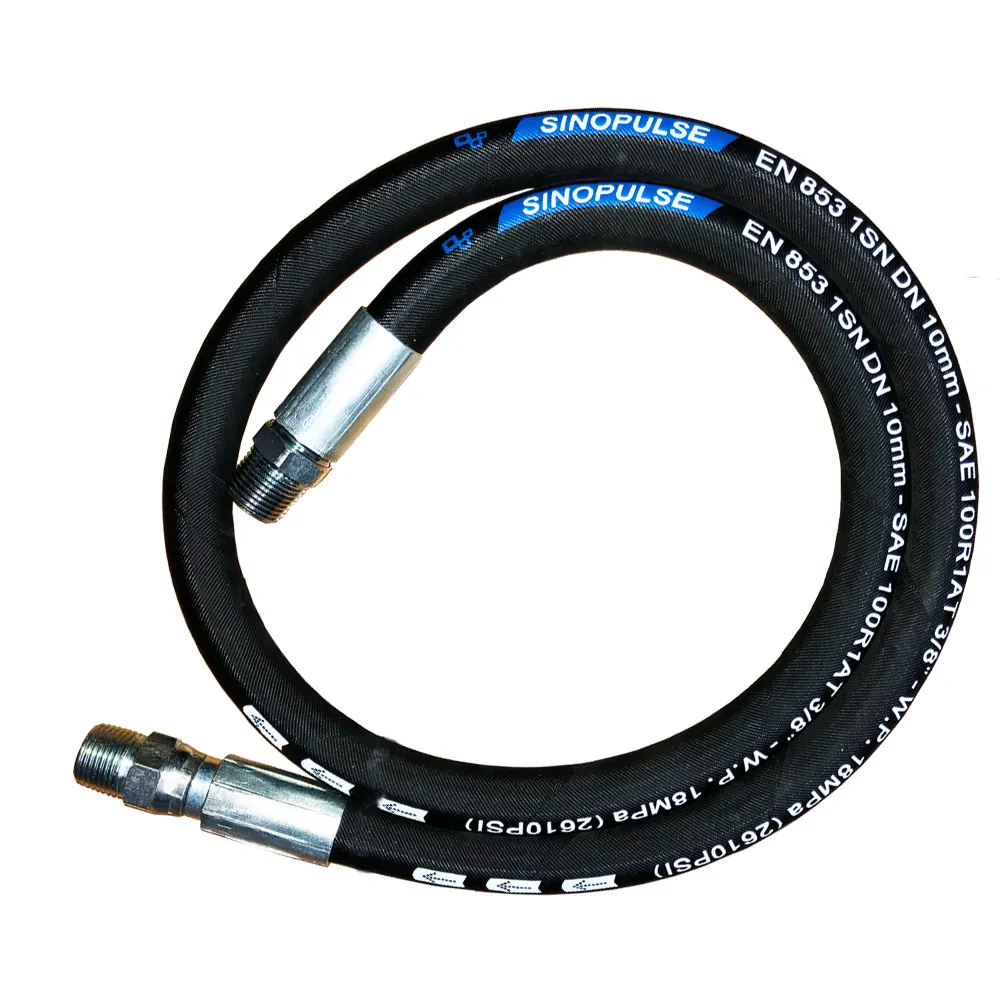
CE-certified rubber hoses are commonly constructed from a combination of synthetic rubbers, reinforcing layers, and protective coverings. Common rubber compounds include Nitrile Butadiene Rubber (NBR) for oil resistance, Ethylene Propylene Diene Monomer (EPDM) for water, steam, and weathering resistance, and Chloroprene Rubber (CR) offering a balance of properties. The choice of rubber compound is dictated by the intended application and the media being conveyed. Reinforcement layers typically comprise high-tensile steel wire (single or multi-spiral) or textile braids (e.g., polyester, aramid) to provide pressure resistance. Coverings are often made of Chlorinated Polyvinyl Chloride (CPVC) or Polyurethane (PU) offering abrasion, ozone, and UV resistance. Manufacturing processes involve several key stages. The inner tube is extruded, followed by the application of reinforcement layers via winding or braiding. An outer cover is then extruded over the reinforcement. Post-extrusion processes include vulcanization (curing) to crosslink the rubber polymers, improving elasticity, strength, and resistance to degradation. Crucially, parameter control during vulcanization – specifically temperature, pressure, and time – is critical to achieving consistent material properties and meeting CE requirements. Batch traceability is maintained throughout the manufacturing process, documenting material origins, processing parameters, and quality control checks. Dimensional accuracy, measured by inside diameter, outside diameter, and wall thickness, is consistently verified using calibrated measurement tools.
Performance & Engineering
The performance of a CE-certified rubber hose is evaluated based on several critical engineering parameters. Burst pressure, defined as the pressure at which the hose fails catastrophically, is a primary safety metric. Working pressure, typically a fraction (e.g., 1/4) of the burst pressure, represents the maximum safe operating pressure. Impulse testing assesses the hose's ability to withstand repeated pressure surges, common in hydraulic systems. Tensile strength, measured according to standards like ISO 6898, determines the hose’s resistance to pulling forces. Elongation at break indicates the hose’s ductility. Environmental resistance is crucial; testing assesses degradation from exposure to ozone, UV radiation, temperature extremes, and chemicals. Chemical compatibility is determined through immersion testing, evaluating swelling, hardening, or cracking of the rubber compound when exposed to specific fluids. Fatigue life, the number of cycles to failure under repeated flexing and pressurization, is assessed through standardized bend tests. Compliance with REACH and RoHS directives is essential, ensuring the hose does not contain restricted substances. The hose’s flexibility radius dictates the minimum bend radius allowable without kinking or compromising performance. Finite Element Analysis (FEA) is frequently employed during the design phase to optimize hose geometry and reinforcement structure for specific application requirements.
Technical Specifications
| Parameter | Unit | Typical Value (NBR Hose, 1" ID) | Test Standard |
|---|---|---|---|
| Working Pressure | Bar | 200 | ISO 6898 |
| Burst Pressure | Bar | 800 | ISO 6898 |
| Temperature Range | °C | -40 to +100 | ISO 6898 |
| Tensile Strength | MPa | 20 | ISO 6898 |
| Elongation at Break | % | 300 | ISO 6898 |
| Inner Diameter | mm | 25.4 | ISO 1307 |
Failure Mode & Maintenance
Rubber hoses are susceptible to various failure modes. Fatigue cracking, initiated by repeated flexing and pressure cycling, often occurs at the bend radius or near fittings. Abrasion, caused by external contact with abrasive surfaces, degrades the outer cover. Ozone cracking, prevalent in environments with high ozone concentrations, manifests as surface cracks in the rubber compound. Chemical degradation occurs when the hose is exposed to incompatible fluids, leading to swelling, softening, or cracking. Improper installation, such as over-tightening fittings or exceeding the minimum bend radius, can cause premature failure. Internal corrosion or erosion can occur due to the media being conveyed. Maintenance practices are critical to maximizing hose life. Regular visual inspections should identify signs of cracking, abrasion, or swelling. Pressure testing should be performed periodically to verify the hose's integrity. Proper storage, away from direct sunlight, ozone sources, and extreme temperatures, is essential. Fittings should be inspected for leaks and corrosion. Hoses should be replaced at recommended intervals, even if no visible damage is apparent, to prevent catastrophic failure. When replacing hoses, ensure compatibility with the conveyed media and operating conditions.
Industry FAQ
Q: What is the significance of the CE marking on a rubber hose, and what specific directives are covered?
A: The CE marking indicates that the rubber hose conforms to all applicable European Union health, safety, and environmental protection standards. Key directives include the Machinery Directive (2006/42/EC) if the hose is part of a machine, the Pressure Equipment Directive (2014/68/EU) for high-pressure applications, REACH (Registration, Evaluation, Authorisation and Restriction of Chemicals) regarding the use of restricted substances, and RoHS (Restriction of Hazardous Substances) limiting the use of certain heavy metals.
Q: How does temperature affect the performance and lifespan of a rubber hose?
A: Temperature significantly impacts rubber hose performance. High temperatures can accelerate degradation, leading to hardening, cracking, and reduced flexibility. Low temperatures can cause the rubber to become brittle and less resilient. Exceeding the specified temperature range can compromise the hose’s pressure rating and lead to premature failure. Consistent temperature cycling can induce fatigue and accelerate crack propagation.
Q: What are the key differences between NBR, EPDM, and CR rubber compounds, and how do these differences impact application suitability?
A: NBR offers excellent resistance to oils, fuels, and hydraulic fluids, making it ideal for automotive and industrial applications involving petroleum-based products. EPDM provides superior resistance to water, steam, ozone, and weathering, making it suitable for outdoor applications and coolant systems. CR exhibits a balance of properties, including resistance to oils, ozone, and weathering, and is often used in general-purpose applications.
Q: What is the role of reinforcement layers in a rubber hose, and how do different reinforcement materials affect pressure resistance and flexibility?
A: Reinforcement layers provide the primary structural support, enabling the hose to withstand internal pressure. Steel wire reinforcement offers the highest pressure resistance but reduces flexibility. Textile braids (e.g., polyester, aramid) provide a good balance of pressure resistance and flexibility. The number of layers and the material properties determine the hose’s overall performance.
Q: What steps should be taken to ensure proper installation of a rubber hose to prevent premature failure?
A: Ensure the hose is compatible with the conveyed media and operating conditions. Use properly sized fittings and avoid over-tightening. Observe the minimum bend radius to prevent kinking. Protect the hose from abrasion and exposure to extreme temperatures or chemicals. Regularly inspect fittings for leaks and corrosion. Proper installation is vital for longevity.
Conclusion
CE-certified rubber hoses are indispensable components in countless industrial processes, demanding a thorough understanding of their material science, manufacturing processes, and performance characteristics. Proper material selection, rigorous quality control during manufacturing, and adherence to relevant industry standards are paramount to ensure safety, reliability, and longevity. Recognizing potential failure modes and implementing proactive maintenance strategies are essential for maximizing hose lifespan and preventing costly downtime.
The future of rubber hose technology will likely focus on developing more sustainable materials, enhancing chemical resistance, and improving fatigue life. Advancements in sensor technology and data analytics will enable predictive maintenance, optimizing hose replacement schedules and minimizing operational disruptions. Continued adherence to evolving regulatory requirements and a commitment to innovation will be crucial for manufacturers and end-users alike.