


buy baili hose factories Technical Performance Analysis
Introduction
Hydraulic hoses are critical components in fluid power systems, facilitating the transmission of pressurized hydraulic fluid to actuators and other machinery. Baili hose factories, specializing in the manufacture of these hoses, represent a significant portion of the global supply chain. This guide focuses on the technical aspects of hydraulic hoses manufactured by Baili, encompassing material science, manufacturing processes, performance characteristics, potential failure modes, and relevant industry standards. The core performance of a hydraulic hose is defined by its ability to withstand high pressures, resist abrasion and corrosion, maintain flexibility under varying temperatures, and ensure leak-free operation. The selection of appropriate hose materials and construction techniques directly impacts the longevity, safety, and efficiency of hydraulic systems. A key pain point in the industry involves ensuring consistent quality control across different manufacturing batches, especially concerning dimensional tolerances and material conformity. Maintaining consistent internal surface smoothness is also crucial to minimize flow restriction and pressure drop.
Material Science & Manufacturing
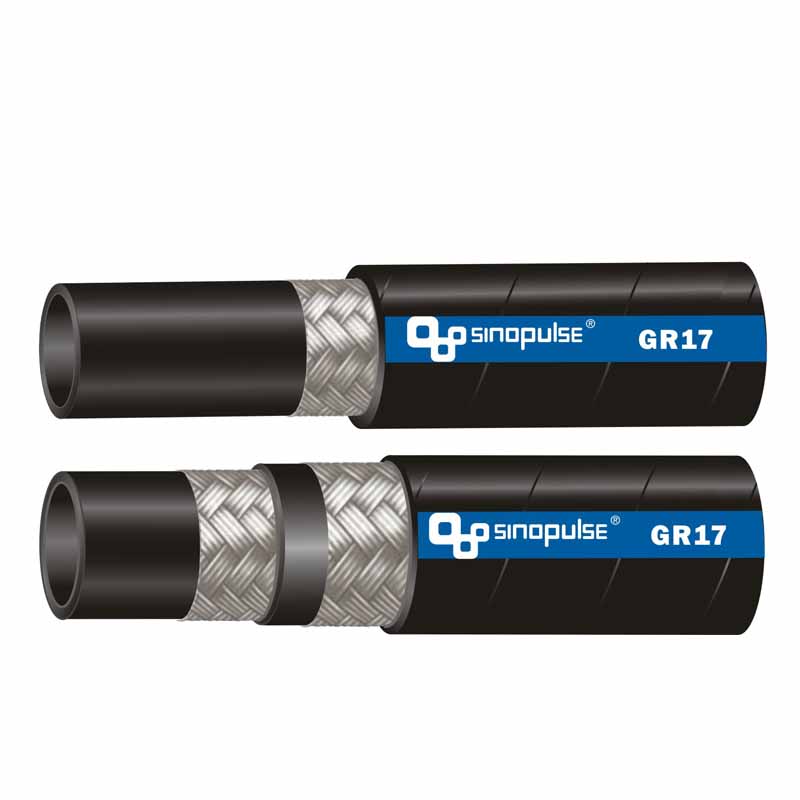
The primary materials utilized in hydraulic hose construction are rubber (typically synthetic, such as nitrile, EPDM, or chloroprene), reinforcing layers (steel wire or high-tensile textile braids), and cover materials (thermoplastic polyurethane (TPU), polyester, or rubber compounds). Nitrile rubber provides excellent resistance to petroleum-based fluids, while EPDM offers superior heat and ozone resistance. Chloroprene provides good all-around performance. The steel wire reinforcement provides the strength to withstand high pressures. The manufacturing process typically involves several stages: inner tube extrusion, reinforcement layer winding or braiding, outer cover extrusion, and final finishing. Parameter control during extrusion is paramount; maintaining consistent wall thickness and material temperature is critical to preventing voids and ensuring uniform material properties. Braiding processes must adhere to precise winding angles and tensions to achieve the specified reinforcement density. Curing (vulcanization) of the rubber components requires careful control of temperature and time to achieve optimal crosslinking and mechanical properties. Variations in the rubber compound formulation – specifically the sulfur content and accelerator types – directly influence the hose's resistance to degradation and its overall lifespan. Furthermore, the purity of the raw rubber materials impacts the final product’s chemical compatibility and resistance to swelling in the presence of hydraulic fluids.
Performance & Engineering
Hydraulic hose performance is governed by several engineering principles, including stress-strain relationships, burst pressure calculations, and fatigue analysis. The burst pressure is determined by the tensile strength of the reinforcement layers and the adhesion between the reinforcement and the rubber matrix. Finite Element Analysis (FEA) is frequently used to model the stress distribution within the hose under various loading conditions, including internal pressure, bending, and axial tension. Environmental resistance is a significant consideration; exposure to extreme temperatures, UV radiation, and corrosive fluids can accelerate degradation. Hydraulic hoses must comply with industry standards such as SAE J517 (hydraulic hose requirements) and ISO 6899 (high-pressure hydraulic hoses). The design must account for pressure spikes and cyclical loading, as these conditions can lead to fatigue failure. Proper hose routing and support are crucial to prevent excessive bending and abrasion. Bend radius calculations are essential to avoid kinking and reduced flow. Furthermore, considerations must be made for fluid compatibility; improper fluid selection can lead to swelling, softening, or degradation of the hose materials. The flow velocity within the hose impacts pressure drop and can induce erosion over time. The allowable wall flexure is directly linked to fatigue life, so limiting excessive bending strain is crucial.
Technical Specifications
| Hose Type | Working Pressure (PSI) | Burst Pressure (PSI) | Temperature Range (°F) |
|---|---|---|---|
| Baili R1AT | 2000 | 8000 | -40 to +212 |
| Baili R2AT | 2610 | 10440 | -40 to +212 |
| Baili R1S | 1500 | 6000 | -40 to +185 |
| Baili R2S | 2220 | 8880 | -40 to +185 |
| Baili 4SH | 3000 | 12000 | -40 to +248 |
| Baili 4SP | 4000 | 16000 | -40 to +248 |
Failure Mode & Maintenance
Common failure modes in hydraulic hoses include burst failure due to exceeding the working pressure, fatigue cracking caused by cyclical loading, abrasion from external sources, and degradation from exposure to incompatible fluids or harsh environments. Burst failures typically occur at the weakest point in the hose construction, often near fittings or areas with imperfections. Fatigue cracking initiates from surface flaws and propagates over time. Abrasion can damage the cover material, exposing the reinforcement layers to corrosion. Degradation manifests as swelling, softening, or hardening of the rubber components, reducing their flexibility and strength. Preventative maintenance is crucial to extend hose lifespan. Regular visual inspections should be conducted to identify signs of abrasion, cracking, or leakage. Hoses should be replaced if they exhibit any signs of damage. Proper hose routing and support are essential to minimize stress and abrasion. Fluid compatibility should be verified before use. Regularly check fittings for tightness and corrosion. Implement a hose management program to track hose age, usage, and maintenance history. Failure analysis techniques, such as fractography, can help identify the root cause of hose failures and prevent future occurrences. Incorrect fitting installation (over-tightening or under-tightening) is a significant contributor to early failure.
Industry FAQ
Q: What is the impact of hose layline markings on traceability and quality control?
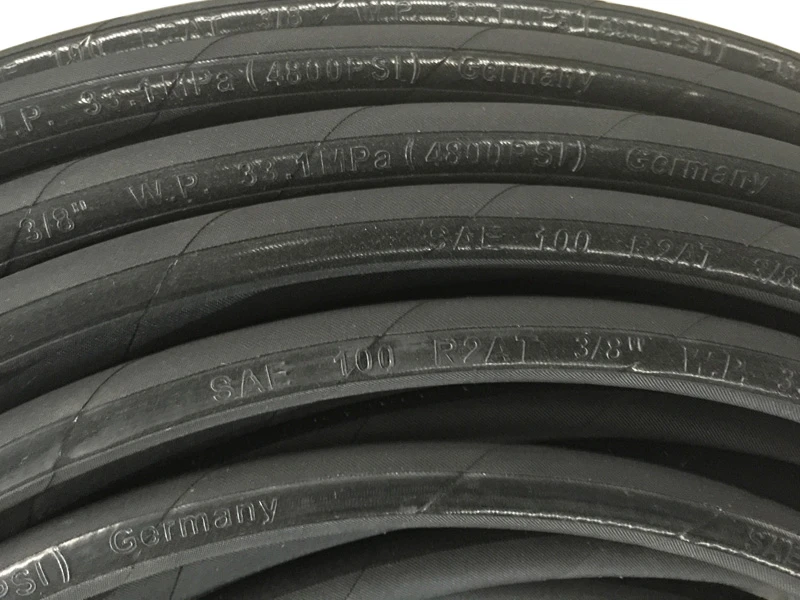
A: Layline markings provide crucial traceability information, including manufacturer identification, hose type, manufacturing date, and working pressure. This information is vital for quality control purposes, allowing for the identification of potential manufacturing defects and the tracking of hose performance over time. Consistent and accurate layline markings are essential for adhering to industry standards and ensuring product accountability.
Q: How does the selection of fitting material (e.g., carbon steel, stainless steel) impact hose performance and corrosion resistance?
A: The fitting material must be compatible with both the hose material and the hydraulic fluid to prevent corrosion and ensure a secure connection. Carbon steel fittings are commonly used for general applications but are susceptible to corrosion in harsh environments. Stainless steel fittings offer superior corrosion resistance but are more expensive. Galvanized steel provides a moderate level of corrosion protection. The choice of fitting material should be based on the specific application requirements and operating conditions.
Q: What are the key considerations when selecting a hose for a pulsating pressure application?
A: Pulsating pressure applications impose significant fatigue stress on the hose. It’s crucial to select a hose with a high fatigue life rating and a robust construction. Reinforcement type (spiral versus braided) and hose material play significant roles. Spiral reinforcement generally offers better fatigue resistance than braided reinforcement. Reducing the amplitude and frequency of the pressure pulsations can also extend hose life. Consider using pulsation dampeners to mitigate the effects of pressure spikes.
Q: How does the internal surface roughness of a hydraulic hose affect fluid flow and pressure drop?
A: A rough internal surface increases friction and turbulence, leading to higher pressure drop and reduced flow efficiency. Smooth bore hoses minimize friction and optimize fluid flow. The roughness is often specified in terms of Ra (average roughness). Maintaining a consistent and smooth internal surface is achieved through precise extrusion and finishing processes. This is particularly important in high-flow applications.
Q: What is the role of skew angle in braided hose construction and how does it affect performance?
A: The skew angle refers to the angle at which the reinforcement braids intersect. A lower skew angle generally provides higher pressure resistance and improved burst strength. However, it can also reduce hose flexibility. A higher skew angle offers greater flexibility but may compromise pressure performance. Optimizing the skew angle is a critical aspect of hose design, balancing pressure capability with flexibility requirements.
Conclusion
The selection and implementation of hydraulic hoses from Baili hose factories require a comprehensive understanding of material science, manufacturing processes, performance characteristics, and potential failure modes. Adhering to industry standards and implementing a robust preventative maintenance program are vital to ensure the safe and reliable operation of hydraulic systems. Careful consideration of operating conditions, fluid compatibility, and pressure requirements is paramount to maximizing hose lifespan and minimizing downtime.
Future advancements in hydraulic hose technology will likely focus on the development of new materials with enhanced properties, such as improved abrasion resistance, higher temperature capabilities, and greater chemical compatibility. The integration of smart sensors into hose construction will enable real-time monitoring of hose condition and predictive maintenance capabilities. Furthermore, advancements in manufacturing techniques, such as additive manufacturing, may enable the creation of customized hose designs tailored to specific application requirements.