


yarn braid r7 hose quotes Performance Analysis
Introduction
Yarn braid R7 hose represents a critical component in hydraulic systems across diverse industrial applications, including construction equipment, agricultural machinery, and manufacturing processes. Designated as R7, this hose denotes a specific performance level defined by the Society of Automotive Engineers (SAE) standard J517, indicating its capability to withstand higher working pressures than lower-rated hoses. The "yarn braid" refers to the reinforcement layer – multiple plies of high-tensile yarn (typically polyester or aramid) spirally wrapped around the inner tube. This reinforcement provides the burst and working pressure ratings, flexibility, and resistance to kinking. Understanding the material science, manufacturing processes, and failure modes of R7 yarn braid hose is crucial for ensuring system reliability, minimizing downtime, and optimizing operational safety. The escalating demands for hydraulic systems with increased efficiency and durability are driving a need for precise specification and quality control of these hoses, placing a premium on a detailed understanding of their characteristics.
Material Science & Manufacturing
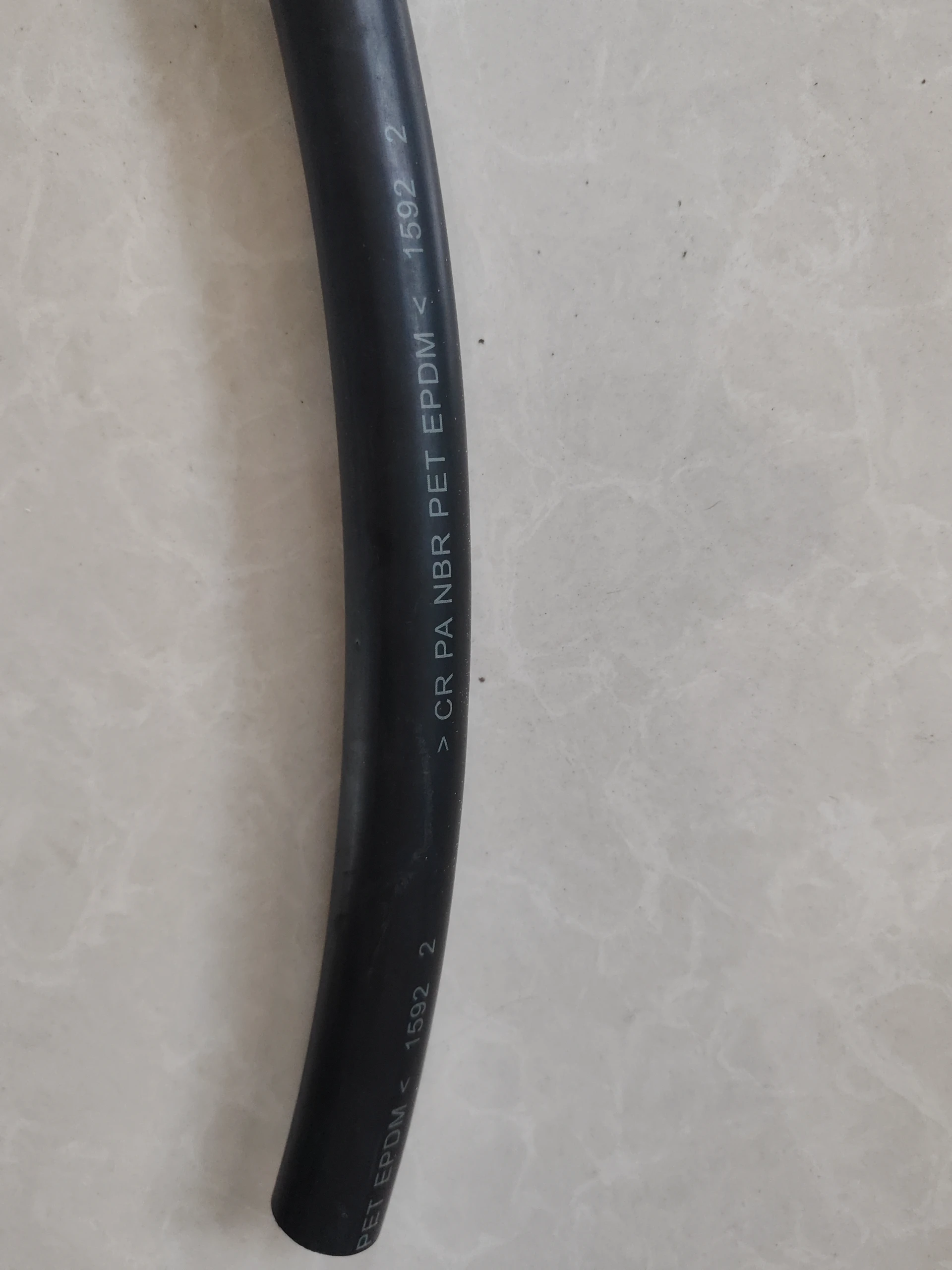
The construction of yarn braid R7 hose involves several key material choices and tightly controlled manufacturing processes. The inner tube is typically constructed from synthetic rubbers, most commonly Nitrile (NBR) for petroleum-based fluids, or Ethylene Propylene Diene Monomer (EPDM) for phosphate ester fluids. NBR offers excellent resistance to abrasion and oil, while EPDM exhibits superior resistance to heat, ozone, and weathering. The reinforcement layer, the defining feature of this hose type, consists of high-tensile strength yarns, usually polyester or aramid. Polyester provides good strength and cost-effectiveness, while aramid (e.g., Kevlar) offers significantly higher tensile strength and cut resistance, resulting in improved pressure ratings and durability. The outer cover is commonly made of Chloroprene (CR), providing abrasion resistance, weathering protection, and resistance to ozone.
Manufacturing begins with extrusion of the inner tube to precise dimensions. The yarn braid is then applied via a high-speed winding machine, ensuring consistent tension and coverage. Multiple layers of yarn are applied to achieve the desired pressure rating, with each ply contributing to the overall structural integrity. Precise control of yarn tension is critical; insufficient tension compromises burst strength, while excessive tension can lead to tube distortion. Following yarn braiding, the outer cover is extruded over the reinforcement layer. Finally, the hose undergoes quality control checks including pressure testing (hydrostatic testing), dimensional verification, and visual inspection for defects. Curing is a critical parameter, optimizing the rubber's cross-linking density for desired flexibility and resistance to degradation.

Performance & Engineering
The performance of yarn braid R7 hose is fundamentally governed by its ability to withstand internal pressure and external stresses without failure. The working pressure is typically rated at a 4:1 safety factor relative to the burst pressure, as defined by SAE J517. Engineering considerations extend beyond static pressure to encompass dynamic loading, including pressure pulsations, bending fatigue, and temperature fluctuations. Bending fatigue is particularly crucial, as repeated flexing induces stress concentration within the reinforcement layer, potentially leading to yarn breakage and hose failure. The bend radius specification (minimum allowable bend radius) is critical; exceeding this radius introduces excessive stress.
Environmental resistance is another critical performance parameter. Exposure to ozone, UV radiation, and extreme temperatures can degrade the rubber compounds, reducing their elasticity and strength. Chemical compatibility is also essential. The inner tube material must be compatible with the hydraulic fluid to prevent swelling, softening, or cracking. R7 hoses are engineered to meet specified temperature ranges, typically -40°C to +100°C for NBR and -40°C to +120°C for EPDM, although specific ratings vary based on manufacturer and compound formulation. Compliance with standards like ISO 14330 ensures the hose's resistance to permeation of hydraulic fluids, minimizing environmental impact and maintaining fluid cleanliness. Finite element analysis (FEA) is increasingly used in the design process to predict stress distributions and optimize hose geometry for improved performance and longevity.
Technical Specifications
| Parameter | Unit | SAE J517 R7 (Typical) | Aramid Reinforced R7 (Typical) |
|---|---|---|---|
| Working Pressure | MPa | 20.7 | 27.6 |
| Burst Pressure | MPa | 82.7 | 110.2 |
| Temperature Range | °C | -40 to +100 | -40 to +120 |
| Inner Tube Material | - | NBR or EPDM | NBR or EPDM |
| Reinforcement | - | Polyester Yarn | Aramid Yarn |
| Cover Material | - | CR | CR |
Failure Mode & Maintenance
Yarn braid R7 hose is susceptible to several failure modes in practical applications. The most common is burst failure, caused by exceeding the working pressure or experiencing a sudden pressure surge. Fatigue cracking, resulting from repeated bending and flexing, initiates at stress concentration points, typically within the reinforcement layer or at the hose ends. Abrasion damage to the outer cover can expose the reinforcement to corrosion or UV degradation, accelerating failure. Chemical attack from incompatible fluids can cause swelling, softening, or cracking of the inner tube. Delamination, the separation of reinforcement layers, reduces the hose's ability to withstand pressure. Oxidation of the rubber compounds due to prolonged exposure to oxygen and ozone leads to embrittlement and cracking.
Preventative maintenance is crucial for maximizing hose lifespan. Regular visual inspections should be conducted to identify abrasion, cracking, or swelling. Proper hose routing and support are essential to minimize bending stress. Avoid sharp bends and ensure adequate clearance from moving parts. Fluid contamination should be minimized through filtration to prevent internal damage. Hose assemblies should be periodically pressure tested to verify their integrity. When replacing hoses, ensure the new hose is compatible with the hydraulic fluid and operating conditions. Proper crimping of hose ends is vital to maintain a secure and leak-free connection. Documenting hose replacement dates and inspection findings facilitates proactive maintenance planning.
Industry FAQ
Q: What is the difference between polyester and aramid reinforcement in R7 hose, and when should I specify one over the other?
A: Aramid reinforcement offers significantly higher tensile strength and cut resistance compared to polyester. While polyester provides adequate performance for most applications and is more cost-effective, aramid is preferred for high-pressure systems, applications with demanding bend cycles, or environments where cut or abrasion resistance is critical. Aramid provides greater safety margin and longer service life in these challenging conditions.
Q: How does temperature affect the performance of R7 hose, and what are the limitations?
A: Temperature affects the rubber compounds' elasticity and strength. High temperatures can cause softening and reduced pressure capacity, while low temperatures can lead to embrittlement and cracking. The specified temperature range for R7 hose (typically -40°C to +100°C for NBR, and wider for EPDM) represents the operating limits. Exceeding these limits can significantly reduce hose lifespan and increase the risk of failure.
Q: What are the key considerations for selecting the correct inner tube material (NBR vs. EPDM)?
A: The choice between NBR and EPDM depends on the hydraulic fluid compatibility. NBR is generally preferred for petroleum-based fluids due to its excellent oil resistance. EPDM is the better choice for phosphate ester fluids, water-glycol fluids, and applications requiring superior resistance to heat, ozone, and weathering. Always consult a fluid compatibility chart to ensure the inner tube material is compatible with the specific fluid being used.
Q: What is the impact of improper hose routing and bend radius on hose life?
A: Improper hose routing and exceeding the minimum bend radius induce excessive stress within the reinforcement layer, leading to fatigue cracking and premature failure. Ensure hoses are routed to avoid sharp bends, contact with hot surfaces, or abrasion against moving parts. Provide adequate support to prevent sagging and minimize bending stress.
Q: How often should R7 hose assemblies be inspected and pressure tested?
A: The inspection frequency depends on the severity of the application and operating conditions. A visual inspection should be conducted at least annually, and more frequently in demanding environments. Pressure testing should be performed every 12-24 months, or as recommended by the hose manufacturer. Any signs of damage, such as cracking, abrasion, or swelling, warrant immediate replacement of the hose assembly.
Conclusion
Yarn braid R7 hose represents a vital, yet often overlooked, component in hydraulic power transmission systems. A thorough understanding of the materials science, manufacturing processes, and engineering principles governing its performance is essential for ensuring system reliability, minimizing downtime, and upholding operational safety. The selection of appropriate materials, adherence to proper installation practices, and implementation of a robust preventative maintenance program are all critical factors in maximizing hose lifespan and preventing catastrophic failures.
Looking forward, advancements in material science, such as the development of new synthetic rubber compounds with improved temperature and chemical resistance, will continue to enhance the performance and durability of R7 hose. The increasing adoption of predictive maintenance techniques, leveraging sensor data and analytical models, will enable proactive identification of potential failure points and optimized maintenance schedules. Continued adherence to industry standards and rigorous quality control procedures will remain paramount in ensuring the consistent performance and safety of these critical components.