


teflon/ptfe hose supplier Performance Analysis

Introduction
Polytetrafluoroethylene (PTFE) hoses, commonly referred to as Teflon hoses, are a critical component in numerous industrial applications demanding chemical resistance, high-temperature performance, and non-stick properties. As a leading teflon/ptfe hose supplier, we focus on delivering high-performance fluid transfer solutions. These hoses are integral to industries including chemical processing, pharmaceuticals, food and beverage, automotive, and aerospace, facilitating the safe and efficient transfer of corrosive materials, high-purity fluids, and extreme temperature substances. Their construction generally involves a PTFE inner tube, often reinforced with braided materials like stainless steel or fiber, to enhance pressure capabilities and prevent kinking. The demand for PTFE hoses is driven by increasing regulatory pressures regarding fluid containment and environmental safety, coupled with advancements in process engineering requiring materials capable of withstanding harsh conditions. Understanding the nuances of PTFE hose construction, performance characteristics, and potential failure modes is paramount for ensuring system reliability and minimizing operational downtime.
Material Science & Manufacturing
The core material, PTFE, is a synthetic fluoropolymer with exceptional chemical inertness, stemming from the strong carbon-fluorine bonds within its molecular structure. Raw PTFE resin, typically produced through emulsion or suspension polymerization of tetrafluoroethylene, exhibits a high molecular weight and is inherently hydrophobic. Manufacturing PTFE hoses begins with the extrusion of the PTFE resin into a seamless tube. This process is critically controlled to maintain consistent wall thickness and minimize imperfections. Reinforcement braiding, frequently utilizing 304 or 316 stainless steel, is then applied over the extruded tube. The braiding angle and wire diameter directly impact the hose’s burst pressure and flexibility. Post-braiding, sintering is performed at temperatures ranging from 380°C to 450°C (716°F to 842°F) to fuse the PTFE particles, improving mechanical strength and dimensional stability. Critical parameters during sintering include temperature ramp rate, hold time, and atmospheric control to prevent degradation. Further processing may involve flaring, fitting attachment (using crimping or bonding techniques), and rigorous quality control testing, including pressure testing, leak testing, and dimensional inspection. Material compatibility is also crucial; for example, certain elastomers used in fitting construction must be compatible with both the PTFE and the conveyed fluid to prevent swelling or degradation.
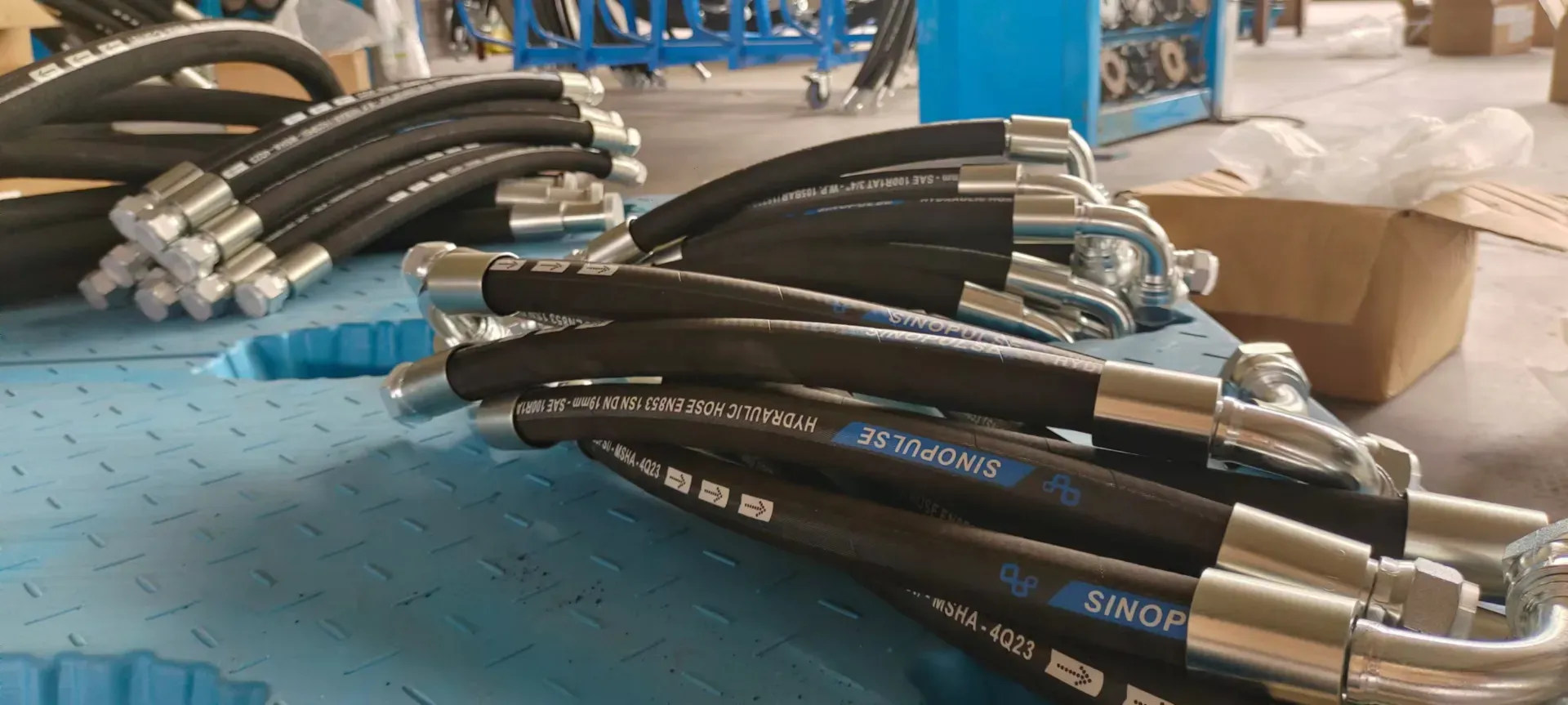
Performance & Engineering
PTFE hoses demonstrate superior performance in demanding applications primarily due to their unique material properties. Their resistance to a broad spectrum of chemicals, including strong acids, bases, and solvents, minimizes corrosion and contamination risks. Operational temperature ranges typically extend from -200°C (-328°F) to +260°C (+500°F), allowing for use in both cryogenic and high-temperature processes. However, PTFE exhibits a relatively low tensile strength compared to other polymers, necessitating reinforcement for high-pressure applications. Force analysis under pressure considers hoop stress within the tube wall and axial stress on the reinforcement braid. The braid’s contribution to pressure containment is calculated using appropriate formulas considering braid angle, wire diameter, and material properties. Environmental resistance is another key factor; prolonged exposure to UV radiation can cause surface degradation, reducing its chemical resistance. Compliance requirements often dictate the use of specific PTFE formulations and reinforcement materials to meet industry standards, such as FDA regulations for food contact applications or USP Class VI certification for biocompatibility. Furthermore, electrostatic discharge (ESD) can be a concern when handling flammable fluids, requiring the use of conductive PTFE hoses with grounded fittings.
Technical Specifications
| Parameter | Unit | Typical Value (Standard Grade PTFE) | Value (Convoluted PTFE) |
|---|---|---|---|
| Operating Pressure (Burst) | PSI | 4000 | 3000 |
| Operating Temperature | °C | -200 to +260 | -200 to +260 |
| Tensile Strength | MPa | 20-35 | 15-25 |
| Elongation at Break | % | 100-300 | 200-400 |
| Chemical Resistance | Rating (1-5, 5=Excellent) | 5 | 5 |
| Dielectric Strength | kV/mm | 100 | 100 |
Failure Mode & Maintenance
PTFE hose failure can manifest in several ways. Fatigue cracking, especially in braided reinforcements, occurs under cyclical pressure and bending, leading to eventual rupture. Delamination, the separation of PTFE from the reinforcement braid, can be caused by improper bonding during manufacturing or exposure to incompatible chemicals. Creep, or slow deformation under constant stress, is more prevalent at higher temperatures and can lead to leaks. Permeation, the diffusion of fluids through the PTFE wall, is a concern when handling highly volatile substances. Oxidation at elevated temperatures, particularly in the presence of oxygen, can degrade the PTFE, reducing its chemical resistance. Maintenance primarily involves visual inspection for cracks, kinks, abrasions, and swelling. Regular pressure testing is recommended for critical applications. Proper storage is essential; avoid exposure to direct sunlight and extreme temperatures. When replacing a hose, ensure compatibility with the conveyed fluid and operating conditions. Correct installation practices, including proper torqueing of fittings, are crucial to prevent premature failure. Avoid sharp bends as they contribute to fatigue cracking. Implementing a preventative maintenance schedule based on operating hours and fluid characteristics can significantly extend hose lifespan.
Industry FAQ
Q: What differentiates a convoluted PTFE hose from a smooth bore hose and when would I choose one?
A: Convoluted PTFE hoses feature a ribbed inner core, providing increased flexibility, particularly for tight bends and dynamic applications. While smooth bore hoses offer lower flow resistance and are preferred for laminar flow, convoluted hoses are better suited for applications requiring frequent movement or routing in confined spaces. The pressure rating is typically lower in convoluted hoses due to the reduced wall thickness in the rib areas.
Q: Can PTFE hose be used with abrasive slurries?
A: While PTFE exhibits a low coefficient of friction, prolonged exposure to highly abrasive slurries can cause wear on the inner tube surface. Reinforcement braid materials can also be susceptible to erosion. For abrasive applications, consider using PTFE hoses with thicker walls or incorporating abrasion-resistant coatings.
Q: What impact does the braid material have on hose performance?
A: The braid material significantly influences pressure rating, flexibility, and corrosion resistance. Stainless steel (304/316) provides high strength and chemical compatibility, while other materials like monel may be used for exceptionally corrosive environments. Braid coverage (the percentage of the hose wall covered by the braid) also affects performance; higher coverage provides greater burst strength.
Q: What are the implications of using incompatible fitting materials with a PTFE hose?
A: Incompatible fitting materials, such as elastomers that swell in contact with the conveyed fluid, can compromise the seal and lead to leaks. The fitting material must be chemically resistant to both the PTFE and the fluid being transported. Proper material selection is crucial for maintaining system integrity.
Q: How does temperature affect the performance of a PTFE hose?
A: While PTFE boasts a wide temperature range, exceeding the recommended limits can significantly degrade its mechanical properties. High temperatures can accelerate creep and oxidation, while low temperatures can reduce flexibility. Maintaining operation within the specified temperature range is critical for ensuring long-term performance.
Conclusion
PTFE hoses represent a sophisticated fluid transfer solution, offering exceptional chemical resistance, temperature stability, and non-stick properties. The selection and implementation of these hoses require a thorough understanding of material science, manufacturing processes, and potential failure modes. As a teflon/ptfe hose supplier, we prioritize providing high-quality products and expert technical support to meet the diverse needs of our clients.
Ongoing advancements in PTFE formulations and manufacturing techniques are continually expanding the capabilities of these hoses. Future developments may focus on enhancing abrasion resistance, reducing permeation rates, and improving sustainability through the use of recycled materials. Proper maintenance and adherence to industry standards are essential for maximizing hose lifespan and ensuring safe and reliable operation.