


teflon hose ss304 Performance Analysis

Introduction
Teflon hose with a stainless steel 304 braid, commonly referred to as PTFE hose with SS304 reinforcement, represents a critical fluid transfer component across diverse industrial applications. Positioned within the fluid conveyance chain, it serves as a flexible alternative to rigid metal tubing, offering superior chemical resistance and temperature handling capabilities. These hoses are utilized in environments demanding high purity and corrosion resistance, including chemical processing, pharmaceutical manufacturing, automotive fuel systems, aerospace hydraulics, and food & beverage processing. Core performance characteristics center around maintaining fluid integrity, withstanding high pressures, resisting permeation, and providing long-term reliability despite exposure to harsh operating conditions. A key industry pain point lies in selecting a hose that balances flexibility, pressure rating, chemical compatibility, and cost-effectiveness; failures stemming from improper material selection lead to costly downtime and potential safety hazards.
Material Science & Manufacturing
The construction of Teflon hose SS304 revolves around two primary materials: Polytetrafluoroethylene (PTFE), commonly known as Teflon, and 304-grade stainless steel. PTFE possesses exceptional chemical inertness, a wide temperature range (-200°C to +260°C), and a very low coefficient of friction. Its manufacturing begins with the polymerization of tetrafluoroethylene monomer, resulting in a fluoropolymer with remarkable properties. 304 stainless steel is an austenitic chromium-nickel alloy, exhibiting excellent corrosion resistance, weldability, and ductility. The manufacturing process typically involves extrusion of the PTFE inner core, followed by the braiding of the SS304 wire. Parameter control is crucial at each stage. Extrusion temperature and speed directly impact PTFE wall thickness and uniformity. Braid density – measured in ends per inch – dictates the hose’s pressure handling capability. Improper braid tension can lead to distortion and premature failure. Post-braiding processes include sintering (for porous PTFE cores to enhance dimensional stability) and often a surface treatment to improve adhesion between the PTFE and SS304 layers. Quality control focuses on dimensional accuracy, burst pressure testing, and chemical resistance verification.
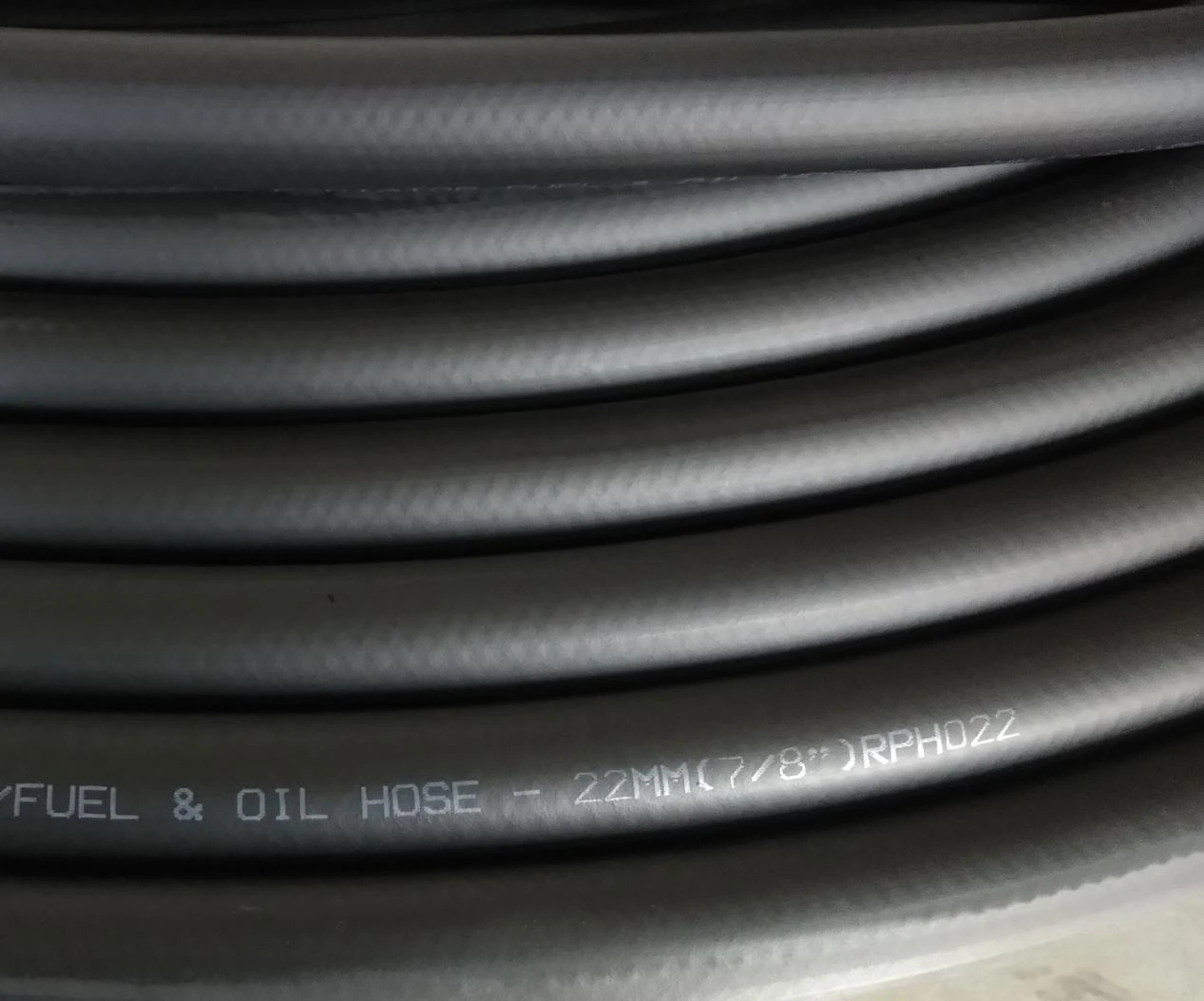
Performance & Engineering
Performance of Teflon hose SS304 is governed by several engineering principles. The SS304 braid provides burst strength, mitigating the inherent weakness of PTFE under tensile stress. Force analysis involves calculating hoop stress in the PTFE liner under internal pressure, considering factors like hose diameter and wall thickness. Environmental resistance is paramount; PTFE’s chemical inertness protects against corrosion from aggressive fluids, while the SS304 braid resists oxidation in many environments. However, prolonged exposure to chlorides can induce pitting corrosion in the 304 SS. Compliance requirements vary by industry. For food & beverage applications, hoses must meet FDA 21 CFR 177.1550 standards regarding food contact safety. In aerospace, compliance with AMS 7268 or equivalent specifications is necessary. Hydraulic systems operating at high pressures require hoses to comply with SAE J526 standards for pressure testing and performance. The hose’s flexibility is characterized by its bend radius; exceeding the minimum bend radius introduces stress concentrations, reducing its lifespan. Permeation rates, particularly for volatile organic compounds (VOCs), are critical in applications requiring environmental protection. Finite element analysis (FEA) is frequently employed to optimize hose design for specific pressure and temperature conditions.
Technical Specifications
| Parameter | Unit | Typical Value (Range) | Test Standard |
|---|---|---|---|
| Inner Diameter | mm | 6 - 100 | ISO 1307 |
| Outer Diameter | mm | 10 - 120 | ISO 1307 |
| Working Pressure | MPa | 1.7 – 20.7 | SAE J526 |
| Burst Pressure | MPa | 6.9 – 69 | SAE J526 |
| Temperature Range | °C | -196 to +260 | ASTM D349 |
| Braid Material | - | 304 Stainless Steel | ASTM A975 |
Failure Mode & Maintenance
Teflon hose SS304 is susceptible to several failure modes. Fatigue cracking in the SS304 braid occurs due to repeated flexing and pressure cycling, especially near connection points. Delamination, the separation of the PTFE liner from the SS304 braid, can result from improper bonding during manufacturing or exposure to extreme temperatures and pressures. Permeation can lead to fluid loss over time, particularly with VOCs. Chemical attack can degrade the PTFE liner if exposed to incompatible substances (e.g., molten alkali metals). Oxidation of the SS304 braid can occur in high-temperature environments with limited oxygen availability. For preventative maintenance, visual inspection for cuts, abrasions, or swelling is essential. Regularly check connection points for leaks or corrosion. Avoid exceeding the specified pressure and temperature limits. When storing, protect the hose from direct sunlight and extreme temperatures. Proper routing and support are critical to prevent excessive bending and stress. If a hose exhibits signs of degradation, it should be replaced immediately. Periodic pressure testing can help identify weaknesses before catastrophic failure.
Industry FAQ
Q: What is the impact of varying braid densities on the hose’s pressure rating?
A: Higher braid densities directly correlate with increased pressure ratings. A greater number of interwoven wires provides more reinforcement to the PTFE liner, resisting expansion under internal pressure. However, increased braid density also reduces hose flexibility. The optimal braid density is a compromise between pressure handling capability and flexibility requirements, dictated by the specific application.
Q: Can Teflon hose SS304 be used with abrasive fluids or slurries?
A: While PTFE possesses a low coefficient of friction, prolonged exposure to highly abrasive fluids or slurries can cause erosion of the PTFE liner, leading to premature failure. In such cases, a harder liner material or a specialized hose construction with enhanced abrasion resistance may be necessary. Careful consideration of particle size, velocity, and fluid composition is crucial.
Q: What are the implications of using dissimilar metals in connection fittings with SS304 braided hoses?
A: Using dissimilar metals in contact with the SS304 braid can induce galvanic corrosion, particularly in the presence of an electrolyte. This corrosion weakens the connection and can lead to leaks. It's crucial to use compatible fitting materials, such as other stainless steel alloys, or to employ insulating materials to prevent direct contact between dissimilar metals.
Q: How does temperature affect the working pressure rating of Teflon hose SS304?
A: Working pressure ratings typically decrease with increasing temperature. As temperature rises, the tensile strength of both the PTFE liner and the SS304 braid decreases, reducing the hose's ability to withstand internal pressure. Pressure derating charts, provided by the manufacturer, specify the allowable working pressure at different temperatures. Operating beyond these limits can lead to burst failure.
Q: What is the recommended method for cutting Teflon hose SS304 without damaging the braid?
A: Cutting Teflon hose SS304 requires a sharp, clean cut to prevent fraying of the braid and damage to the PTFE liner. A rotary cutting tool with a Teflon-coated blade is recommended. Avoid using abrasive cutting methods, such as sawing, as they can generate heat and damage the hose. After cutting, carefully inspect the end to ensure the braid is intact and the PTFE liner is not compromised.
Conclusion
Teflon hose SS304 stands as a versatile and reliable solution for a broad spectrum of fluid transfer applications demanding chemical resistance, temperature stability, and pressure handling capabilities. Its core performance is inextricably linked to the material properties of PTFE and 304 stainless steel, coupled with precise manufacturing controls. Selecting the appropriate hose specification – considering inner diameter, pressure rating, temperature range, and chemical compatibility – is paramount to ensuring long-term operational integrity.
Future trends will likely focus on advancements in PTFE formulations to enhance abrasion resistance and reduce permeation rates, alongside the development of more sophisticated braiding techniques to improve flexibility and burst strength. Continued adherence to stringent industry standards (SAE, ISO, ASTM) and a commitment to rigorous quality control will remain essential for maintaining the reliability and safety of Teflon hose SS304 in critical applications.