


r8 twin hose supplier Performance Analysis

Introduction
R8 twin hose assemblies represent a critical component in hydraulic systems across diverse industrial applications. These hoses, characterized by their standardized R8 fitting configuration, facilitate the transmission of hydraulic fluid under pressure. Their significance lies in providing reliable fluid conveyance in machinery operating in sectors such as construction, agriculture, material handling, and manufacturing. Unlike simpler hose constructions, twin hose assemblies inherently provide redundancy and potentially separate flow paths for different hydraulic functions – return lines, pilot lines, and primary pressure lines can all be bundled. This guide provides an in-depth technical examination of R8 twin hose assemblies, covering materials, manufacturing, performance characteristics, failure modes, and relevant industry standards. A primary industry pain point involves premature hose failure due to improper material selection for the operating fluid, exceeding pressure ratings, or inadequate protection against abrasion and environmental factors. Understanding these risks is crucial for informed procurement and effective system maintenance.
Material Science & Manufacturing
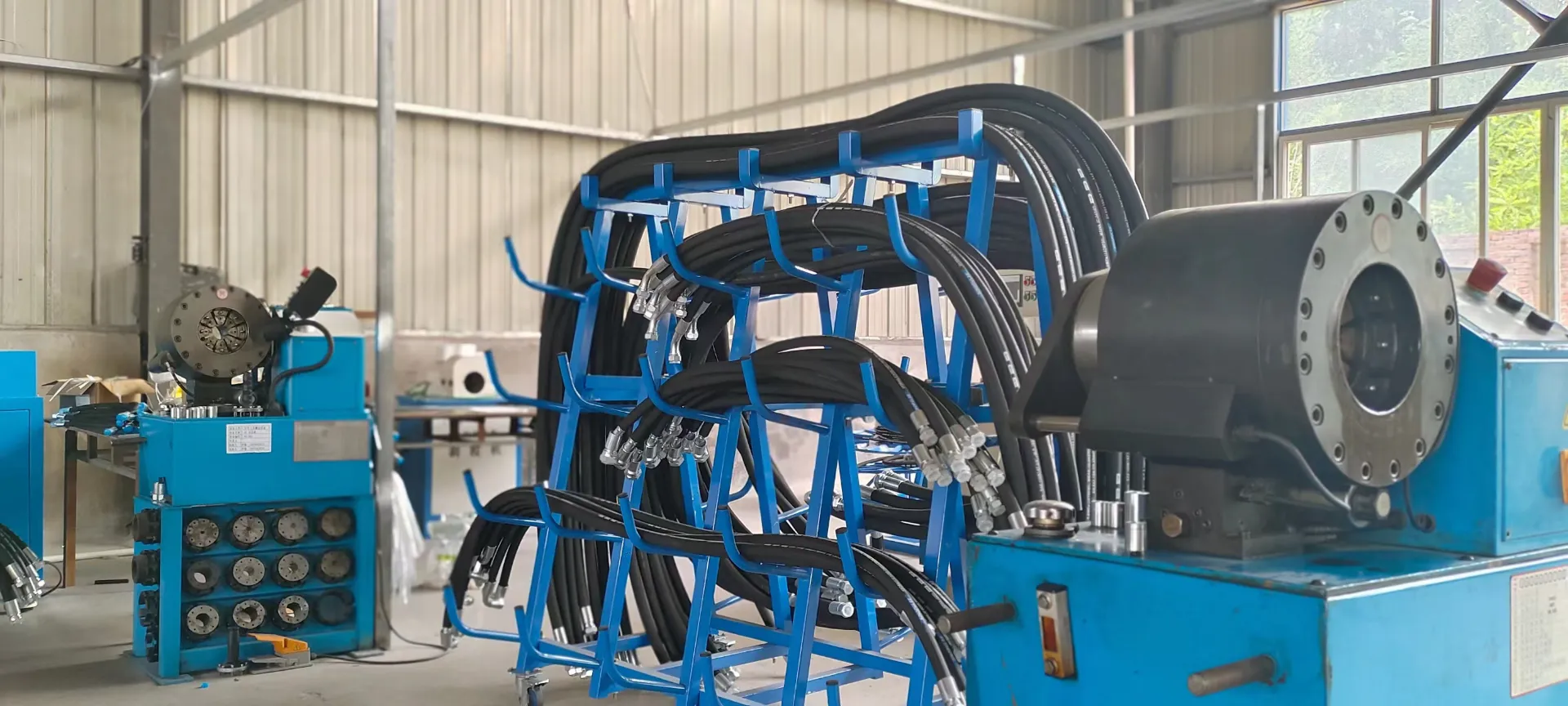
R8 twin hose assemblies are typically constructed from a combination of materials designed to withstand high pressures, temperature fluctuations, and chemical exposure. The core tube is commonly composed of synthetic rubber, most frequently nitrile rubber (NBR) for petroleum-based hydraulic fluids. NBR offers excellent resistance to abrasion and is cost-effective. For phosphate ester fluids, specialized materials like EPDM (ethylene propylene diene monomer) rubber are required due to NBR’s incompatibility. Reinforcement layers, critical for pressure containment, utilize multiple plies of high-tensile steel wire spiraled or braided around the inner tube. The number and construction of these layers directly correlate with the hose’s working pressure rating. The outer cover generally utilizes a synthetic rubber compound, often polyurethane, providing resistance to oil, abrasion, ozone, and weathering. Manufacturing processes involve extrusion of the inner tube and outer cover, followed by precise winding of the reinforcement layers. Fitting attachment, crucial for leak-free operation, utilizes mechanical crimping processes applying controlled force to securely attach the R8 fittings. Critical parameters during manufacturing include consistent rubber compound mixing ratios, precise wire winding tension, and accurate crimp dimensions. Dimensional accuracy of the fitting seal is verified through rigorous leak testing using pressurized water or air. The quality of the steel wire, particularly its tensile strength and fatigue resistance, is paramount for ensuring hose longevity and preventing catastrophic failure.
Performance & Engineering
The performance of R8 twin hose assemblies is governed by several key engineering principles. Burst pressure, working pressure, and impulse pressure ratings are critical specifications. Burst pressure represents the point at which the hose will rupture, while working pressure is a fraction of the burst pressure, representing the maximum allowable continuous operating pressure. Impulse pressure refers to the hose’s ability to withstand pressure surges and spikes. Force analysis involves calculating the hoop stress within the hose wall under internal pressure, determining the required reinforcement layer strength. Environmental resistance considerations include temperature range – NBR typically operates between -40°C and 100°C, while EPDM extends this range. Fluid compatibility is paramount; incompatible fluids can cause swelling, degradation, and ultimately, hose failure. Bend radius is another critical factor; exceeding the minimum bend radius induces stress concentration and accelerates fatigue cracking. Compliance requirements, such as those stipulated by SAE J517 (hydraulic hose) and ISO 6898 (hydraulic fluid power – hose assemblies) must be met to ensure safety and reliability. Furthermore, the assembly’s resistance to vibration and flexing under load needs to be considered to prevent premature fatigue failure. Static dissipation and electrical conductivity are increasingly important in certain applications to prevent static build-up and potential ignition hazards.
Technical Specifications
| Parameter | Units | Typical Value (NBR, Steel Wire Reinforcement) | Tolerance |
|---|---|---|---|
| Working Pressure | PSI | 3000 | ±10% |
| Burst Pressure | PSI | 9000 | ±5% |
| Inner Diameter | inches | 0.5 | ±0.01 |
| Outer Diameter | inches | 0.75 | ±0.02 |
| Temperature Range | °F | -40 to 212 | N/A |
| Reinforcement Layers | Number | 4 | ±1 |
Failure Mode & Maintenance
R8 twin hose assemblies are susceptible to several failure modes. Fatigue cracking, resulting from repeated flexing and pressure cycling, is a common cause, often initiating at the fitting crimp or at points of high stress concentration. Abrasion, caused by external contact with abrasive surfaces, degrades the outer cover and eventually exposes the reinforcement layers, leading to corrosion and subsequent failure. Chemical degradation occurs when the hose material is exposed to incompatible fluids, causing swelling, softening, and loss of strength. Permeation, the diffusion of fluid through the hose wall, can occur with certain fluids and can lead to pressure loss and environmental contamination. Fitting failure, including corrosion of the fitting material or loosening of the crimp, results in leaks and potential hose rupture. Maintenance procedures include regular visual inspection for signs of abrasion, cracking, or swelling. Pressure testing should be conducted periodically to verify the integrity of the hose and fittings. Proper hose routing and support are crucial to prevent excessive bending and abrasion. Regularly check for fluid leaks around fittings. Replacement of the hose assembly is recommended when any signs of damage or degradation are observed. Avoid kinking the hose as this creates a point of high stress and can lead to premature failure. Ensure the hose is protected from extreme temperatures and direct sunlight.
Industry FAQ
Q: What is the impact of exceeding the minimum bend radius on hose life?
A: Exceeding the minimum bend radius induces significant stress concentration within the hose wall, particularly at the inner radius. This stress accelerates fatigue cracking, drastically reducing the hose’s service life and increasing the risk of catastrophic failure. The severity of the impact is proportional to the degree to which the minimum bend radius is violated.
Q: How does fluid temperature affect hose performance and longevity?
A: Elevated temperatures accelerate the degradation of rubber compounds, leading to loss of elasticity and reduced pressure resistance. Low temperatures can cause the rubber to become brittle and more susceptible to cracking. Operating outside the specified temperature range significantly diminishes hose performance and lifespan.
Q: What are the key differences between NBR and EPDM hose materials?
A: NBR is the standard choice for petroleum-based hydraulic fluids offering good abrasion resistance and cost-effectiveness. EPDM is specifically designed for phosphate ester fluids, offering superior compatibility, as NBR rapidly degrades in the presence of phosphate esters. EPDM also exhibits better resistance to ozone and weathering.
Q: What is the role of the steel wire reinforcement in an R8 twin hose?
A: The steel wire reinforcement is the primary component responsible for withstanding the internal pressure of the hydraulic fluid. The number and construction (braided or spiraled) of the wire layers directly determine the hose’s pressure rating. Higher pressures require more reinforcement layers or stronger wire materials.
Q: How often should R8 twin hoses be replaced as a preventative maintenance measure?
A: Replacement frequency depends on the application’s severity and operating conditions. A general guideline is to replace hoses every 3-5 years, or sooner if visual inspection reveals any signs of damage or degradation. Critical applications or those operating under harsh conditions may require more frequent replacement.
Conclusion
R8 twin hose assemblies are a vital component in numerous hydraulic systems, demanding careful consideration of material selection, manufacturing precision, and operational parameters. Understanding the interplay between pressure ratings, temperature limits, fluid compatibility, and potential failure modes is critical for ensuring reliable and safe operation. Proper maintenance, including regular inspection and timely replacement, significantly extends hose lifespan and minimizes the risk of costly downtime.
Future developments in hose technology will likely focus on incorporating advanced materials with improved chemical resistance and higher temperature capabilities. Smart hose assemblies, equipped with sensors to monitor pressure, temperature, and internal leakage, will further enhance predictive maintenance capabilities and improve system reliability. The adoption of more sustainable materials and manufacturing processes will also become increasingly important in the evolving industrial landscape.