


oem sae hydraulic hose products Performance Analysis
Introduction
OEM SAE hydraulic hose products represent a critical component in fluid power systems across diverse industries, including construction, agriculture, manufacturing, and transportation. These hoses are engineered to convey hydraulic fluid under high pressure, facilitating the transmission of power in applications ranging from heavy machinery operation to aircraft control systems. The "SAE" designation refers to standards established by the Society of Automotive Engineers, ensuring interchangeability, performance consistency, and safety. OEM (Original Equipment Manufacturer) hoses are specifically produced for integration directly into larger systems, demanding stringent quality control and adherence to precise specifications. Core performance characteristics include burst pressure, working pressure, temperature resistance, and fluid compatibility. The selection and implementation of appropriate hydraulic hose are crucial to system reliability, minimizing downtime, and preventing catastrophic failures. The industry currently faces challenges in material sourcing, evolving fluid technologies demanding broader chemical compatibility, and the need for lighter-weight, high-strength hose constructions.
Material Science & Manufacturing
Hydraulic hoses are typically constructed from multiple layers, each serving a distinct function. The inner tube, directly contacting the fluid, is commonly composed of synthetic rubbers such as nitrile (NBR), ethylene propylene diene monomer (EPDM), or fluorocarbon (FKM/Viton). NBR provides excellent resistance to petroleum-based fluids, while EPDM excels in applications involving phosphate ester hydraulic fluids and high-temperature resistance. FKM offers superior resistance to a broad spectrum of aggressive chemicals and extreme temperatures, albeit at a higher cost. Reinforcement layers are crucial for withstanding internal pressure. These typically consist of multiple braids or spirals of high-tensile steel wire, or synthetic fiber such as aramid. Steel wire provides the highest pressure capacity and abrasion resistance, while aramid offers a lighter weight alternative with good strength properties. The outer cover, providing environmental protection and abrasion resistance, is often composed of synthetic rubbers like chloroprene (CR) or polyurethane (PU). CR offers good all-around performance, while PU excels in abrasion resistance and oil resistance. Manufacturing processes vary depending on hose type. Braided hoses are created by helically winding steel wire over a mandrel, followed by vulcanization to bond the layers. Spiral-wound hoses utilize a continuous wire coil wrapped around a mandrel, also followed by vulcanization. Extrusion is used to form the inner tube and outer cover. Critical parameters during manufacturing include consistent rubber compound mixing, precise wire tension during braiding/winding, accurate vulcanization temperature and time control, and rigorous dimensional inspection.

Performance & Engineering
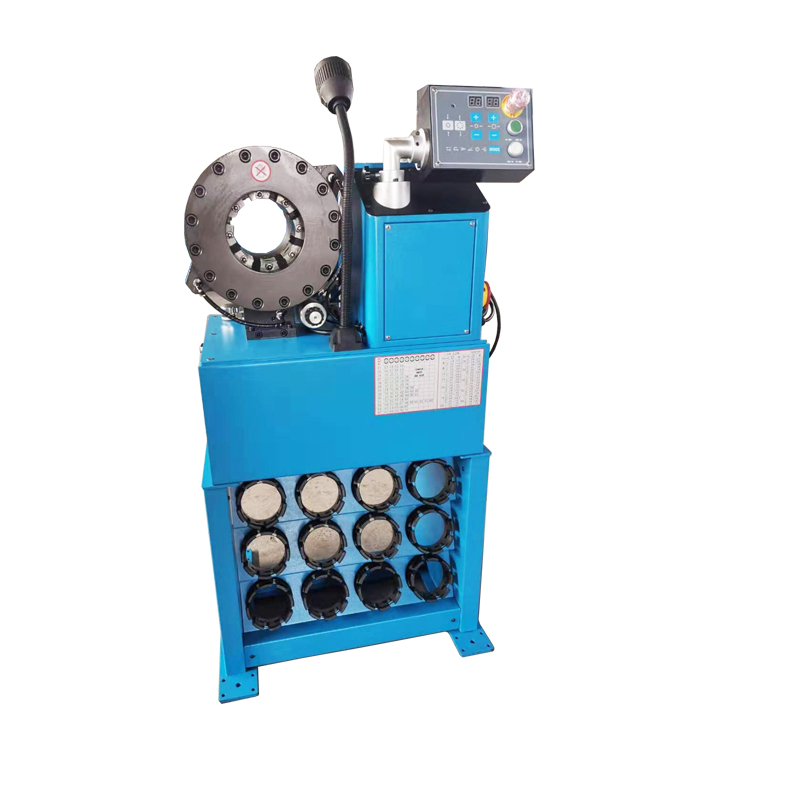
The performance of a hydraulic hose is governed by several key engineering principles. Burst pressure, the maximum pressure the hose can withstand before rupture, is a critical safety parameter determined by reinforcement layer strength and hose diameter. Working pressure, typically a fraction of burst pressure (often 1/4), represents the safe operating pressure for continuous use. Hose deflection under pressure (expansion and contraction) must be considered in system design to prevent interference with surrounding components. Fatigue resistance, the ability to withstand repeated pressure cycles, is a major concern, particularly in dynamic applications. Finite element analysis (FEA) is commonly employed to model stress distribution within the hose under various loading conditions. Environmental resistance is also paramount. Exposure to UV radiation, ozone, extreme temperatures, and corrosive fluids can degrade hose materials over time. Compliance requirements are dictated by SAE standards (e.g., SAE J517 for synthetic hydraulic hose) and industry-specific regulations. The selection of appropriate end fittings is crucial for a leak-free and reliable connection. Fitting materials must be compatible with both the hose and the hydraulic fluid. Proper crimping procedures, utilizing calibrated crimping machines, are essential to ensure a secure and durable fitting attachment.
Technical Specifications
| Parameter | Unit | SAE 100R1 AT | SAE 100R2 AT |
|---|---|---|---|
| Working Pressure | psi | 1000 | 1500 |
| Burst Pressure | psi | 3000 | 4500 |
| Temperature Range | °F | -40 to +212 | -40 to +212 |
| Inner Tube | Material | Nitrile Rubber (NBR) | Nitrile Rubber (NBR) |
| Reinforcement | Material | Single Steel Wire Braid | Two Steel Wire Braids |
| Cover | Material | Synthetic Rubber (CRM) | Synthetic Rubber (CRM) |
Failure Mode & Maintenance
Hydraulic hose failures are often attributed to several common modes. Fatigue cracking, resulting from repeated flexing and pressure cycling, is a prevalent failure mechanism. This can initiate at stress concentration points, such as near fittings or within the reinforcement layers. Abrasion damage, caused by contact with abrasive surfaces, can wear through the outer cover, exposing the reinforcement and leading to subsequent failure. Pinholes and leaks can develop due to localized degradation of the inner tube, often caused by chemical attack or incompatibility with the hydraulic fluid. Kinking, resulting from excessive bending radius, can restrict fluid flow and damage the inner tube. Fitting failures, such as corrosion or improper crimping, can lead to leaks or complete separation. Maintenance procedures should include regular visual inspections for signs of wear, abrasion, cracking, or leaks. Hose should be replaced if any damage is detected. Proper routing and support mechanisms should be employed to prevent kinking and abrasion. Hydraulic fluid should be regularly analyzed to ensure compatibility with hose materials and to identify contaminants that could accelerate degradation. Crimping procedures should be periodically verified to ensure they meet specifications. Documented records of hose replacement and maintenance activities are essential for tracking performance and identifying potential issues.
Industry FAQ
Q: What is the impact of using an incompatible hydraulic fluid with a specific hose construction?
A: Using an incompatible hydraulic fluid can lead to significant hose degradation. For example, using a petroleum-based fluid with a hose designed for phosphate ester fluids will cause the inner tube to swell, soften, and ultimately fail. Chemical incompatibility weakens the rubber compounds, resulting in leaks, cracks, and reduced service life. Always verify fluid compatibility with the hose manufacturer's specifications.
Q: How does temperature affect the performance and lifespan of a hydraulic hose?
A: Extreme temperatures, both high and low, can negatively impact hose performance. High temperatures accelerate the degradation of rubber compounds, reducing their elasticity and strength. Low temperatures can cause the hose to become stiff and brittle, increasing the risk of cracking. Consistent operation outside the hose's specified temperature range drastically shortens its lifespan.
Q: What are the key considerations when selecting a hose for pulsating pressure applications?
A: Pulsating pressure applications place significant stress on the hose reinforcement. Select a hose with a higher burst pressure rating and a robust reinforcement construction (e.g., spiral-wound hose). Consider using pulsation dampeners to mitigate the pressure fluctuations and extend hose life. Regularly inspect the hose for signs of fatigue cracking.
Q: What is the proper procedure for crimping hose fittings?
A: Proper crimping is critical for a leak-free and durable connection. Use a calibrated crimping machine and the correct die set for the hose and fitting combination. Follow the manufacturer's recommended crimp specifications. Visually inspect the crimp for proper compression and ensure there are no gaps or distortions. Perform a pressure test to verify the integrity of the connection.
Q: How can I identify a hose that is nearing the end of its service life?
A: Signs of impending failure include visible cracks in the cover or near fittings, abrasion that penetrates the reinforcement layers, swelling or softening of the hose material, evidence of leaks, and excessive hose deflection under pressure. Regular inspections and documented maintenance records are essential for proactive identification of aging hoses.
Conclusion
OEM SAE hydraulic hose products are complex engineered components whose performance is intrinsically linked to material science, manufacturing precision, and proper application. Understanding the nuances of rubber chemistry, reinforcement techniques, and pressure ratings is vital for selecting the appropriate hose for a given application. Failure to consider these factors can lead to premature failures, costly downtime, and potential safety hazards.
Future advancements in hydraulic hose technology will likely focus on developing lighter-weight, higher-strength materials, improving chemical compatibility with emerging hydraulic fluids, and incorporating smart sensing capabilities for real-time monitoring of hose condition. Adherence to stringent quality control standards and regular maintenance practices will remain crucial for maximizing hose lifespan and ensuring the reliability of hydraulic systems.