


hydraulic test hose Performance Analysis
Introduction
Hydraulic test hoses are specialized components designed for the safe and accurate pressure testing of hydraulic systems, components, and pipelines. Distinct from standard hydraulic hoses intended for fluid conveyance, test hoses prioritize burst resistance, dimensional stability under pressure, and leak-tight connections. They serve a critical role in quality control, maintenance, and safety verification across diverse industries including aerospace, automotive, oil & gas, and heavy equipment manufacturing. The technical position of the hydraulic test hose lies at the intersection of materials science, pressure vessel engineering, and precision metrology. Core performance characteristics include maximum working pressure (MWP), burst pressure, leak rate, and compatibility with test fluids. Ensuring the integrity of these hoses is paramount, as failure can result in catastrophic system damage, operator injury, or inaccurate test results. This guide provides a comprehensive technical overview of hydraulic test hose technology, encompassing material selection, manufacturing processes, performance parameters, failure analysis, and relevant industry standards.
Material Science & Manufacturing
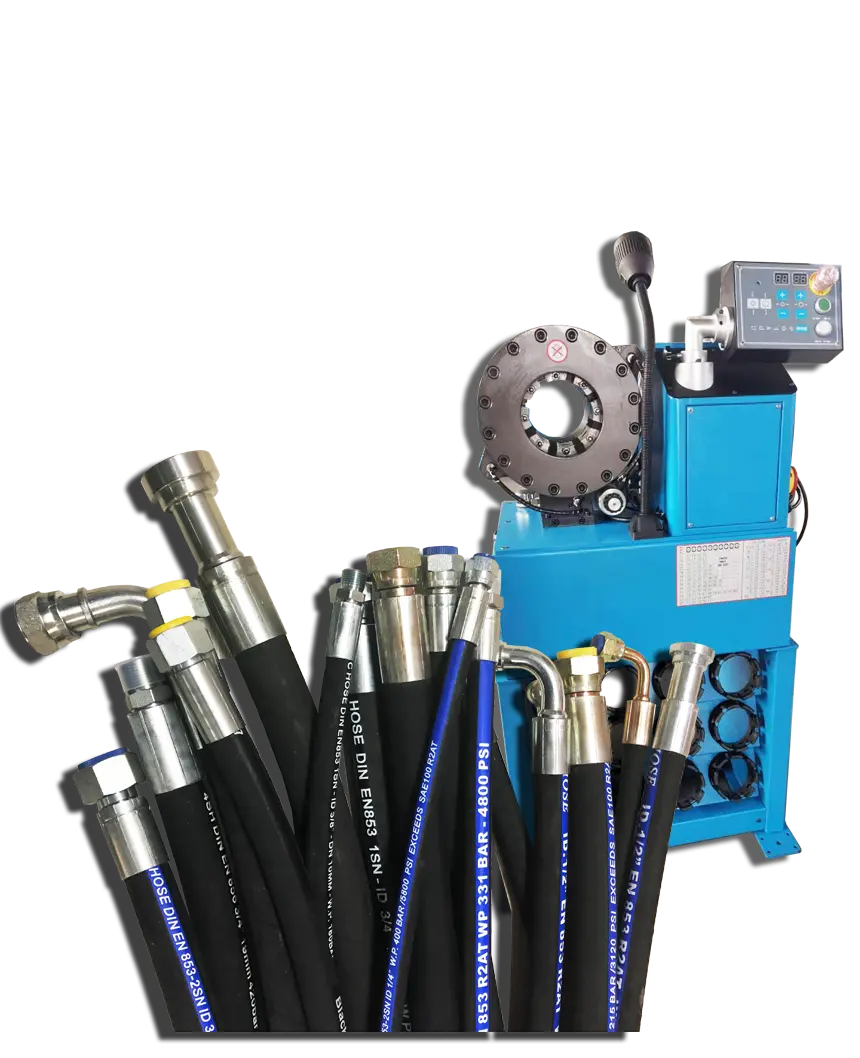
Hydraulic test hoses are typically constructed from a combination of materials chosen for their strength, flexibility, and chemical resistance. The core tube, responsible for containing the test fluid, is commonly made from a thermoplastic material such as polypropylene (PP) or polyamide (PA, Nylon). These materials offer good chemical compatibility with hydraulic fluids and possess sufficient pressure-holding capabilities. Reinforcement layers are crucial for achieving the required burst pressure. These layers are often composed of high-tensile strength fibers such as aramid (Kevlar), steel wire (braided or spiraled), or a combination of both. Aramid fibers provide excellent strength-to-weight ratio and flexibility, while steel wire offers higher pressure capacity and abrasion resistance. The outer cover provides environmental protection and abrasion resistance, and is usually made from a polyurethane (PU) or polyvinyl chloride (PVC) compound.
Manufacturing processes vary based on hose construction. For braided hoses, high-strength fibers or steel wires are mechanically braided around the core tube using automated braiding machines. The braid angle and wire diameter are critical parameters influencing the hose’s burst pressure and flexibility. Spiraled hoses utilize a single or multiple helical steel wires wound around the core tube. The pitch and diameter of the spiral wire determine the hose's kink resistance and pressure capacity. The thermoplastic core tube is commonly manufactured through extrusion. Precise control of extrusion temperature, screw speed, and die geometry is vital to ensure a consistent wall thickness and smooth internal surface. After reinforcement, the outer cover is applied via extrusion or dip molding. Post-manufacturing processes include pressure testing to verify performance, dimensional inspection, and end fitting attachment, typically using crimping technology. Crimping parameters (pressure, die size, and crimp angle) must be precisely controlled to ensure a secure and leak-proof connection.
Performance & Engineering
The performance of a hydraulic test hose is governed by several critical engineering parameters. Burst pressure, typically four times the MWP, is a primary design consideration. This requires thorough force analysis considering the internal pressure, reinforcement layer geometry, and material properties. Finite Element Analysis (FEA) is commonly employed to simulate stress distribution and predict burst pressure. Environmental resistance is also crucial. Hydraulic test hoses must withstand exposure to varying temperatures, humidity levels, and potentially corrosive fluids. Material selection and the addition of UV stabilizers to the outer cover are essential for mitigating degradation. Leak rate is a key performance indicator. Test hoses are designed to minimize leakage even at pressures approaching the MWP. Leakage is typically measured in cubic centimeters per minute (cc/min). Compliance with industry standards (e.g., ISO 3866) dictates acceptable leak rates. The dimensional stability of the hose under pressure is another important factor. Excessive expansion or contraction can affect the accuracy of the test results. Hose geometry and reinforcement layer construction are optimized to minimize dimensional changes. Furthermore, consideration must be given to the hose's flexibility and bend radius. Excessive bending can induce stress concentrations and potentially lead to premature failure.
Technical Specifications
| Parameter | Unit | Typical Value | Test Standard |
|---|---|---|---|
| Maximum Working Pressure (MWP) | PSI | 5000 | ISO 3866 |
| Burst Pressure | PSI | 20000 | ISO 3866 |
| Temperature Range | °F | -40 to 212 | ASTM D348 |
| Hose ID (Inner Diameter) | Inch | 0.5 - 1.0 | SAE J518 |
| Hose OD (Outer Diameter) | Inch | 0.75 - 1.25 | SAE J518 |
| Leak Rate | cc/min | < 0.1 | ISO 3866 |
Failure Mode & Maintenance
Hydraulic test hoses are susceptible to several failure modes. Fatigue cracking, induced by repeated pressure cycling, is a common cause of failure, particularly in the reinforcement layers. This is exacerbated by excessive bending and exposure to corrosive environments. Delamination, the separation of reinforcement layers from the core tube or outer cover, can occur due to poor adhesion or thermal stress. Degradation of the thermoplastic core tube due to prolonged exposure to incompatible fluids or high temperatures can lead to leakage and pressure loss. Oxidation of the reinforcement materials, especially steel wire, can reduce their strength and corrosion resistance. Abrasive wear of the outer cover can expose the reinforcement layers, increasing the risk of corrosion and damage.
Preventive maintenance is crucial for extending the service life of hydraulic test hoses. Regular visual inspections should be conducted to identify signs of damage such as cracks, abrasions, swelling, or discoloration. Pressure testing the hose to a specified percentage of its MWP can help detect hidden leaks or weaknesses. Proper storage is essential. Hoses should be stored in a cool, dry environment away from direct sunlight and corrosive substances. Avoid sharp bends and kinks during storage and handling. End fittings should be inspected for corrosion and damage. Crimped connections should be checked for tightness. When discarding a damaged hose, it should be done responsibly, following local regulations for hazardous waste disposal. Adhering to a strict maintenance schedule and promptly addressing any signs of damage will significantly reduce the risk of catastrophic failure and ensure the accuracy of hydraulic testing procedures.
Industry FAQ
Q: What is the key difference between a hydraulic test hose and a standard hydraulic hose?
A: While both types of hoses are designed to handle pressurized fluids, hydraulic test hoses are engineered for significantly higher burst pressures and are primarily intended for static pressure testing, not continuous fluid conveyance. Standard hydraulic hoses prioritize fluid compatibility and flexibility for dynamic applications. Test hoses often feature different material compositions and construction techniques to maximize pressure containment and minimize leakage during testing.
Q: How often should hydraulic test hoses be replaced?
A: Replacement frequency depends on usage intensity, operating conditions, and adherence to maintenance procedures. A general guideline is to replace hoses every 24-36 months, or sooner if any signs of damage are observed during visual inspections or pressure testing. Hoses used in harsh environments or subjected to frequent high-pressure cycles may require more frequent replacement.
Q: What safety precautions should be taken when using a hydraulic test hose?
A: Always ensure that the hose's MWP exceeds the test pressure. Use appropriate safety guards and personal protective equipment (PPE), including eye protection and gloves. Never exceed the hose's rated temperature range. Before pressurizing the hose, inspect it thoroughly for any signs of damage. Slowly and carefully increase the pressure, monitoring for leaks or unusual behavior.
Q: What are the common causes of hydraulic test hose failure?
A: Common failure modes include fatigue cracking due to repeated pressure cycling, delamination of reinforcement layers, degradation of the core tube material, and damage to end fittings. Corrosion, abrasion, and excessive bending can also contribute to failure. Incompatible test fluids can accelerate degradation.
Q: How does temperature affect the performance of a hydraulic test hose?
A: Temperature extremes can significantly impact hose performance. High temperatures can reduce the hose’s strength and increase its susceptibility to degradation. Low temperatures can decrease the hose’s flexibility and increase its risk of cracking. It's crucial to select a hose with a temperature range that matches the application’s operating conditions.
Conclusion
Hydraulic test hoses represent a critical safety component within hydraulic system validation and maintenance. Their robust construction, defined by careful material selection and precise manufacturing processes, is essential for accurate and reliable pressure testing. Understanding the performance characteristics, potential failure modes, and relevant industry standards is paramount for ensuring operational safety and extending the service life of these specialized components. A proactive maintenance approach, encompassing regular inspections and timely replacement, is vital to mitigate the risk of catastrophic failures.
As hydraulic systems become increasingly complex and operate in more demanding environments, the requirements for high-performance hydraulic test hoses will continue to evolve. Future advancements may focus on the development of new materials with enhanced strength and chemical resistance, as well as the incorporation of smart sensors for real-time monitoring of hose condition and pressure levels. Adopting these innovations will be critical for maintaining the integrity and safety of hydraulic systems across a wide range of industrial applications.