


high quality high impulse hydraulic hose company Performance Analysis

Introduction
High impulse hydraulic hose represents a critical component within fluid power systems, distinguished by its capacity to reliably transmit hydraulic fluid under extreme pressure fluctuations. Unlike standard hydraulic hose, high impulse designs are engineered to withstand repetitive pressure spikes – a common occurrence in dynamic applications such as construction equipment, agricultural machinery, and industrial presses. These hoses are typically reinforced with multiple layers of high-tensile steel wire, providing the necessary strength and flexibility to prevent burst failures and ensure operational safety. The performance of these hoses directly impacts system efficiency, reliability, and ultimately, the total cost of ownership for demanding applications. This guide provides a comprehensive overview of the material science, manufacturing processes, performance characteristics, failure modes, and maintenance considerations for high impulse hydraulic hose.
Material Science & Manufacturing
The construction of high impulse hydraulic hose relies on a precise interplay of material properties and manufacturing techniques. The inner tube, typically composed of synthetic rubbers like nitrile (NBR), chloroprene (CR), or ethylene propylene diene monomer (EPDM), must exhibit excellent resistance to the hydraulic fluid being conveyed, preventing degradation and maintaining flexibility over a wide temperature range. NBR is common for petroleum-based fluids, while EPDM offers superior resistance to phosphate ester-based fluids. The reinforcement layer is crucial; high-tensile steel wire, spirally wound or braided, provides the necessary pressure resistance. Wire gauge and ply count are directly proportional to the hose’s maximum working pressure. An outer cover, often a blend of synthetic rubbers including polyurethane, provides abrasion, ozone, and UV resistance. Manufacturing begins with extrusion of the inner tube, followed by precise winding or braiding of the reinforcement layers. The outer cover is then extruded, and the hose is cured under controlled temperature and pressure to vulcanize the rubber compounds and achieve the desired mechanical properties. Key parameter control during manufacturing includes maintaining consistent wire tension, accurate ply alignment, and precise temperature control during curing to ensure uniform properties throughout the hose length. Variations in these parameters can lead to localized weaknesses and premature failure.
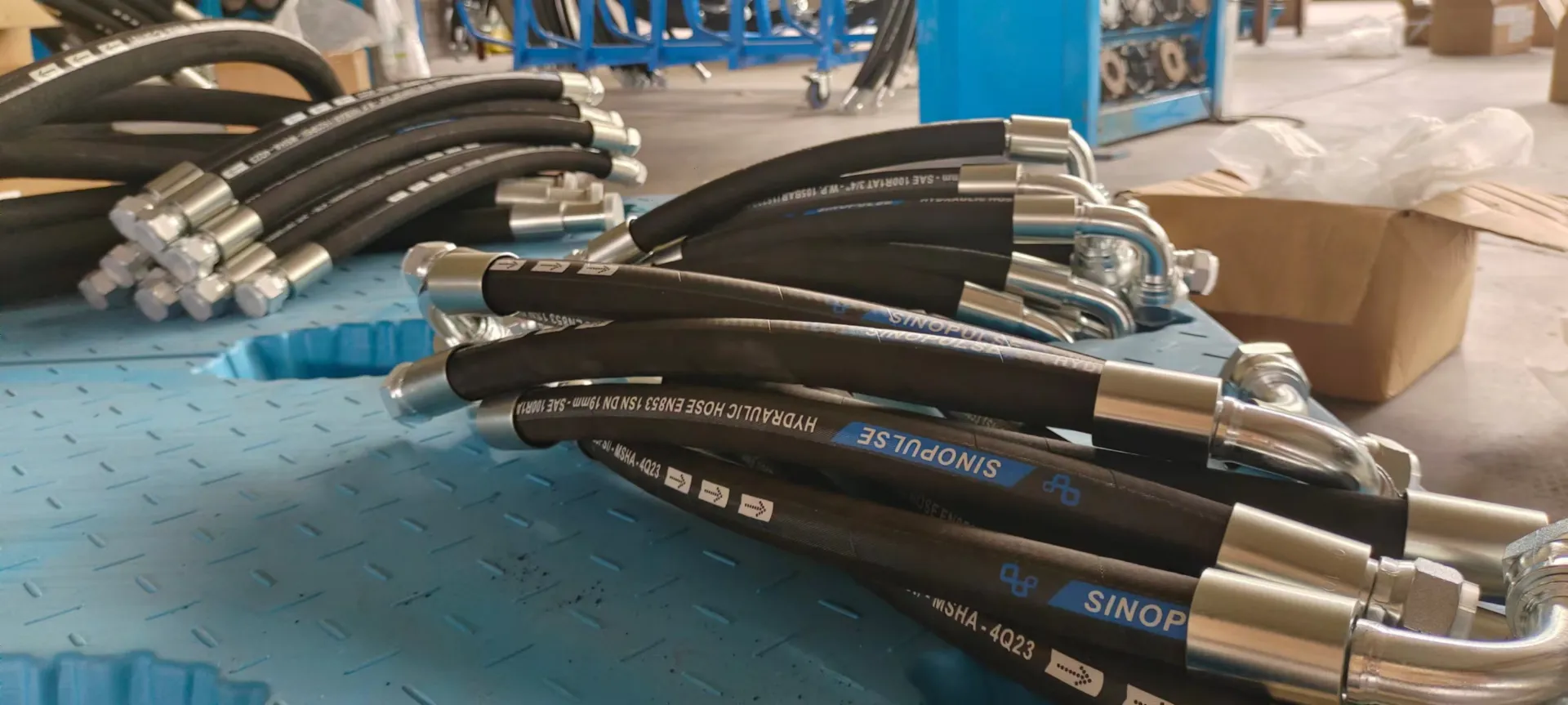
Performance & Engineering
High impulse hydraulic hose performance is governed by several key engineering principles. Burst pressure, working pressure, and impulse pressure ratings are paramount. Burst pressure represents the maximum pressure the hose can withstand before catastrophic failure, typically four times the working pressure. Working pressure is the continuous operating pressure specified by the manufacturer. Impulse pressure refers to the hose’s ability to withstand repeated pressure surges. Fatigue life, measured in cycles to failure under specific impulse conditions, is a critical metric. Force analysis involves calculating hoop stress in the reinforcement layers based on internal pressure. Finite element analysis (FEA) is frequently employed during hose design to optimize reinforcement configuration and predict stress distribution. Environmental resistance is also a critical factor. Exposure to extreme temperatures, ozone, UV radiation, and corrosive fluids can degrade the rubber compounds, reducing hose life. Compliance requirements, such as those defined by SAE standards (J517, J189, J1926), dictate minimum performance criteria and testing protocols. Hose end termination methods – crimping, swaging, or field-attachable fittings – significantly impact performance. Improper crimping can lead to localized stress concentrations and premature failure. Correct fitting selection and installation are therefore vital.
Technical Specifications
| Parameter | Unit | Typical Value (DN20/½” Hose) | Testing Standard |
|---|---|---|---|
| Working Pressure | MPa | 31.5 | SAE J517 |
| Burst Pressure | MPa | 126 | SAE J517 |
| Impulse Pressure (100,000 Cycles) | MPa | 48 | SAE J189 |
| Temperature Range | °C | -40 to +100 | SAE J517 |
| Reinforcement Type | - | Spiral Steel Wire | SAE J1926 |
| Inner Tube Material | - | Nitrile Rubber (NBR) | ASTM D2000 |
Failure Mode & Maintenance
High impulse hydraulic hose failure can manifest in several forms. Fatigue cracking, originating at stress concentrations in the reinforcement layers, is a common mode, particularly under cyclical loading. Delamination, the separation of reinforcement plies, reduces the hose's burst strength. Rubber degradation, caused by oxidation, ozone attack, or chemical incompatibility, leads to loss of flexibility and cracking. Abrasion, from external contact with surrounding components, can compromise the outer cover and expose the reinforcement layers. Improper installation, such as over-bending or incorrect crimping, introduces stress concentrations and accelerates failure. Maintenance involves regular visual inspections for signs of cracking, abrasion, or swelling. Pressure testing can identify leaks or weakening of the hose. Proper routing, using adequate support and avoiding sharp bends, minimizes stress. Fluid contamination can accelerate degradation, so maintaining clean hydraulic fluid is essential. When replacing hoses, ensure the new hose meets or exceeds the original specifications and that fittings are compatible. Avoid twisting the hose during installation and ensure proper torque during fitting tightening. A proactive maintenance program, coupled with careful monitoring of hose condition, significantly extends service life and reduces the risk of catastrophic failure.
Industry FAQ
Q: What is the impact of fluid velocity on high impulse hose life?
A: High fluid velocity increases pressure drop and can cause erosion of the inner tube, particularly with abrasive fluids. It also exacerbates the effects of cavitation, which can lead to localized stress and damage. Maintaining optimal fluid velocity within the system’s design parameters is crucial for maximizing hose life.
Q: How do I select the correct hose size for a given application?
A: Hose size selection depends on flow rate, working pressure, and fluid velocity. Undersized hoses restrict flow and increase pressure drop, while oversized hoses can be prone to whipping and damage. Consult hose sizing charts and manufacturer recommendations based on your specific system requirements.
Q: What is the best way to prevent hose twisting during installation?
A: Hose twisting introduces stress and reduces flexibility. Always ensure the hose is free to rotate during installation and avoid forcing it into a bent position. Use swivel fittings where appropriate and inspect the hose for twisting after installation.
Q: What is the significance of the hose’s bend radius?
A: Exceeding the minimum bend radius places undue stress on the reinforcement layers and can cause premature failure. Always adhere to the manufacturer's specified minimum bend radius. Support the hose properly to prevent sagging and sharp bends.
Q: How often should high impulse hydraulic hoses be inspected?
A: Inspection frequency depends on the severity of the application and operating conditions. A minimum of quarterly inspections is recommended for critical systems. Inspections should include a visual check for cracks, abrasion, leaks, and proper fitting connection. More frequent inspections may be necessary in harsh environments or for high-cycle applications.
Conclusion
High impulse hydraulic hose is a sophisticated engineered product, critical for the reliable operation of numerous industrial and mobile applications. Its performance is dictated by the careful selection of materials, precise manufacturing processes, and adherence to stringent quality control standards. Understanding the factors that influence hose life – pressure fluctuations, temperature extremes, fluid compatibility, and proper installation – is paramount for maximizing operational efficiency and minimizing downtime.
Looking forward, advancements in material science, such as the development of more durable and chemically resistant rubber compounds, and innovative reinforcement technologies will continue to improve the performance and longevity of high impulse hydraulic hose. Proactive maintenance programs, incorporating regular inspections and adherence to manufacturer recommendations, remain the cornerstone of ensuring safe and reliable operation.