


custom resin hose products Performance Analysis

Introduction
Custom resin hoses represent a specialized segment within the broader fluid conveyance industry, engineered for applications demanding chemical compatibility, temperature resistance, and flexibility beyond the capabilities of traditional rubber or thermoplastic hoses. These hoses are not simply off-the-shelf products; they are fabricated through a precise process of resin selection, reinforcement layering, and extrusion, tailored to specific operational parameters. Their technical position lies between standardized rubber hoses and highly engineered metal piping, filling a critical gap where the cost and weight of metal are prohibitive, and the performance limitations of elastomers are unacceptable. Core performance characteristics include sustained pressure capability, resistance to permeation, and a service life optimized for the intended chemical environment. Failure to properly specify a resin hose can lead to catastrophic system failure, emphasizing the need for detailed engineering understanding and adherence to relevant industry standards.
Material Science & Manufacturing
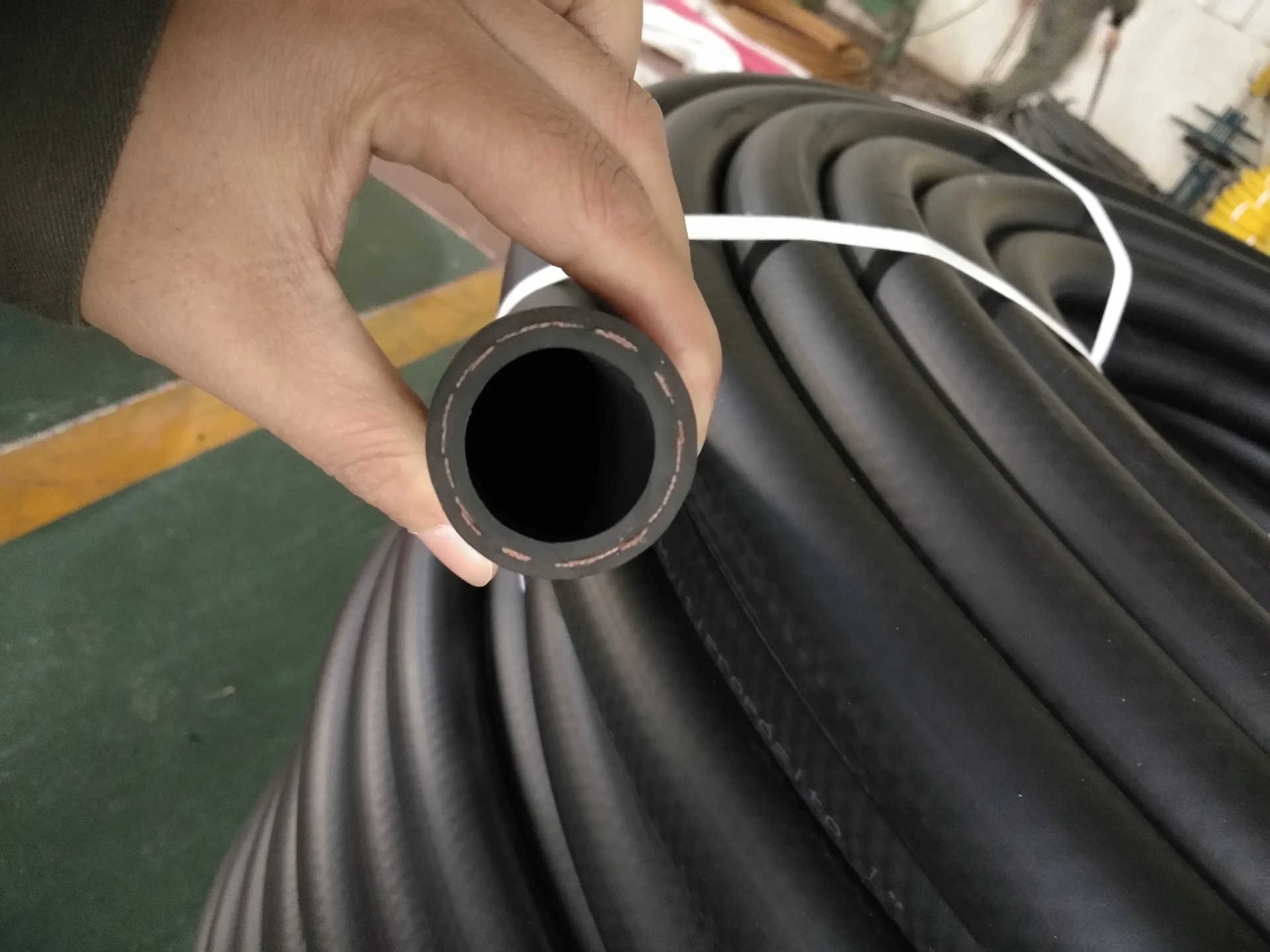
The foundation of a custom resin hose lies in the careful selection of resin materials. Common resins include PTFE (Polytetrafluoroethylene), PFA (Perfluoroalkoxy alkanes), PVDF (Polyvinylidene Fluoride), Polypropylene, and various Nylons, each offering unique properties. PTFE, for example, boasts exceptional chemical inertness and a wide temperature range (-200°C to +260°C), but exhibits lower mechanical strength. PVDF offers improved abrasion resistance compared to PTFE, while Nylons provide excellent burst pressure capabilities. Manufacturing typically involves several stages. Firstly, the chosen resin is compounded with additives such as UV stabilizers, carbon black for conductivity, or glass fibers for reinforcement. This compound is then extruded through a die, forming the inner tube. Subsequent layers of reinforcement – typically braided textiles (polyester, nylon, or aramid fibers) or spirally wound metal wires – are added to provide pressure resistance and structural integrity. Finally, an outer cover, also composed of resin or a combination of resin and textile, is extruded to provide abrasion resistance and environmental protection. Critical parameters during extrusion include melt temperature, screw speed, die pressure, and cooling rate, all of which influence the final dimensions, crystallinity, and mechanical properties of the hose. Post-extrusion processes like sintering (for PTFE) or annealing (for Nylons) further optimize material characteristics.
Performance & Engineering
Performance analysis of custom resin hoses centers around several critical engineering considerations. Force analysis, particularly burst pressure calculation, is paramount. This calculation incorporates the tensile strength of the resin, the reinforcement layer geometry (braid angle, wire pitch), and the hose diameter. Finite element analysis (FEA) is frequently employed to model stress distribution under various loading conditions. Environmental resistance is equally vital. Chemical compatibility testing verifies the hose’s ability to withstand prolonged exposure to the intended fluids without degradation (swelling, cracking, or leaching). Temperature cycling tests assess the impact of thermal expansion and contraction on the hose’s structural integrity. Permeation testing measures the rate at which fluids can diffuse through the hose wall, a critical parameter for hazardous material transport. Compliance requirements vary by industry. For example, the pharmaceutical industry demands hoses conforming to USP Class VI standards for biocompatibility, while the food and beverage industry requires FDA compliance. Hose selection must also account for flow rate and pressure drop, influencing the internal diameter and surface roughness of the liner. Static electricity build-up, especially when handling flammable fluids, necessitates the use of conductive resins or grounding mechanisms.
Technical Specifications
| Parameter | PTFE Lined Hose | PVDF Lined Hose | Nylon Lined Hose | Operating Temperature Range (°C) |
|---|---|---|---|---|
| Inner Diameter (mm) | 6 – 152 | 6 – 102 | 4 – 76 | -73 to +260 |
| Burst Pressure (psi) | Up to 500 | Up to 800 | Up to 1500 | -60 to +85 |
| Chemical Resistance | Excellent (Universal) | Very Good (Acids, Bases) | Good (Oils, Fuels) | -40 to +120 |
| Permeation Rate (cc/m²/day) | < 0.1 (most fluids) | < 0.5 (most fluids) | 1-5 (depending on fluid) | -20 to +60 |
| Tensile Strength (MPa) | 20-35 | 30-45 | 50-80 | -5 to +40 |
| Reinforcement Type | Braided Polyester/Aramid | Braided Stainless Steel/Aramid | Spirally Wound Steel Wire | -10 to +30 |
Failure Mode & Maintenance
Failure modes in custom resin hoses are diverse and often application-specific. Fatigue cracking, particularly in reinforced layers, is a common issue arising from repeated pressure cycling or mechanical flexing. Delamination – the separation of resin layers or between the resin and reinforcement – can occur due to poor adhesion or thermal stress. Chemical attack leads to degradation of the resin matrix, resulting in swelling, embrittlement, or permeation. Oxidation, especially at elevated temperatures, can cause cross-linking and loss of flexibility. Abrasion from particulate matter in the fluid stream can wear away the outer cover, exposing underlying layers. Failure analysis typically involves visual inspection (for cracks or delamination), chemical analysis (to identify degradation products), and mechanical testing (to determine residual strength). Maintenance protocols should include regular visual inspections, pressure testing, and replacement based on service life guidelines. Avoid sharp bends or kinking, as these can concentrate stress and accelerate fatigue. Proper storage is crucial; hoses should be stored in a cool, dry environment away from direct sunlight and incompatible chemicals. For PTFE hoses, avoid conditions that promote creep (sustained deformation under load) at elevated temperatures.
Industry FAQ
Q: What is the primary advantage of a custom resin hose over a standard rubber hose in a chemically aggressive environment?
A: The primary advantage lies in chemical inertness. Standard rubber hoses are susceptible to degradation from many chemicals, leading to swelling, cracking, and ultimately, failure. Custom resin hoses, particularly those utilizing PTFE or PVDF, exhibit exceptional resistance to a wide range of corrosive fluids, ensuring long-term reliability and preventing contamination of the process stream.
Q: How does the reinforcement layer impact the burst pressure rating of a resin hose?
A: The reinforcement layer is critical. Its material (steel wire, textile braid), construction (braid angle, ply count), and bonding to the resin liner directly determine the hose's ability to withstand internal pressure. Higher tensile strength reinforcement materials and optimized braid angles increase burst pressure. FEA modeling is often used to refine reinforcement designs for specific pressure requirements.
Q: What considerations should be made regarding permeation when transporting hazardous materials?
A: Permeation is a critical safety concern. Selecting a resin with inherently low permeability to the specific hazardous material is paramount. Multi-layer constructions, incorporating barrier layers, can further reduce permeation rates. Regular permeation testing and adherence to relevant regulatory standards (e.g., EPA regulations for VOC emissions) are essential.
Q: How does temperature affect the performance and lifespan of a custom resin hose?
A: Temperature significantly impacts resin properties. Elevated temperatures can accelerate chemical degradation, reduce tensile strength, and promote creep. Conversely, low temperatures can embrittle the resin. Selecting a resin with a suitable operating temperature range for the application and avoiding thermal cycling extremes are crucial for maximizing hose lifespan.
Q: What are the implications of electrostatic discharge (ESD) when handling flammable fluids through a resin hose?
A: ESD can ignite flammable fluids. Hoses used in these applications must be conductive to dissipate static charges safely. This can be achieved by incorporating conductive additives (e.g., carbon black) into the resin formulation or by grounding the hose assembly to a suitable earth point. Regular testing of hose conductivity is recommended.
Conclusion
Custom resin hoses are a sophisticated fluid conveyance solution tailored for demanding applications where conventional materials fall short. Their performance hinges on a precise understanding of material science, manufacturing processes, and engineering principles. Careful consideration of chemical compatibility, temperature resistance, pressure requirements, and regulatory compliance is essential for selecting the optimal resin and construction.
The continued development of advanced resin formulations and reinforcement technologies promises to expand the capabilities of custom resin hoses, enabling their use in increasingly challenging environments. Proper maintenance and adherence to industry best practices will ensure reliable operation and maximize service life, reducing downtime and minimizing the risk of catastrophic failure.