


custom high tensile steel wire braid hoses factory Performance Analysis
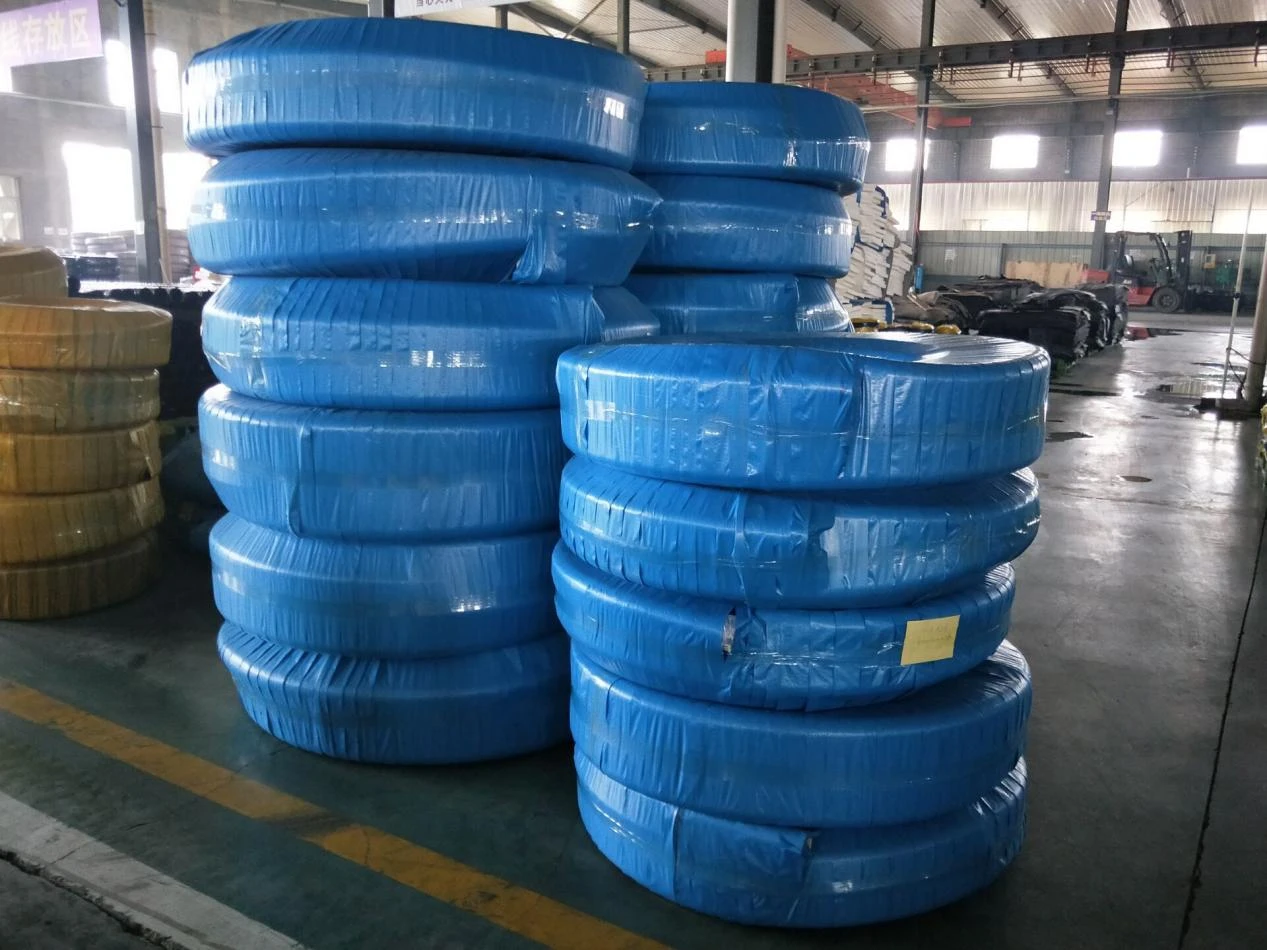
Introduction
High tensile steel wire braid hoses represent a critical component in numerous hydraulic systems across diverse industries including construction, agriculture, oil and gas, and manufacturing. These hoses are engineered to convey fluids under high pressure, experiencing cyclical loading, and often harsh environmental conditions. Their performance directly impacts system reliability, efficiency, and safety. Unlike rubber hoses or those with simpler braid constructions, high tensile steel wire braid hoses utilize specialized steel alloys and precise braiding techniques to achieve superior strength, durability, and resistance to burst pressure. This guide provides an in-depth technical overview of these hoses, covering material science, manufacturing processes, performance characteristics, potential failure modes, and relevant industry standards. The core pain point addressed by these hoses is mitigating the risk of catastrophic failure in high-pressure applications, reducing downtime, and improving operational safety. Custom fabrication allows tailoring of hose assemblies to specific application requirements, a crucial factor in optimizing performance and system integration.
Material Science & Manufacturing
The construction of high tensile steel wire braid hoses begins with the selection of appropriate raw materials. The inner tube is commonly constructed from nitrile rubber (NBR), ethylene propylene diene monomer (EPDM), or fluorocarbon rubber (FKM/Viton) depending on the fluid compatibility requirements. NBR offers good resistance to petroleum-based fluids, EPDM excels in applications involving water and glycol-based fluids, and FKM provides superior resistance to aggressive chemicals and high temperatures. The reinforcement layer is composed of high tensile steel wire, typically drawn from specialized steel alloys such as AISI 304 or 316 stainless steel for corrosion resistance. Wire diameter is a critical parameter, influencing burst pressure and flexibility. Braiding is conducted using automated braiding machines, typically employing a helical winding pattern. The braid angle (typically between 30 and 55 degrees) dictates hose flexibility and pressure resistance – a steeper angle yields higher pressure capacity but reduced flexibility. Post-braiding, the hose undergoes curing, where the rubber compound is vulcanized to enhance its mechanical properties. Critical process parameters include temperature, pressure, and curing time. The outer cover, usually a synthetic rubber compound, provides abrasion and weather resistance. Quality control includes non-destructive testing (NDT) such as magnetic particle inspection to detect wire defects and hydrostatic pressure testing to verify burst pressure.

Performance & Engineering
The performance of high tensile steel wire braid hoses is defined by several key engineering parameters. Burst pressure, determined through hydrostatic testing, represents the maximum pressure the hose can withstand before rupture. Working pressure is a fraction of the burst pressure, typically 1/4 to 1/3, providing a safety margin. Tensile strength refers to the force required to pull the hose apart longitudinally, indicating its resistance to axial loading. Flex fatigue resistance is crucial for applications involving repetitive bending or vibration. This is evaluated through flex impulse testing, which simulates cyclic loading conditions. Environmental resistance encompasses factors such as temperature range, ozone exposure, and chemical compatibility. Hose assemblies are often subjected to rigorous force analysis to determine stress concentrations at fittings and braid terminations. Finite element analysis (FEA) is employed to optimize hose design and predict performance under various loading scenarios. Compliance requirements are dictated by industry standards such as SAE J517 (hydraulic hose specifications) and ISO 6898 (hydraulic hose assemblies). The selection of appropriate fitting materials (e.g., carbon steel, stainless steel) and crimping procedures is vital to ensure a secure and leak-proof connection.
Technical Specifications
| Parameter | Unit | Typical Value (NBR/Steel Wire Braid) | Typical Value (FKM/Steel Wire Braid) |
|---|---|---|---|
| Working Pressure | PSI | 3000 | 2500 |
| Burst Pressure | PSI | 12000 | 10000 |
| Temperature Range | °F | -40 to +212 | -20 to +450 |
| Inner Tube Material | - | Nitrile Rubber (NBR) | Fluorocarbon Rubber (FKM/Viton) |
| Reinforcement | - | Single Steel Wire Braid | Single Steel Wire Braid |
| Outer Cover Material | - | Synthetic Rubber | Synthetic Rubber |
Failure Mode & Maintenance
Failure modes in high tensile steel wire braid hoses are diverse and often interconnected. Fatigue cracking, initiated by repeated bending and flexing, is a common cause of failure, particularly near fittings. This is exacerbated by excessive bending radius or operating pressures exceeding the hose's specifications. Corrosion, especially in environments with chlorides or other corrosive agents, can lead to wire degradation and eventual rupture. Abrasion, caused by external contact with abrasive surfaces, can compromise the outer cover, exposing the reinforcement layer to corrosion. Improper installation, such as over-tightening or incorrect crimping, can induce stress concentrations and premature failure. Internal degradation of the rubber compound due to fluid incompatibility or prolonged exposure to high temperatures can also lead to failure. Maintenance involves regular visual inspection for signs of abrasion, cracking, or swelling. Pressure testing can be performed to detect leaks or reduced burst pressure. Hoses should be replaced if any signs of damage are observed. Proper storage, avoiding direct sunlight and extreme temperatures, is crucial to extend hose lifespan. Regularly checking for proper torque on fittings and ensuring correct routing to prevent excessive bending are also important preventative measures.
Industry FAQ
Q: What is the impact of braid angle on hose performance?
A: The braid angle directly influences the balance between pressure capacity and flexibility. A steeper braid angle (closer to 90 degrees) provides higher burst pressure because the load is distributed more directly along the wire strands. However, it reduces flexibility, making the hose more difficult to route and increasing stress concentrations during bending. A shallower angle (closer to 30 degrees) offers greater flexibility but lowers the pressure rating. Therefore, selecting the optimal braid angle is a trade-off based on the specific application requirements.
Q: How do different inner tube materials affect fluid compatibility?
A: Inner tube material selection is paramount for ensuring fluid compatibility. NBR is widely used for petroleum-based fluids, but it’s not suitable for phosphate ester hydraulic fluids. EPDM offers excellent resistance to water, glycol, and certain chemicals, but it's less resistant to oils. FKM (Viton) provides the broadest chemical resistance, including fuels, oils, and aggressive chemicals, but it's more expensive. Incorrect material selection can lead to swelling, softening, or degradation of the inner tube, resulting in leaks and failure.
Q: What is the significance of hydrostatic testing?
A: Hydrostatic testing is a critical quality control measure used to verify the burst pressure of the hose. The hose is filled with water and pressurized to a level significantly exceeding its working pressure (typically 1.5 times). This test identifies any inherent defects in the hose construction, such as pinholes, weak spots, or inadequate crimping. It provides confidence in the hose's ability to withstand operating pressures and ensures safe operation.
Q: How does temperature affect the performance of steel wire braid hoses?
A: Temperature significantly influences the mechanical properties of both the rubber compound and the steel wire. High temperatures can reduce the tensile strength and elasticity of the rubber, increasing the risk of leaks and failure. Low temperatures can make the rubber brittle and more susceptible to cracking. Steel wire can also experience reduced strength at elevated temperatures. Therefore, it's essential to select a hose with a temperature range appropriate for the application.
Q: What are the common causes of hose fitting failure?
A: Common causes of hose fitting failure include improper crimping, corrosion, and over-tightening. Insufficient crimping can lead to leakage and separation of the hose from the fitting. Corrosion, particularly in marine or chemical environments, can weaken the fitting and hose connection. Over-tightening can damage the hose reinforcement and induce stress concentrations. Utilizing high-quality fittings, proper crimping procedures, and corrosion protection measures are crucial for preventing fitting failures.
Conclusion
High tensile steel wire braid hoses are indispensable components in demanding hydraulic systems, offering superior strength, durability, and reliability compared to alternative hose constructions. Their performance is dictated by a complex interplay of material science, manufacturing processes, and engineering principles. Understanding these factors is crucial for selecting the appropriate hose for a given application, ensuring safe and efficient operation. Proper installation, maintenance, and adherence to industry standards are essential for maximizing hose lifespan and minimizing the risk of catastrophic failure.
The future of high tensile steel wire braid hose technology will likely focus on the development of advanced materials, such as lighter-weight and higher-strength steel alloys, and more sophisticated braiding techniques to enhance performance and reduce weight. Smart hose technologies, incorporating sensors for pressure monitoring and leak detection, are also emerging. Continued research and development in these areas will further improve the reliability and efficiency of hydraulic systems across a wide range of industries.