


custom heat resistant hydraulic hose products Performance Analysis

Introduction
Custom heat resistant hydraulic hose products are engineered solutions designed to reliably transmit hydraulic fluid under elevated temperature conditions. These hoses represent a critical component in numerous industrial applications – including furnace operations, die casting, metal processing, and power generation – where standard hydraulic hoses would rapidly degrade and fail. The technical position of these hoses within the industry chain lies between the hydraulic power unit (HPU), which generates fluid power, and the hydraulic actuator, which converts that power into mechanical motion. Core performance characteristics center around maintaining pressure integrity, preventing fluid leakage, resisting thermal degradation, and ensuring long service life in extreme thermal environments. The increasing demand for high-performance hydraulic systems operating in challenging conditions is driving the need for specialized hose constructions that exceed the capabilities of conventional rubber-based designs. A key pain point in the industry is the premature failure of hoses leading to costly downtime, safety hazards, and the need for frequent replacement. Custom heat resistance addresses this by tailored material selection and construction.
Material Science & Manufacturing
The construction of heat resistant hydraulic hoses typically involves multiple layers, each contributing to specific performance attributes. The inner tube is often formulated from specialized elastomers like fluorocarbon (FKM), perfluoroelastomer (FFKM), or silicone rubber, chosen for their exceptional resistance to high temperatures, aggressive fluids, and chemical attack. FKM, for example, provides a temperature range of -20°C to +205°C, while FFKM extends this to -200°C to +260°C. The reinforcement layer is crucial for pressure containment and typically comprises multiple braids of high-tensile steel wire. The number and configuration of these braids dictate the hose's working pressure. A critical parameter in steel wire selection is its tensile strength (typically exceeding 2000 MPa) and its resistance to relaxation at elevated temperatures. An intermediate layer often consists of a thermally stable fiber braid (Aramid or fiberglass) to maintain dimensional stability and prevent hose kinking. The outer cover is typically constructed from a synthetic rubber compound (like Chlorinated Polyethylene – CPE – or Silicone) that provides abrasion resistance, weathering protection, and resistance to ozone cracking. Manufacturing processes include extrusion of the inner tube and cover, spiral winding or braiding of reinforcement layers, and vulcanization – a curing process that crosslinks the rubber compounds, enhancing their strength and elasticity. Precise temperature and pressure control during vulcanization is paramount to achieving optimal material properties and bond strength between layers. Die swell control during extrusion of the inner tube is vital to ensure consistent inner diameter and flow characteristics.
Performance & Engineering
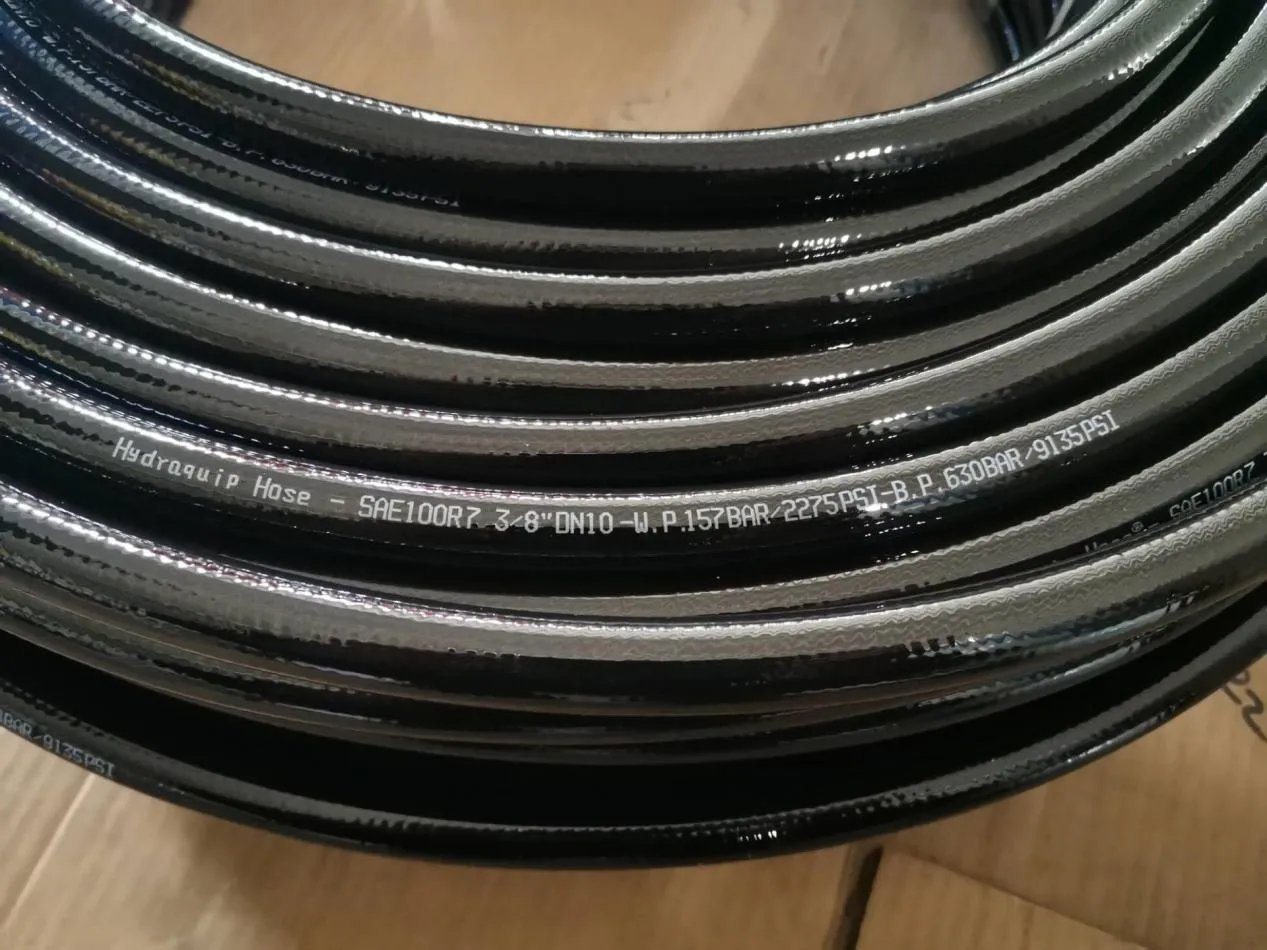
Performance analysis of heat resistant hydraulic hoses focuses on several critical engineering parameters. Burst pressure, working pressure, and temperature rating are fundamental specifications. Burst pressure is determined through hydrostatic testing, typically to 2.5 to 4 times the working pressure. Finite Element Analysis (FEA) is employed to model stress distribution within the hose under pressure and temperature loads, identifying potential weak points and optimizing reinforcement layer configurations. Thermal expansion and contraction are significant considerations, particularly in applications with large temperature swings. The hose must be able to accommodate these dimensional changes without compromising pressure integrity or causing stress on connected fittings. Environmental resistance encompasses exposure to oils, fuels, hydraulic fluids, chemicals, and UV radiation. Chemical compatibility testing is essential to ensure the hose material does not swell, degrade, or leach contaminants into the hydraulic system. Compliance requirements are dictated by industry standards (detailed in the footer) and application-specific regulations. For instance, in the aerospace industry, hoses must meet stringent flammability and outgassing requirements. Fatigue life is assessed through cyclic pressure testing at elevated temperatures to predict the hose's service life under realistic operating conditions. Proper fitting selection and installation are crucial; incorrect fittings can introduce stress concentrations and significantly reduce hose life.
Technical Specifications
| Parameter | Unit | Typical Value (FKM Inner Tube, Steel Wire Reinforcement) | Typical Value (FFKM Inner Tube, Stainless Steel Wire Reinforcement) |
|---|---|---|---|
| Working Pressure | MPa | 35 | 50 |
| Burst Pressure | MPa | 140 | 200 |
| Temperature Range | °C | -20 to +205 | -200 to +260 |
| Inner Diameter | mm | 19.1 | 12.7 |
| Outer Diameter | mm | 32.5 | 25.4 |
| Minimum Bend Radius | mm | 150 | 100 |
Failure Mode & Maintenance
Common failure modes in heat resistant hydraulic hoses include thermal degradation of the elastomer, fatigue cracking of the reinforcement layers, and extrusion failure of the inner tube. Thermal degradation occurs when the hose is repeatedly exposed to temperatures exceeding its rated limit, leading to hardening, cracking, and loss of flexibility. Fatigue cracking is initiated by cyclic pressure fluctuations, exacerbated by elevated temperatures and stress concentrations at fittings. Extrusion failure can occur due to excessive pressure, incompatible fluids causing swelling, or damage to the inner tube during installation. Oxidation, particularly in the outer cover, leads to surface cracking and loss of protective properties. To mitigate these failures, regular visual inspections are critical. Look for signs of cracking, blistering, abrasion, or deformation. Pressure testing should be performed periodically to verify the hose’s integrity. Proper fluid maintenance – including filtration and regular fluid analysis – minimizes contamination that can accelerate degradation. Hose routing should avoid sharp bends and contact with abrasive surfaces. When replacing a hose, always use fittings that are compatible with the hose material and rated for the operating pressure and temperature. Avoid over-tightening fittings, as this can damage the hose end connections. Storage of hoses should be in a cool, dry, and dark environment to prevent premature degradation. Regular lubrication of the hose exterior can also mitigate ozone cracking.
Industry FAQ
Q: What is the primary difference between FKM and FFKM inner tubes regarding heat resistance?
A: While both FKM and FFKM offer excellent heat resistance, FFKM (Perfluoroelastomer) provides a significantly wider operating temperature range, extending to much lower and higher temperatures than FKM. FFKM also exhibits superior resistance to a broader range of aggressive chemicals and fluids, making it suitable for the most demanding applications.
Q: How does the number of reinforcement braids affect the hose's pressure rating?
A: Increasing the number of reinforcement braids directly increases the hose's pressure rating. Each braid adds tensile strength and contributes to the hose's ability to withstand internal pressure without bursting. However, increasing the number of braids also reduces the hose's flexibility.
Q: What are the consequences of using an incompatible hydraulic fluid with a specific hose material?
A: Using an incompatible fluid can lead to swelling, softening, or degradation of the hose material. This can compromise the hose's pressure integrity, reduce its service life, and potentially cause catastrophic failure. Always consult a chemical compatibility chart before selecting a hose for a specific hydraulic fluid.
Q: How important is proper fitting selection and installation in ensuring long hose life?
A: Proper fitting selection and installation are critical. Incorrectly sized or rated fittings can introduce stress concentrations at the hose ends, leading to premature failure. Overtightening fittings can crush the hose, while undertightening can cause leaks. Fittings must be compatible with the hose material and rated for the operating pressure and temperature.
Q: What preventative maintenance checks should be performed on heat resistant hydraulic hoses?
A: Preventative maintenance includes regular visual inspections for cracks, blisters, or abrasions. Conduct leak checks, verify proper hose routing (avoiding sharp bends and abrasion), and perform periodic pressure testing. Monitor hydraulic fluid condition and ensure proper filtration to prevent contamination.
Conclusion
Custom heat resistant hydraulic hoses represent a specialized engineering solution vital for applications demanding reliable fluid power transmission in extreme thermal environments. Their construction, utilizing advanced materials like FKM, FFKM, and high-tensile steel alloys, directly addresses the limitations of conventional hydraulic hoses. Careful consideration of operating parameters – including pressure, temperature, fluid compatibility, and environmental factors – is paramount to selecting the appropriate hose for a given application.
The ongoing development of new elastomer formulations and reinforcement techniques will continue to enhance the performance and longevity of these critical components. Furthermore, advancements in non-destructive testing methods will enable more accurate assessment of hose condition, facilitating proactive maintenance and minimizing the risk of unexpected failures. Prioritizing proper material selection, rigorous testing, and consistent preventative maintenance will ensure the safe and efficient operation of hydraulic systems in demanding industrial settings.