


china sae hydraulic hose products Performance Analysis

Introduction
China SAE hydraulic hose products represent a critical component in fluid power systems across a diverse range of industries, including construction, agriculture, manufacturing, and mining. These hoses are engineered to convey hydraulic fluid under high pressure, facilitating the operation of hydraulic machinery. Adherence to SAE (Society of Automotive Engineers) standards, particularly J517, J518, and J1079, is paramount, defining dimensions, pressure ratings, and performance characteristics. The manufacturing landscape in China has become a significant global supplier of these hoses, offering competitive pricing and increasingly sophisticated engineering capabilities. However, understanding the nuanced variations in material composition, manufacturing processes, and quality control is crucial for successful application and long-term reliability. This guide provides an in-depth technical overview of China SAE hydraulic hose products, addressing material science, manufacturing techniques, performance characteristics, potential failure modes, and relevant industry standards. Core performance metrics focus on burst pressure, working pressure, temperature range, and fluid compatibility.
Material Science & Manufacturing
The construction of a China SAE hydraulic hose typically involves four key layers: the inner tube, reinforcement layers, the outer cover, and, often, a bond between the layers. The inner tube is commonly composed of synthetic rubber compounds such as nitrile (NBR), chloroprene (CR), or ethylene propylene diene monomer (EPDM), chosen for their resistance to hydraulic fluids, abrasion, and temperature variations. NBR is prevalent for petroleum-based fluids, CR excels in heat and ozone resistance, and EPDM is ideal for phosphate ester fluids. The reinforcement layer provides the hose’s strength and pressure resistance. High-tensile steel wire, either spirally wound or braided, is the most common reinforcement material. The number of layers and wire diameter directly impact the hose's working and burst pressure. The outer cover, usually made of synthetic rubber like CR or polyurethane, protects the reinforcement layers from abrasion, weathering, ozone, and chemical attack. Manufacturing processes include extrusion for the inner tube and outer cover, followed by precise winding or braiding of the reinforcement layers. A bonding agent is applied between layers to ensure adhesion. Key parameter control focuses on rubber compound formulation (polymer ratios, filler content), wire tension during winding/braiding, curing temperature and time, and dimensional accuracy. Quality control procedures include hydrostatic testing to verify burst pressure, impulse testing to assess fatigue resistance, and material composition analysis.
Performance & Engineering
Hydraulic hose performance is fundamentally governed by force analysis, considering internal pressure, tensile stress, and bending stress. Internal pressure generates hoop stress in the hose wall, which is resisted by the reinforcement layers. Tensile stress arises from axial loads and bending, particularly at connection points. Fatigue failure is a primary concern, especially in applications with cyclical loading and bending. Engineering calculations, based on thin-walled cylinder theory and beam bending equations, are used to determine appropriate hose size, reinforcement type, and minimum bend radius to prevent exceeding material limits. Environmental resistance is also critical. Exposure to extreme temperatures, UV radiation, and corrosive fluids can degrade the rubber compounds and reduce hose life. SAE standards dictate specific testing procedures to evaluate performance under these conditions, including temperature cycling, fluid resistance, and ozone exposure. Compliance requirements extend beyond SAE standards to include REACH and RoHS regulations, restricting the use of hazardous substances. Functional implementation involves selecting the correct hose type for the specific application, ensuring proper fittings are used, and implementing regular inspection and maintenance schedules.
Technical Specifications
| Hose Type | Reinforcement Type | Working Pressure (PSI) | Burst Pressure (PSI) |
|---|---|---|---|
| SAE 100 R1AT | Single Wire Braid | 2000 | 8000 |
| SAE 100 R2AT | Two Wire Braid | 3000 | 12000 |
| SAE 100 R6 | Four Spiral Wire | 3000 | 12000 |
| SAE 100 R7 | Seven Spiral Wire | 5000 | 20000 |
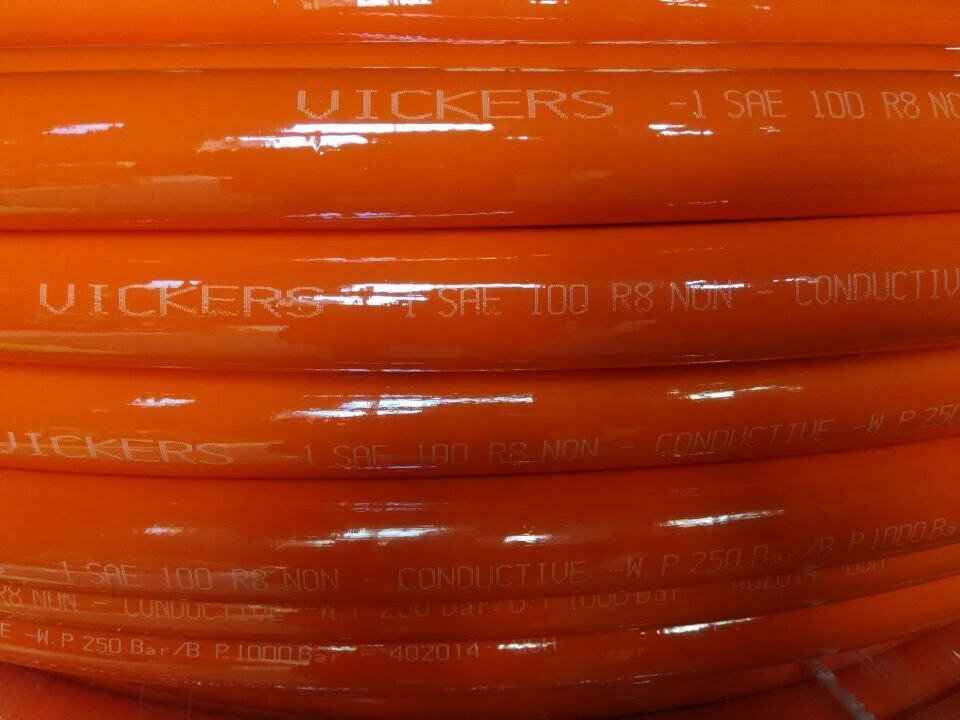
| SAE 100 R8 | Six Spiral Wire | 4000 | 16000 |
| SAE 100 R9 | Combination - Braid & Spiral | 3500 | 14000 |
Failure Mode & Maintenance
Common failure modes in China SAE hydraulic hoses include burst failure due to exceeding pressure limits, fatigue cracking from cyclical loading and bending, extrusion failure resulting from excessive pressure and insufficient hose support, abrasion damage from external contact, and degradation of rubber compounds due to exposure to heat, ozone, or incompatible fluids. Failure analysis often reveals root causes such as improper hose selection, incorrect installation, inadequate maintenance, or material defects. Fatigue cracking typically initiates at stress concentration points, such as fitting connections or areas of localized damage. Extrusion failure occurs when the inner tube is forced through the reinforcement layers under high pressure. Preventative maintenance is crucial. Regular visual inspections should be conducted to identify signs of abrasion, cracking, or swelling. Hose connections should be checked for leaks and proper torque. Fluid contamination can accelerate hose degradation, so regular fluid analysis and filtration are essential. Hose replacement should be based on a predetermined schedule or when signs of wear or damage are detected. Proper handling and storage are also important, avoiding kinking, twisting, and exposure to direct sunlight. When replacing hoses, ensure the new hose meets or exceeds the original specifications and is compatible with the hydraulic fluid.
Industry FAQ
Q: What is the significance of the SAE standards (J517, J518, J1079) in relation to China SAE hydraulic hose quality?
A: These SAE standards are paramount. J517 defines the dimensions and characteristics of hydraulic hose, J518 specifies the performance requirements for reinforcement materials, and J1079 covers synthetic hose. Compliance ensures a baseline level of quality, safety, and interchangeability. However, variations in manufacturing quality control within China can still exist, so verifying third-party certifications and conducting thorough testing is crucial.
Q: How does temperature affect the performance and lifespan of a hydraulic hose?
A: Temperature significantly impacts rubber compound elasticity and strength. High temperatures accelerate degradation and reduce burst pressure. Low temperatures can cause the rubber to become brittle and prone to cracking. The specified temperature range for a hose must be carefully considered based on the operating environment. Using a hose outside its recommended temperature range will substantially shorten its lifespan and increase the risk of failure.
Q: What are the common causes of hydraulic hose leaks, and how can they be prevented?
A: Common causes include improper fitting connections (loose, cross-threaded, or damaged), hose damage (abrasion, cracking, or swelling), and fluid incompatibility. Prevention involves using the correct fittings, properly torquing connections, protecting hoses from abrasion, regularly inspecting hoses for damage, and ensuring the hydraulic fluid is compatible with the hose materials.
Q: What is the difference between braided and spiral hydraulic hose, and when should each be used?
A: Braided hoses (single or multiple layers) offer good flexibility and are suitable for moderate pressure applications with frequent bending. Spiral hoses provide higher pressure capacity and are more resistant to kinking, making them ideal for high-pressure systems and applications with minimal bending. The choice depends on the specific pressure requirements, bend radius, and operating conditions.
Q: What is the role of the bonding agent in hydraulic hose construction, and how does it affect hose performance?
A: The bonding agent ensures strong adhesion between the inner tube, reinforcement layers, and outer cover. Proper bonding is essential for maintaining hose integrity and preventing delamination. A weak bond can lead to premature failure, as the layers can separate under pressure. Quality control checks should include bond strength testing to verify adhesion.
Conclusion
China SAE hydraulic hose products have become a significant force in the global fluid power industry, providing cost-effective solutions for a wide array of applications. Understanding the interplay between material science, manufacturing processes, and performance characteristics is crucial for ensuring reliability and preventing premature failure. Selecting the appropriate hose type, reinforcement configuration, and fluid compatibility based on specific operating conditions is paramount.
Moving forward, continued advancements in material technology, manufacturing precision, and quality control will be essential for enhancing the performance and durability of these products. Adherence to international standards, coupled with rigorous testing and inspection procedures, will further solidify the position of China SAE hydraulic hose products as a dependable and competitive option for industries worldwide. Prioritizing preventative maintenance programs will continue to be the most effective measure in extending hose life and reducing unplanned downtime.