


cheap smooth cover hydraulic hose Performance Analysis
Introduction
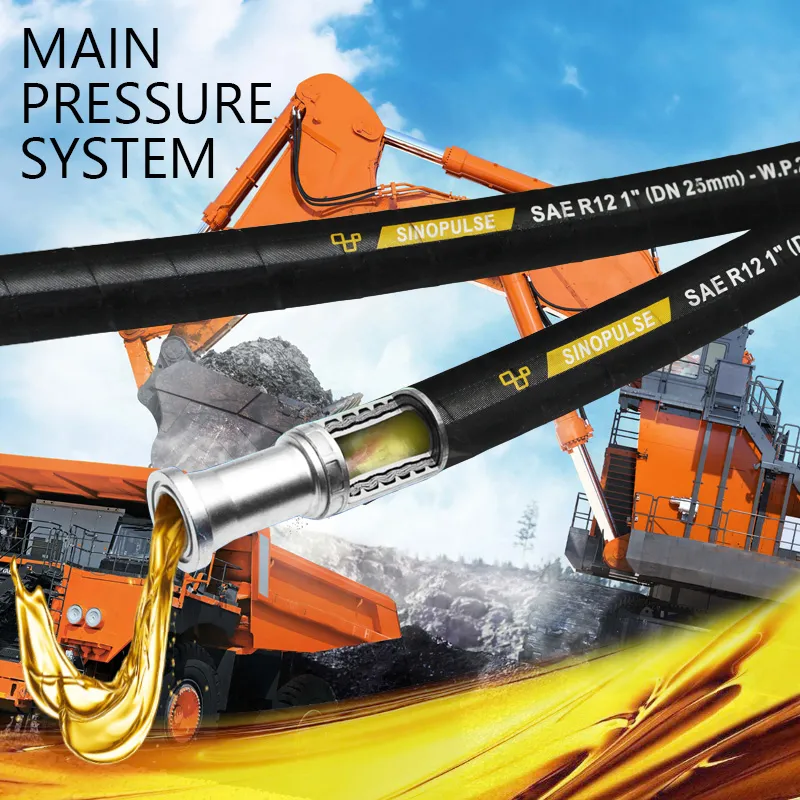
Smooth cover hydraulic hose, particularly in cost-optimized configurations, represents a critical component in fluid power systems across diverse industrial applications. This guide focuses on these “cheap” smooth cover hoses – a classification denoting a balance between functionality and economy – used for the transmission of hydraulic fluid under pressure. These hoses typically utilize a synthetic rubber inner tube, multiple layers of high-tensile braided reinforcement (typically steel wire or fiber braiding), and a smooth, abrasion-resistant outer cover. Their primary role is to efficiently and safely convey hydraulic power from pumps to actuators, cylinders, and other hydraulic components. While premium hoses prioritize extended lifecycles and exotic fluid compatibility, smooth cover hydraulic hoses address applications where cost-effectiveness is paramount, such as construction equipment, agricultural machinery, and basic industrial hydraulics. Understanding the material science, manufacturing processes, performance characteristics, and potential failure modes of these hoses is crucial for ensuring system reliability and minimizing operational downtime. The core pain point for end-users lies in achieving a suitable lifespan and maintaining operational safety without incurring the substantial cost of high-specification hoses.
Material Science & Manufacturing
The manufacturing of cheap smooth cover hydraulic hose involves several critical stages, each impacting the final product’s performance. The inner tube commonly utilizes synthetic rubbers like Styrene-Butadiene Rubber (SBR) or Nitrile Butadiene Rubber (NBR) due to their resistance to petroleum-based hydraulic fluids. SBR offers good abrasion resistance and moderate oil resistance at a lower cost, while NBR provides superior oil resistance, essential for compatibility with a wider range of hydraulic fluids. Reinforcement layers typically consist of one or more braids of high-tensile steel wire. The number of braids directly correlates with the hose’s working pressure rating; more braids equate to higher pressure capacity. Fiber braiding, utilizing polyester or nylon, is sometimes employed in lower-pressure applications to reduce cost. The outer cover is generally composed of Chloroprene rubber (CR), known for its resistance to abrasion, weathering, and ozone.
Manufacturing begins with the extrusion of the inner tube. Precise temperature control is crucial during extrusion to ensure uniform rubber consistency and dimensional accuracy. The reinforcement braid is then applied helically around the inner tube using specialized braiding machines. The angle and tension of the braid are tightly controlled, as these parameters directly affect the hose’s flexibility and burst pressure. Following braiding, the outer cover is extruded over the reinforcement layer. A curing process, typically involving heat and pressure, is then employed to vulcanize the rubber compounds, enhancing their physical properties and creating a robust, integrated structure. Quality control measures throughout the process include dimensional checks, pressure testing (to verify burst pressure), and impulse testing (to assess resistance to pulsating pressure). Key parameter controls include rubber compound batch consistency, braid angle and tension, and curing temperature and duration. Deviation from these parameters can lead to premature failure.

Performance & Engineering
The performance of a smooth cover hydraulic hose is dictated by its ability to withstand internal pressure, external loads, and environmental factors. Force analysis centers around hoop stress within the inner tube and the tensile stress experienced by the reinforcement braid. The working pressure is determined by the braid construction (number of braids and wire diameter) and the material properties of the inner tube and cover. Engineering considerations include bend radius – exceeding the minimum bend radius can induce kinking and premature failure. Impulse pressure, common in hydraulic systems, subjects the hose to cyclical pressure fluctuations, leading to fatigue. The hose’s ability to withstand these impulses depends on the reinforcement’s elasticity and damping characteristics.
Environmental resistance is another critical factor. Exposure to extreme temperatures (both high and low) can degrade the rubber compounds, reducing their flexibility and increasing the risk of cracking. Ozone and UV radiation can also cause surface degradation. Chemical compatibility is crucial, as incompatible fluids can cause swelling, softening, or dissolution of the inner tube material. Compliance requirements, varying by region and application, often mandate adherence to standards such as SAE J517 (hydraulic hose specifications) and ISO 6898 (hydraulic fluid power – hose assemblies). Functional implementation involves proper hose assembly with compatible fittings, ensuring leak-free connections and preventing stress concentrations. Incorrect crimping can drastically reduce the hose’s lifespan.
Technical Specifications
| Parameter | Unit | Typical Value (Low-Pressure Grade) | Typical Value (High-Pressure Grade) |
|---|---|---|---|
| Working Pressure | PSI | 1500 | 3000 |
| Burst Pressure | PSI | 4500 | 9000 |
| Inner Tube Material | - | SBR | NBR |
| Reinforcement | Layers | 1-wire braid | 2-wire braid |
| Outer Cover Material | - | CR | CR |
| Temperature Range | °F | -40 to +212 | -40 to +212 |
| Minimum Bend Radius | inches | 6 | 8 |
Failure Mode & Maintenance
Cheap smooth cover hydraulic hoses are susceptible to several failure modes. Fatigue cracking, initiated by repeated pressure cycling and bending, is a common issue, particularly near the fittings. Delamination, or separation of the layers, can occur due to inadequate bonding during manufacturing or exposure to incompatible fluids. Degradation of the rubber compounds, caused by heat, ozone, or UV radiation, leads to hardening, cracking, and loss of flexibility. Oxidation of the inner tube material can result in the formation of sludge, which can clog the system and accelerate wear. Abrasion of the outer cover can expose the reinforcement braid, leading to corrosion and eventual failure. Pinholes in the inner tube can occur due to manufacturing defects or damage from foreign objects.
Maintenance best practices include regular visual inspections for signs of wear, cracking, or swelling. Hose assemblies should be inspected for proper fitting crimp and secure connections. The hydraulic fluid should be regularly analyzed for contamination and replaced as needed. Hoses should be replaced at predetermined intervals, based on operating conditions and manufacturer recommendations. When replacing hoses, it is essential to use compatible fittings and ensure proper assembly techniques. Avoid exceeding the hose’s working pressure or minimum bend radius. Implementing a preventative maintenance program, including scheduled inspections and replacements, is crucial for minimizing downtime and ensuring operational safety. Any hose exhibiting signs of damage or deterioration should be removed from service immediately.
Industry FAQ
Q: What is the typical lifespan of a cheap smooth cover hydraulic hose in a construction environment?
A: The lifespan is highly variable but typically ranges from 2-5 years. Severe operating conditions – exposure to abrasive materials, extreme temperatures, and frequent bending – will reduce this lifespan. Regular inspections and adherence to recommended maintenance schedules are vital for maximizing service life.
Q: How does the type of hydraulic fluid affect hose performance?
A: Hydraulic fluid compatibility is paramount. Using an incompatible fluid can cause the inner tube to swell, soften, or dissolve, leading to premature failure. NBR inner tubes offer broader fluid compatibility than SBR.
Q: What are the key factors to consider when selecting a hose for a specific application?
A: Working pressure, temperature range, fluid compatibility, bend radius, and external load are the primary considerations. The application’s duty cycle (continuous vs. intermittent operation) also plays a role.
Q: What causes hose fittings to fail?
A: Fitting failure is often due to improper crimping, corrosion, or damage from external forces. Incorrectly crimped fittings can leak or loosen over time. Using incompatible fitting materials can also lead to corrosion.
Q: How can I identify a hose that is nearing the end of its lifespan?
A: Look for signs of cracking, swelling, hardening, abrasion, or leakage. Regularly check the hose for proper flexibility and ensure the fittings are secure. Any visible damage warrants immediate replacement.
Conclusion
Cheap smooth cover hydraulic hoses offer a cost-effective solution for numerous hydraulic applications where extreme performance or longevity are not critical requirements. Their performance is intrinsically linked to the materials used – primarily synthetic rubbers for the inner tube and outer cover, and high-tensile steel wire for reinforcement – and the precision of the manufacturing processes. Careful consideration must be given to operating conditions, fluid compatibility, and proper installation to maximize service life and ensure operational safety.
Ultimately, successful implementation relies on understanding the inherent limitations of these hoses and implementing a robust preventative maintenance program. Future developments may focus on improving the abrasion resistance of outer covers and enhancing the compatibility of inner tube materials with newer, more environmentally friendly hydraulic fluids. The ongoing challenge remains balancing cost-effectiveness with reliable performance and adherence to increasingly stringent safety regulations.