


cheap flexible rubber hydraulic hose companies Performance Analysis
Introduction
Flexible rubber hydraulic hoses are critical components in fluid power systems, transmitting pressurized fluid to actuate machinery across diverse industries including construction, agriculture, manufacturing, and automotive. These hoses are valued for their flexibility, enabling connection between static and moving components, and for absorbing shock and vibration. The market for these hoses is stratified, with significant price variance dependent on materials, construction methods, and performance characteristics. “Cheap” flexible rubber hydraulic hoses generally refer to those utilizing less expensive rubber compounds, simpler reinforcement structures, and potentially less rigorous quality control measures. This guide provides an in-depth technical overview of these hoses, covering material science, manufacturing, performance considerations, failure modes, and relevant industry standards. Understanding these aspects is crucial for procurement managers and engineers to navigate the trade-offs between cost and reliability when selecting hoses for specific applications. Core pain points within the industry center around premature hose failure, leading to downtime, safety hazards, and fluid leaks, frequently stemming from inadequate material selection for the operating environment or insufficient reinforcement for the system pressure.
Material Science & Manufacturing
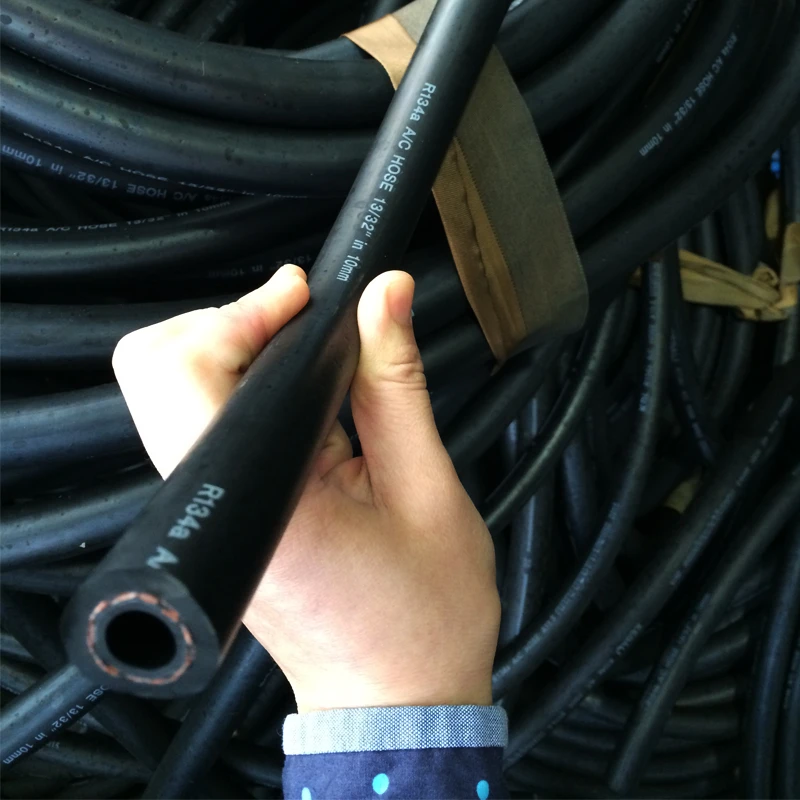
The construction of a flexible rubber hydraulic hose typically comprises three key layers: the inner tube, the reinforcement layer, and the outer cover. Inner tubes are commonly manufactured from synthetic rubbers such as nitrile rubber (NBR), styrene-butadiene rubber (SBR), or ethylene propylene diene monomer (EPDM). NBR offers excellent resistance to petroleum-based hydraulic fluids, making it a frequent choice. SBR provides good abrasion resistance at a lower cost, while EPDM is selected for its resistance to heat, ozone, and weathering. ‘Cheap’ hoses often prioritize SBR or lower grades of NBR to reduce material costs. The reinforcement layer provides the hose's pressure resistance and is generally constructed from textile braids (typically polyester or nylon) or steel wire spirals. Polyester braids are common in lower-pressure applications and are less expensive than steel wire. Steel wire reinforcement offers significantly higher pressure capabilities but adds to the cost and weight. Cheaper hoses typically employ fewer braid layers or utilize lower tensile strength yarns. The outer cover protects the reinforcement layer from abrasion, environmental degradation, and chemical exposure and is generally composed of CR (Chloroprene Rubber) or SBR. Manufacturing processes involve extrusion of the inner tube and outer cover, followed by braiding or spiraling of the reinforcement layer. These layers are then assembled and vulcanized – a process involving heat and pressure to crosslink the rubber molecules, imparting strength, elasticity, and resistance to degradation. Key parameter control during vulcanization is paramount, specifically temperature, pressure, and cure time, as variations can significantly impact hose performance and lifespan. In cheaper hoses, control over these parameters may be less stringent, leading to inconsistent material properties and increased failure rates. Raw material purity and consistency also play a vital role; lower-cost manufacturers may utilize recycled rubber compounds or accept materials with wider tolerance ranges in impurity levels.
Performance & Engineering
The performance of a rubber hydraulic hose is dictated by its ability to withstand internal pressure, external pressure, temperature extremes, and fluid compatibility. Internal pressure ratings are determined by the hose’s diameter and reinforcement structure, calculated using formulas based on the tensile strength of the reinforcement material and the allowable stress of the rubber compound (Hoop Stress). Burst pressure is typically four times the working pressure. Engineering considerations extend to hose bend radius – exceeding the minimum bend radius can cause kinking and localized stress concentrations, leading to premature failure. External pressure resistance is critical in suction applications, preventing hose collapse. Temperature resistance is defined by the operating temperature range of the rubber compounds. Hydraulic fluids operate across a wide temperature range, and exceeding these limits can cause hardening, cracking, or softening of the hose material. Fluid compatibility is equally important; incompatible fluids can cause swelling, degradation, or leaching of plasticizers from the rubber, compromising its structural integrity. ‘Cheap’ hoses often exhibit reduced performance in these areas due to the use of lower-grade materials and less robust construction. Specifically, the working pressure may be lower, the bend radius more restrictive, the temperature range narrower, and the fluid compatibility limited to common petroleum-based fluids. Fatigue life is another key performance metric; cyclic pressure fluctuations can induce fatigue cracking in the reinforcement layer. Finite Element Analysis (FEA) is used during the design phase to predict stress distribution under various loading conditions and optimize hose construction for enhanced fatigue resistance.
Technical Specifications
| Parameter | Low-Cost Rubber Hose (Typical) | Mid-Range Rubber Hose | Premium Rubber Hose |
|---|---|---|---|
| Working Pressure (PSI) | 1500 | 3000 | 5000 |
| Burst Pressure (PSI) | 4500 | 9000 | 15000 |
| Reinforcement Type | Polyester Braid (2-Layer) | Polyester Braid (4-Layer) | Steel Wire Spiral |
| Inner Tube Material | SBR | NBR | Fluorocarbon (FKM) |
| Outer Cover Material | SBR | CR | CP (Chlorinated Polyethylene) |
| Temperature Range (°F) | -20 to 212 | -40 to 250 | -65 to 300 |
Failure Mode & Maintenance
Failure modes in rubber hydraulic hoses are diverse, often stemming from a combination of factors. Common failure mechanisms include: Fatigue Cracking: Repeated pressure cycles induce cracks in the reinforcement layer, eventually leading to rupture. Abrasion: External abrasion from contact with surrounding surfaces can wear through the outer cover and reinforcement, exposing the inner tube. Chemical Degradation: Exposure to incompatible fluids can cause swelling, softening, or cracking of the rubber compounds. Heat Degradation: Prolonged exposure to high temperatures can cause hardening and embrittlement of the rubber. Ozone Cracking: Exposure to ozone can cause surface cracking, particularly in unsaturated rubbers. Pinholes: Small punctures in the inner tube can lead to leaks. ‘Cheap’ hoses are more susceptible to these failure modes due to their lower-quality materials and construction. Maintenance strategies involve regular visual inspections for signs of damage (cracks, abrasions, swelling), pressure testing to identify leaks, and proper hose routing to minimize bending and abrasion. Hose guards should be used to protect hoses from external damage. Replacement should be performed at recommended intervals or upon detection of any signs of deterioration. Proper storage is crucial; hoses should be stored in a cool, dry, dark environment to prevent degradation. Avoid kinking or twisting hoses during storage. Post-mortem failure analysis – carefully examining a failed hose to determine the root cause of failure – is a valuable tool for preventing future occurrences.
Industry FAQ
Q: What is the impact of fluid velocity on hose life?
A: Higher fluid velocities increase the rate of erosion and fatigue within the hose. Increased velocity amplifies pressure pulsations, accelerating fatigue failure. Choosing a hose with a larger inner diameter to reduce fluid velocity is a recommended practice, especially in high-pressure systems. Cheaper hoses often have less precise inner diameters and surface finishes, exacerbating erosion issues.
Q: How does hose reinforcement type affect flexibility?
A: Textile braids (polyester, nylon) offer greater flexibility than steel wire spirals. However, steel wire provides significantly higher pressure capacity. The trade-off is flexibility versus pressure rating. Cheaper hoses typically prioritize flexibility with fewer reinforcement layers, compromising pressure resistance.
Q: What is the role of the outer cover in hose performance?
A: The outer cover provides crucial protection against abrasion, ozone, UV radiation, and chemical exposure. A robust outer cover significantly extends hose life. Cheaper hoses often utilize less durable cover materials (like SBR) that degrade more quickly in harsh environments.
Q: How important is proper hose assembly?
A: Proper crimping of hose fittings is critical for a leak-free and reliable connection. Incorrect crimp dimensions can lead to premature failure. Using certified crimping equipment and trained personnel is essential. Cheaper hose suppliers may not have the same level of quality control in their assembly processes.
Q: Can I use a different type of hydraulic fluid than specified by the hose manufacturer?
A: No. Using an incompatible fluid can cause swelling, softening, or cracking of the hose material, leading to catastrophic failure. Always verify fluid compatibility with the hose’s inner tube material.
Conclusion
The selection of flexible rubber hydraulic hoses necessitates a careful evaluation of application requirements, operating conditions, and budgetary constraints. While “cheap” hoses offer an initial cost advantage, they often exhibit reduced performance, shorter lifespan, and increased susceptibility to failure. This can lead to higher long-term costs associated with downtime, fluid leaks, and replacement. Understanding the material science, manufacturing processes, and potential failure modes is paramount for making informed purchasing decisions.
Prioritizing hoses with appropriate reinforcement, fluid compatibility, and temperature ratings, even if they incur a higher upfront cost, can significantly improve system reliability, enhance safety, and reduce overall operational expenses. Regular inspection and preventative maintenance are vital for maximizing hose lifespan and minimizing the risk of unexpected failures.