


ce certification wrapped cover hydraulic hose factories Performance Analysis
Introduction
Wrapped cover hydraulic hoses represent a critical component in fluid power systems across numerous industrial applications, including construction machinery, agricultural equipment, and manufacturing processes. These hoses are specifically designed to convey hydraulic fluid under high pressure, facilitating the transmission of power. CE certification for these hoses signifies compliance with European health, safety, and environmental protection standards, enabling market access within the European Economic Area (EEA). The certification process addresses aspects like pressure resistance, burst pressure, fatigue life, and material compatibility. This guide provides a detailed technical overview of CE-certified wrapped cover hydraulic hoses, covering material science, manufacturing processes, performance characteristics, failure modes, and relevant industry standards. A key pain point in the industry lies in ensuring consistent adherence to increasingly stringent CE requirements, particularly concerning REACH and RoHS compliance related to material composition and environmental impact. Maintaining traceability of materials and rigorous testing procedures are paramount to successful CE certification.
Material Science & Manufacturing
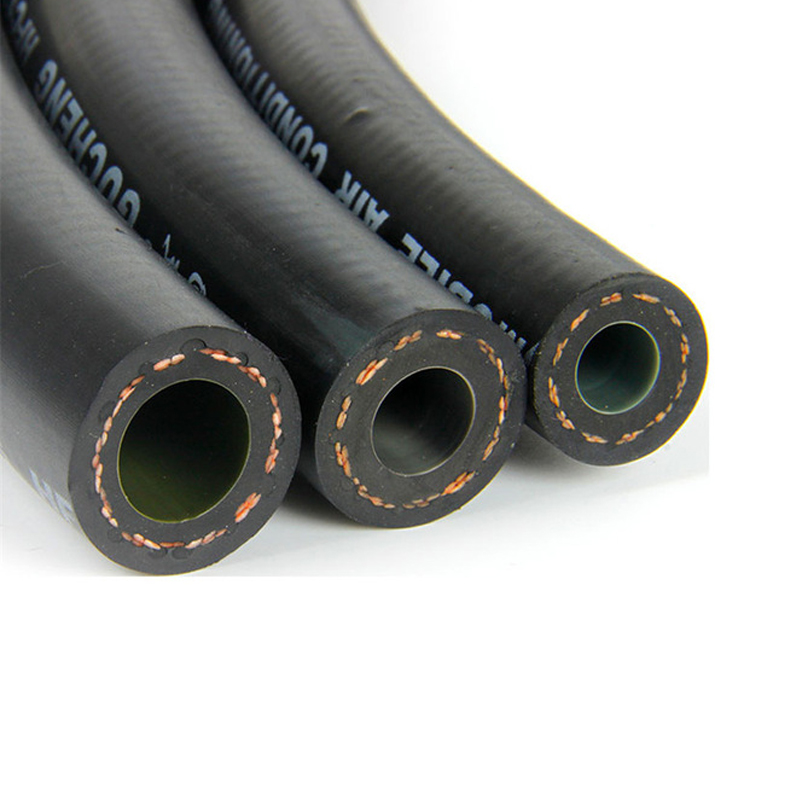
The construction of a CE-certified wrapped cover hydraulic hose involves several key material selections and manufacturing processes. The inner tube is typically composed of a synthetic rubber compound, such as nitrile rubber (NBR), chloroprene rubber (CR), or ethylene propylene diene monomer (EPDM), chosen for compatibility with the hydraulic fluid being conveyed. NBR offers excellent resistance to petroleum-based fluids, while CR provides superior resistance to ozone and weathering. EPDM excels in phosphate ester fluid compatibility. Reinforcement layers, typically comprised of high-tensile steel wire, are spirally wound around the inner tube to provide pressure resistance. The number of layers dictates the working pressure capacity. A cover layer, typically a synthetic rubber blend like polyurethane, offers abrasion resistance and protection against environmental degradation. Manufacturing involves extrusion of the inner tube, precise winding of the reinforcement layers under tension control, and subsequent extrusion of the cover. Critical parameters include extrusion temperature, winding tension, and vulcanization time and temperature. Vulcanization, a chemical process involving cross-linking of the rubber polymers, is essential for achieving desired mechanical properties and ensuring long-term durability. Proper control of these parameters is crucial to meet CE certification requirements, specifically regarding tensile strength, elongation at break, and hardness as per ISO 6807.
Performance & Engineering
Performance of wrapped cover hydraulic hoses is dictated by several engineering considerations. Burst pressure, defined as the pressure at which the hose fails catastrophically, is a primary performance parameter. Working pressure is significantly lower, typically rated as 70% of the burst pressure, to account for safety factors. Fatigue life, the number of pressure cycles the hose can withstand before failure, is critical for dynamic applications. This is heavily influenced by hose movement (bending and flexing) and the amplitude of those movements. Hose bend radius is also important, with exceeding the minimum bend radius causing premature failure due to stress concentration. Environmental resistance encompasses factors like temperature variation, exposure to oils, chemicals, and UV radiation. The choice of rubber compounds must be carefully considered based on the intended application environment. Compliance with industry standards such as SAE J517 and EN 853 dictates acceptable performance levels. Finite Element Analysis (FEA) is often employed during the design phase to optimize hose geometry and reinforcement layer configuration for maximizing performance and minimizing weight. A key pain point for engineers is balancing pressure capacity with flexibility and minimizing weight to improve system efficiency.
Technical Specifications
| Parameter | Unit | Typical Value (DN20 Hose) | Test Standard |
|---|---|---|---|
| Working Pressure | MPa | 20 | EN 853 |
| Burst Pressure | MPa | 80 | EN 853 |
| Temperature Range | °C | -40 to +100 | ISO 6807 |
| Inner Tube Material | - | NBR | - |
| Reinforcement | Layers | 2 Spiral Steel Wire | - |
| Cover Material | - | Polyurethane | - |
Failure Mode & Maintenance
Wrapped cover hydraulic hoses are susceptible to several failure modes. Fatigue cracking, initiated by repeated bending and flexing, is a common failure mechanism, particularly in dynamic applications. Bursting occurs when the working pressure exceeds the hose's rated capacity or due to defects in the reinforcement layers. Abrasion of the cover layer can expose the reinforcement, leading to corrosion and eventual failure. Internal degradation of the rubber compounds due to chemical incompatibility or aging can also compromise hose integrity. Oxidation, caused by exposure to oxygen and heat, leads to hardening and cracking of the rubber. To mitigate these failures, regular visual inspections are crucial, looking for signs of abrasion, cracking, or bulging. Hose routing should minimize bending and twisting. Correct fluid compatibility must be ensured to prevent internal degradation. Preventative maintenance includes periodic pressure testing and replacement of hoses at recommended intervals. Failure analysis should be conducted on failed hoses to identify root causes and prevent recurrence. A significant industry challenge is predicting remaining useful life (RUL) of hoses in service, requiring advanced monitoring techniques and data analysis.
Industry FAQ
Q: What specific CE directives apply to wrapped cover hydraulic hoses?
A: Several CE directives are relevant, including the Machinery Directive (2006/42/EC) which covers safety requirements for machinery where the hose is used as a component, the REACH regulation (EC) No 1907/2006 concerning the Registration, Evaluation, Authorisation and Restriction of Chemicals, and the RoHS directive (2011/65/EU) restricting the use of certain hazardous substances. Compliance requires documentation of material composition, testing reports, and a Declaration of Conformity.
Q: What are the key tests performed during CE certification?
A: Key tests include hydrostatic pressure testing (to verify burst pressure), impulse testing (to assess fatigue life), tensile strength testing of the reinforcement layers, and material composition analysis to ensure REACH and RoHS compliance. Temperature cycling and fluid compatibility tests are also frequently conducted.
Q: How important is traceability of materials in the CE certification process?
A: Traceability is critically important. CE certification requires detailed documentation of the origin and composition of all materials used in the hose, including the rubber compounds and steel wire. This ensures that the materials meet the required standards and allows for effective recall procedures if necessary.
Q: What is the impact of fluid type on hose selection and performance?
A: Fluid type significantly impacts hose performance. Different hydraulic fluids have varying chemical properties, requiring specific rubber compounds for compatibility. Using an incompatible fluid can cause swelling, degradation, and premature failure of the inner tube. The hose manufacturer’s compatibility charts must be consulted before selecting a hose for a particular application.
Q: How does hose bend radius affect its service life?
A: Exceeding the minimum bend radius induces stress concentration in the hose, accelerating fatigue failure. Maintaining the recommended bend radius is essential for maximizing service life, particularly in dynamic applications. Using hose guards and proper routing techniques can help prevent excessive bending.
Conclusion
CE-certified wrapped cover hydraulic hoses are fundamental components in various industrial applications, demanding meticulous attention to material science, manufacturing precision, and rigorous testing. Compliance with European standards is not merely a regulatory requirement but a testament to product safety, reliability, and environmental responsibility. Understanding the intricacies of hose construction, performance parameters, and potential failure modes is crucial for engineers and procurement managers seeking to optimize system performance and minimize downtime.
Looking forward, the industry faces increasing pressure to adopt sustainable materials and manufacturing processes. Innovations in hose design, such as the use of bio-based rubber compounds and optimized reinforcement structures, will play a vital role in reducing environmental impact and enhancing hose performance. Continuous monitoring of hose condition through sensor-based technologies will also enable predictive maintenance and extend service life, contributing to improved operational efficiency and reduced costs.