


ce certification flexible rubber hydraulic hose company Performance Analysis
Introduction
Flexible rubber hydraulic hoses are critical components in fluid power systems, transmitting hydraulic fluid to actuate machinery across diverse industries including construction, agriculture, manufacturing, and automotive. This technical guide focuses on CE-certified flexible rubber hydraulic hoses, detailing their material composition, manufacturing processes, performance characteristics, failure modes, and relevant industry standards. CE certification signifies conformity with health, safety, and environmental protection standards as mandated by the European Union, and is increasingly a requirement for global market access. The core performance of these hoses hinges on their ability to withstand high pressures, resist abrasion, maintain flexibility in dynamic applications, and ensure fluid compatibility, thereby guaranteeing system reliability and operational safety. Understanding the intricacies of these hoses is paramount for procurement managers, engineers, and maintenance personnel seeking optimal performance and longevity.
Material Science & Manufacturing
The construction of a CE-certified flexible rubber hydraulic hose typically involves multiple layers, each serving a specific purpose. The innermost layer, or tube, is typically composed of a synthetic rubber compound – commonly nitrile rubber (NBR), ethylene propylene diene monomer (EPDM), or fluorocarbon (FKM/Viton) – selected based on fluid compatibility requirements. NBR excels in mineral oil-based hydraulic fluids, EPDM provides excellent resistance to water-based fluids and weathering, while FKM offers superior resistance to aggressive chemicals and high temperatures. The reinforcement layer provides the hose's pressure-withstanding capability, generally employing multiple layers of high-tensile steel wire braid or spiral-wound steel wire. The number of layers and wire diameter directly correlate with the hose's working and burst pressures. An outer cover, typically comprised of chloroprene rubber (CR) or polyurethane (PU), provides abrasion resistance, weathering protection, and overall durability. Manufacturing processes include extrusion of the inner tube and outer cover, calendaring of reinforcement layers, and subsequent assembly through bonding adhesives and mechanical locking. Key parameter controls during manufacturing include precise temperature and pressure management during extrusion, accurate winding tension for reinforcement layers, and rigorous quality control checks for dimensional accuracy, bond strength, and pressure testing to ensure adherence to EN 853 and ISO 6897 standards. Batch traceability is maintained throughout the process to facilitate failure analysis and ensure accountability.

Performance & Engineering
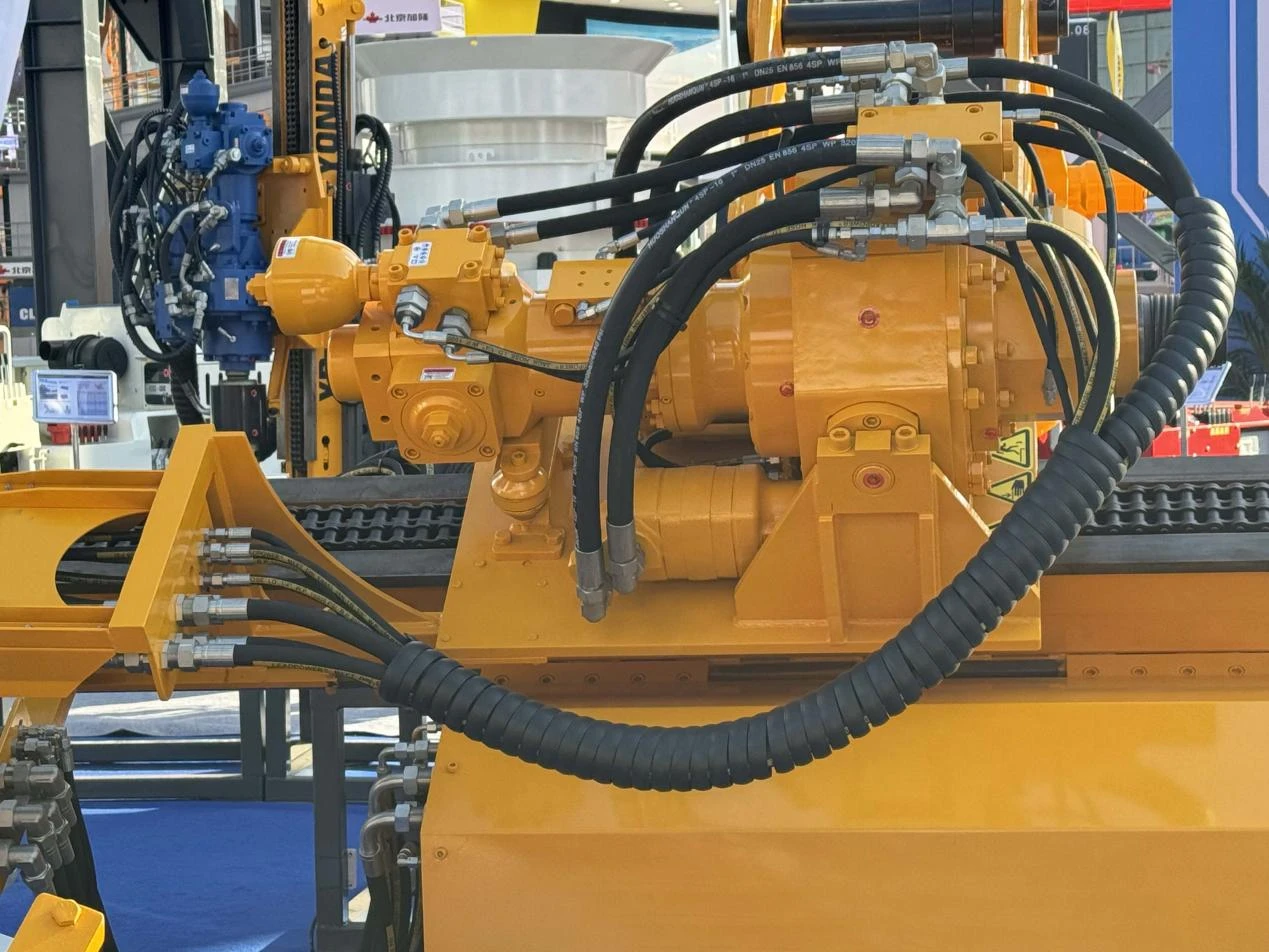
The performance of a flexible rubber hydraulic hose is dictated by several engineering considerations. Static and dynamic pressure ratings are determined through burst pressure testing, impulse testing (cyclic pressure application), and fatigue testing, conforming to ISO 3096 and SAE J517 standards. Flexibility, measured by bend radius, is crucial for installations in confined spaces. This is governed by the hose’s construction, particularly the reinforcement layer configuration. Environmental resistance, including temperature range (-40°C to +120°C is typical, but varies with material selection), ozone resistance, and UV resistance, must be assessed based on the intended application environment. Fluid compatibility is paramount to prevent swelling, degradation, or permeation of the hose material, leading to leaks and failures. Finite Element Analysis (FEA) is frequently employed to model stress distribution within the hose under various loading conditions, optimizing reinforcement layer design and predicting service life. The selection of end fittings (crimped, swaged, or field-attachable) significantly impacts hose performance; fittings must be compatible with the hose material and rated for the same pressure and temperature specifications. Proper hose routing and support are also vital to prevent kinking, abrasion, and excessive bending stresses, which can compromise structural integrity and lead to premature failure.
Technical Specifications
| Parameter | Unit | Typical Value (NBR/Steel Wire Braid) | Typical Value (FKM/Spiral Steel Wire) |
|---|---|---|---|
| Working Pressure | MPa | 25 | 40 |
| Burst Pressure | MPa | 75 | 120 |
| Temperature Range | °C | -40 to +100 | -20 to +150 |
| Minimum Bend Radius | mm | 4D (D=hose ID) | 6D (D=hose ID) |
| Fluid Compatibility | - | Mineral Oil, Water-Glycol | Wide range including fuels, oils, and chemicals |
| Reinforcement Type | - | 2 or 4 Steel Wire Braid | Spiral Steel Wire |
Failure Mode & Maintenance
Common failure modes in flexible rubber hydraulic hoses include burst due to exceeding pressure limits, fatigue cracking from cyclic bending and pressure fluctuations, abrasion from external contact, and permeation leading to fluid loss. Internal failures can originate from hose tube degradation due to incompatible fluids, causing swelling, softening, or cracking. External damage can manifest as cover abrasion, cuts, or crushing, compromising the reinforcement layer. Failure analysis typically involves visual inspection, microscopic examination of fractured surfaces, and chemical analysis of the hose material. Preventive maintenance is crucial for extending hose life and preventing catastrophic failures. This includes regular visual inspections for signs of wear, abrasion, or leaks; checking hose routing and supports to prevent kinking and rubbing; and periodically replacing hoses based on manufacturer recommendations or operational conditions. Proper storage of hoses in a cool, dry environment away from direct sunlight and ozone sources is also essential. Crimped fittings should be inspected for proper retention and replaced if damaged. When replacing hoses, ensure compatibility with the hydraulic fluid and operating conditions. Record keeping of hose installations and replacements facilitates predictive maintenance and improves system reliability.
Industry FAQ
Q: What is the significance of the CE marking on a hydraulic hose?
A: The CE marking indicates that the hydraulic hose complies with the essential health and safety requirements of the Pressure Equipment Directive (PED) 2014/68/EU and other relevant European Union directives. This ensures that the hose has undergone rigorous testing and assessment to meet specific safety standards, allowing for legal sale and use within the EU and often required for international compliance.
Q: How does temperature affect the performance and lifespan of a hydraulic hose?
A: Temperature extremes can significantly impact hose performance. High temperatures can accelerate rubber degradation and reduce pressure ratings, while low temperatures can decrease flexibility and increase the risk of cracking. Exceeding the specified temperature range for the hose material can lead to premature failure. Proper material selection based on the operating temperature is therefore critical.
Q: What is the impact of using an incompatible hydraulic fluid with a rubber hose?
A: Using an incompatible hydraulic fluid can cause the hose tube to swell, soften, or crack, leading to leaks and ultimately, hose failure. Certain fluids can also accelerate the degradation of the rubber compound, reducing its overall lifespan. Always verify fluid compatibility with the hose material before installation.
Q: What are the key differences between braided and spiral-wound hydraulic hoses?
A: Braided hoses offer excellent flexibility and are suitable for applications with tighter bend radii. Spiral-wound hoses provide higher pressure ratings and are more resistant to kinking and twisting, making them ideal for heavy-duty applications where higher pressures and more dynamic movement are present. The reinforcement structure dictates these performance differences.
Q: How can I identify signs of impending hose failure before a catastrophic event?
A: Regularly inspect hoses for signs of cracking, abrasion, blistering, or leaks. Pay attention to any changes in flexibility or difficulty in bending the hose. Look for signs of fitting corrosion or looseness. If any of these signs are observed, replace the hose immediately to prevent a potentially dangerous failure.
Conclusion
CE-certified flexible rubber hydraulic hoses are vital components in countless industrial applications, demanding a comprehensive understanding of their material science, manufacturing processes, and performance characteristics. Ensuring compatibility with hydraulic fluids, proper installation techniques, and diligent maintenance practices are essential for maximizing service life and preventing costly failures. The choice between different hose constructions – braided versus spiral-wound, and the selection of appropriate rubber compounds – should be based on a thorough assessment of the operating conditions and application requirements.
Future advancements in hydraulic hose technology are focused on developing more durable and environmentally friendly materials, improving burst pressure resistance, and incorporating smart sensors for real-time monitoring of hose condition. Adherence to international standards like EN 853, ISO 6897, and SAE J517 is paramount for ensuring product quality, safety, and regulatory compliance, ultimately contributing to the efficiency and reliability of hydraulic systems.