


ce certification all sizes hydraulic hose manufacturers Performance Engineering
Introduction
Hydraulic hoses, critical components in fluid power systems, transmit hydraulic fluid to actuate machinery across diverse industries including construction, agriculture, manufacturing, and aerospace. CE certification for all sizes of hydraulic hoses signifies adherence to stringent European Union safety, health, and environmental protection standards. This guide details the requirements for CE marking hydraulic hoses, encompassing material science, manufacturing processes, performance characteristics, and potential failure modes. The increasing demand for reliable and safe hydraulic systems necessitates a thorough understanding of CE compliance. Without adherence to these standards, manufacturers face significant legal and market access barriers within the EU. This document serves as a technical resource for manufacturers, engineers, and procurement specialists involved in the production and specification of hydraulic hose assemblies.
Material Science & Manufacturing
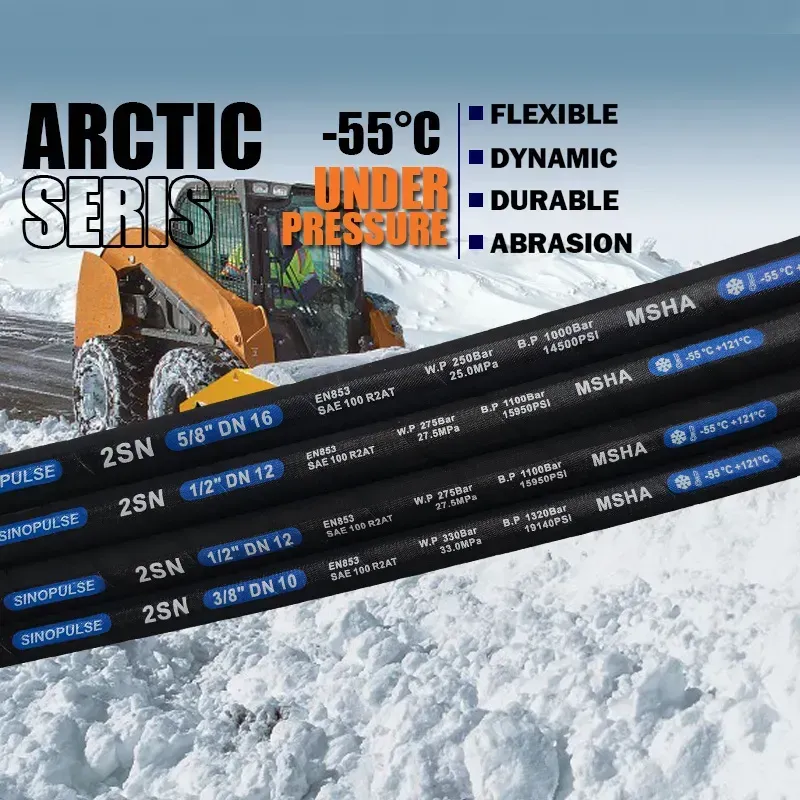
Hydraulic hose construction typically involves four key layers: the inner tube, reinforcement layers, outer cover, and potentially a bonding layer. The inner tube, in direct contact with the hydraulic fluid, is commonly composed of synthetic rubbers like nitrile (NBR), chloroprene (CR), or fluoropolymers (FKM/Viton) chosen for their chemical compatibility, temperature resistance, and flexibility. NBR offers good resistance to petroleum-based fluids at moderate temperatures, while CR provides enhanced resistance to ozone and weathering. FKM provides superior resistance to high temperatures and aggressive fluids, but at a higher cost. Reinforcement layers, providing burst pressure resistance, typically comprise one or more braids or spirals of high-strength steel wire. The wire is surface-treated for adhesion and corrosion protection. Outer covers are generally composed of synthetic rubbers such as CR or polyurethane (PU), offering abrasion, ozone, and weathering resistance. Manufacturing processes involve extrusion of the inner tube and outer cover, followed by winding or spiraling of the reinforcement layers. Critical parameters during extrusion include temperature control, screw speed, and die design to ensure dimensional accuracy and uniform material properties. Reinforcement winding requires precise tension control to achieve the specified burst pressure rating. Post-manufacturing processes include vulcanization (curing) to crosslink the rubber compounds, enhancing their physical properties and chemical resistance. Quality control at each stage, including raw material testing, dimensional inspection, and burst pressure testing, is paramount.
Performance & Engineering
The performance of a hydraulic hose is defined by several critical parameters, including working pressure, burst pressure, temperature range, fluid compatibility, and bend radius. Working pressure is the maximum continuous operating pressure specified by the manufacturer, typically expressed in psi or bar. Burst pressure is the pressure at which the hose is expected to fail catastrophically, and is typically four times the working pressure. Temperature range dictates the operating temperature limits for the hose, exceeding which can lead to material degradation and failure. Fluid compatibility is crucial to prevent swelling, softening, or cracking of the inner tube. Bend radius is the minimum radius to which the hose can be bent without kinking or damaging the reinforcement layers. Engineering considerations for CE compliance include performing Finite Element Analysis (FEA) to validate the hose's structural integrity under various loading conditions. These analyses consider factors such as internal pressure, external bending moments, and axial tensile loads. Furthermore, conducting accelerated aging tests, exposing hoses to elevated temperatures and pressures for extended periods, provides data on long-term durability and reliability. Compliance with EN 489 (Industrial hoses and hose assemblies for fluid power applications – Safety requirements) is fundamental for CE marking, requiring rigorous testing and documentation.
Technical Specifications
| Parameter | Unit | Specification (Typical) | Test Standard |
|---|---|---|---|
| Working Pressure | Bar | 160 - 420 | EN 489 |
| Burst Pressure | Bar | 640 - 1680 | EN 489 |
| Temperature Range | °C | -40 to +100 | SAE J30R3 |
| Inner Tube Material | - | NBR, CR, FKM | ASTM D2000 |
| Reinforcement | - | Steel Wire Braid (1SP, 2SP, 4SP) or Spiral | EN 489 |
| Outer Cover Material | - | CR, PU | ASTM D2000 |
Failure Mode & Maintenance
Hydraulic hose failures commonly stem from several mechanisms. Fatigue cracking, resulting from repeated flexing and pressure cycling, is a prevalent cause, particularly in applications with dynamic loads. Corrosion, both internal and external, can degrade the reinforcement layers, reducing burst pressure. External abrasion from contact with abrasive surfaces can compromise the outer cover, leading to reinforcement exposure and subsequent corrosion. Internal degradation of the inner tube due to fluid incompatibility or excessive temperature can lead to swelling, softening, and eventual failure. Kinking, caused by exceeding the minimum bend radius, can damage the reinforcement layers and restrict fluid flow. Maintenance procedures should include regular visual inspections for signs of wear, abrasion, cracking, or leakage. Hose assemblies should be replaced if any defects are detected. Proper routing and support of hoses, utilizing clamps and protective sleeves, can minimize abrasion and fatigue. Regular fluid analysis can identify potential compatibility issues and prevent internal degradation. Avoid exceeding the specified working pressure and temperature limits. Maintaining detailed records of hose installation dates and maintenance activities aids in proactive failure prevention.
Industry FAQ
Q: What specific documentation is required for CE marking hydraulic hoses?
A: CE marking requires a Technical File demonstrating compliance with applicable directives, including the Machinery Directive (2006/42/EC) and potentially the Pressure Equipment Directive (2014/68/EU) depending on hose size and application. This file must include technical drawings, material specifications, test reports (burst pressure, impulse testing, temperature resistance), a risk assessment, and a declaration of conformity.
Q: How does the reinforcement type (braid vs. spiral) impact burst pressure and application suitability?
A: Spiral reinforcement generally provides higher burst pressure capabilities compared to braided reinforcement for a given hose size. However, braided hoses are often more flexible and easier to route in confined spaces. Spiral hoses are preferred for high-pressure applications requiring minimal expansion under pressure.
Q: What are the implications of using an incompatible hydraulic fluid with the hose's inner tube material?
A: Incompatibility can lead to swelling, softening, or cracking of the inner tube, resulting in leakage and potential hose failure. It’s crucial to verify the fluid compatibility chart provided by the hose manufacturer and select a hose with an inner tube material specifically rated for the intended hydraulic fluid.
Q: What is the role of impulse testing in CE certification?
A: Impulse testing simulates the effects of pressure pulsations and surges commonly encountered in hydraulic systems. It assesses the hose's ability to withstand repeated pressure fluctuations without fatigue failure. This testing is a critical component of EN 489 compliance.
Q: Can a hydraulic hose be CE marked if it only meets some, but not all, of the EN 489 requirements?
A: No. CE marking signifies full compliance with all applicable requirements of the relevant directives and standards, including EN 489. Partial compliance is not sufficient and can lead to legal repercussions.
Conclusion
CE certification of hydraulic hoses is a rigorous process demanding meticulous attention to material selection, manufacturing control, performance validation, and documentation. Successful compliance ensures the safe and reliable operation of hydraulic systems, protecting personnel and equipment. Manufacturers must prioritize adherence to EN 489 and other relevant standards to gain access to the European market and maintain a reputation for quality and safety.
Looking ahead, increasing emphasis on sustainability and environmental responsibility will likely drive the development of more eco-friendly hose materials and manufacturing processes. Furthermore, advancements in sensor technology and predictive maintenance algorithms will enable proactive monitoring of hose condition, optimizing maintenance schedules and minimizing the risk of unexpected failures. Continuous improvement in hose design and testing methodologies is essential to meet the evolving demands of modern hydraulic systems.