


buy hydraulic rubber hose exporter Performance Analysis
Introduction
Hydraulic rubber hose is a critical component in hydraulic systems, responsible for safely and efficiently transmitting pressurized fluid to actuators and other components. As a key element in power transmission across industries including construction, agriculture, manufacturing, and aerospace, its performance directly impacts system reliability, safety, and overall productivity. This guide provides an in-depth technical overview of hydraulic rubber hose, covering material science, manufacturing processes, performance characteristics, failure modes, maintenance procedures, and relevant industry standards. The global market for hydraulic hoses is driven by increasing demand for hydraulic equipment and a need for more durable and reliable hose solutions. Core performance characteristics are defined by pressure rating, temperature range, fluid compatibility, and resistance to abrasion and environmental factors. Addressing key pain points such as premature failure due to improper installation, fluid incompatibility, and exceeding pressure limits is crucial for ensuring optimal system performance and minimizing downtime.
Material Science & Manufacturing
Hydraulic hoses are typically constructed from multiple layers, each contributing to specific performance characteristics. The inner tube, responsible for fluid containment, is commonly made of synthetic rubbers like Nitrile (NBR), Ethylene Propylene Diene Monomer (EPDM), or Fluorocarbon (FKM), selected based on fluid compatibility. NBR exhibits excellent resistance to petroleum-based fluids, while EPDM excels in water-based applications. FKM provides superior resistance to high temperatures and aggressive chemicals. The reinforcement layer, crucial for withstanding high pressures, commonly utilizes multiple braids or spirals of high-tensile steel wire. The number and configuration of these layers directly influence the hose’s pressure rating. An outer cover, typically made of Chloroprene (CR) or Polyurethane (PU), provides abrasion, weather, and ozone resistance. The manufacturing process begins with extrusion of the inner tube, followed by application of the reinforcement layer via winding or braiding. The outer cover is then extruded over the reinforcement. Critical parameters during manufacturing include consistent rubber compound mixing, precise braid angle control, and proper vulcanization (curing) to achieve desired mechanical properties. Vulcanization, typically employing sulfur-based systems, crosslinks the polymer chains, enhancing strength, elasticity, and resistance to degradation. Quality control measures, including burst pressure testing, impulse testing, and dimensional checks, are essential to ensure product integrity. Proper curing time and temperature are paramount; under-curing results in reduced strength, while over-curing can lead to brittleness.

Performance & Engineering
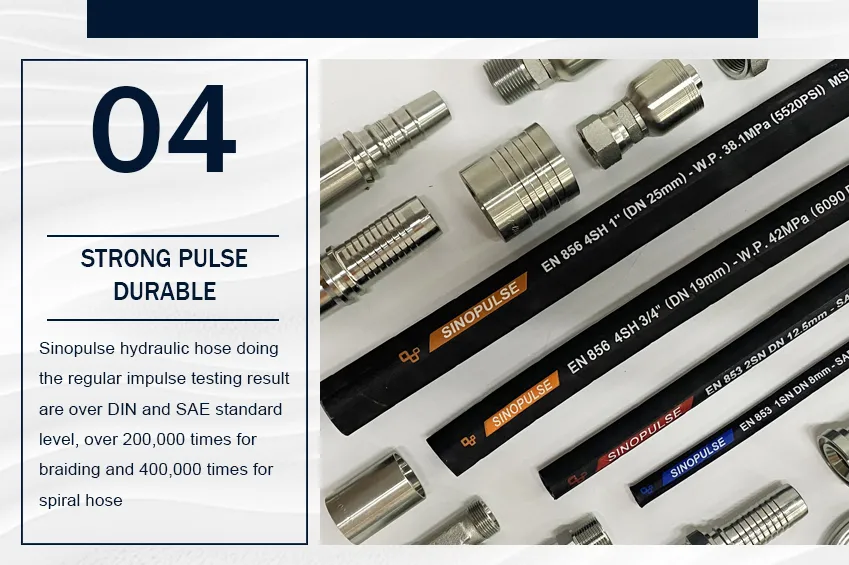
Hydraulic hose performance is governed by principles of fluid mechanics and material strength. The hose must withstand internal pressure without bursting or collapsing, and external loads without kinking or damaging the reinforcement. Force analysis involves calculating hoop stress in the hose wall based on internal pressure and diameter, as well as bending stresses induced by hose routing. Environmental resistance is critical; prolonged exposure to UV radiation, ozone, and extreme temperatures can degrade the rubber compounds, reducing flexibility and increasing the risk of failure. Compliance requirements vary by industry and region. SAE J517 and EN 853 are common standards specifying pressure ratings, temperature ranges, and construction requirements. Static and dynamic stress calculations are performed during hose assembly to determine appropriate fitting selection and hose routing. Fitting crimp integrity is paramount; inadequate crimping can lead to leakage or hose blow-off. Hose assemblies are often subjected to impulse testing, simulating the pressure pulsations inherent in hydraulic systems, to evaluate fatigue life. Proper hose routing is essential to avoid sharp bends, abrasion, and excessive twisting, all of which can compromise performance and longevity. Selection of the correct hose based on fluid type and operating temperature is crucial to prevent chemical degradation and maintain structural integrity.
Technical Specifications
| Parameter | Unit | Typical Value (NBR/Steel Wire Braid) | Typical Value (FKM/Spiral Steel Wire) |
|---|---|---|---|
| Working Pressure | PSI | 2000 | 4000 |
| Burst Pressure | PSI | 8000 | 16000 |
| Temperature Range | °F | -40 to 212 | -20 to 450 |
| Inner Tube Material | - | Nitrile Rubber (NBR) | Fluorocarbon (FKM) |
| Reinforcement | - | 2 Steel Wire Braid | Spiral Steel Wire |
| Outer Cover Material | - | Chloroprene (CR) | Polyurethane (PU) |
Failure Mode & Maintenance
Common failure modes in hydraulic hoses include burst failure due to exceeding pressure limits, kink failure from sharp bending, abrasion failure from external contact, and degradation failure from chemical incompatibility or environmental exposure. Fatigue cracking, initiated by repeated pressure pulsations and flexure, can lead to gradual weakening and eventual rupture. Delamination, the separation of layers, is often caused by improper bonding during manufacturing or exposure to aggressive fluids. Oxidation of the rubber compounds, accelerated by heat and oxygen, leads to embrittlement and loss of flexibility. Failure analysis often involves visual inspection for cracks, bulges, and abrasion, as well as microscopic examination of fracture surfaces to determine the root cause. Preventive maintenance is critical. Regular visual inspections should be conducted to identify signs of wear, damage, or leakage. Hoses should be replaced if they exhibit any signs of deterioration. Proper hose routing and protection from abrasion are essential. Fluid compatibility must be verified before use. Crimped fittings should be inspected for tightness and corrosion. Regularly flushing the hydraulic system to remove contaminants helps prolong hose life. Correct torque specifications for fittings must always be adhered to during installation and maintenance. Periodic pressure testing can proactively identify weak hoses before catastrophic failure occurs.
Industry FAQ
Q: What is the impact of fluid velocity on hydraulic hose life?
A: Higher fluid velocity increases pressure drop and can lead to cavitation, which causes erosion of the inner tube and accelerates fatigue failure. Maintaining appropriate fluid velocity within the hose’s specifications is crucial for maximizing its lifespan.
Q: How does temperature affect hydraulic hose performance?
A: Extreme temperatures can significantly impact hose performance. High temperatures accelerate rubber degradation and reduce pressure ratings, while low temperatures can reduce flexibility and increase the risk of cracking. Selecting a hose with an appropriate temperature range for the application is essential.
Q: What are the key considerations when selecting a hose fitting?
A: The fitting must be compatible with the hose end connection type (e.g., crimp, field attachable). The fitting material must be compatible with the hydraulic fluid. The fitting pressure rating must equal or exceed the hose’s working pressure. Correct crimp size and proper installation are vital for leak-free performance.
Q: What is the role of impulse pressure in hydraulic hose selection?
A: Impulse pressure refers to pressure surges or pulsations within the hydraulic system. Hoses must be capable of withstanding these impulses without premature failure. Selecting a hose with a sufficient impulse rating is critical for applications with frequent or high-magnitude pressure fluctuations.
Q: What are the common causes of hose twisting and how can it be prevented?
A: Hose twisting occurs when the hose is subjected to torsional stress during operation. This can damage the reinforcement and lead to premature failure. Proper hose routing, avoiding sharp bends, and using swivel fittings can help prevent twisting.
Conclusion
Hydraulic rubber hose is a complex engineered component with performance heavily reliant on material selection, manufacturing precision, and proper application. Understanding the interplay between fluid compatibility, pressure ratings, temperature limitations, and environmental factors is paramount for ensuring system reliability and safety. Selecting the appropriate hose type, employing correct installation procedures, and implementing a robust preventative maintenance program are all essential to maximizing hose lifespan and minimizing the risk of costly downtime.
Future advancements in hydraulic hose technology will likely focus on developing more durable materials, improving manufacturing techniques, and incorporating smart features for condition monitoring and predictive maintenance. Continuous monitoring of hose performance through sensors and data analytics could provide valuable insights into remaining useful life and allow for proactive replacement, further enhancing system reliability and reducing operational costs.