


best ss304 braid metal hose service Performance Analysis

Introduction
SS304 stainless steel braided metal hose represents a critical component in fluid transfer systems across a diverse range of industries, including oil and gas, chemical processing, automotive, and marine engineering. These hoses are engineered to convey fluids and gases under pressure, providing flexibility and resistance to corrosion. Their construction, utilizing a corrugated inner core coupled with a protective braided exterior of 304 stainless steel, distinguishes them from standard rubber hoses, offering superior pressure capability, temperature resilience, and longevity. This guide provides an in-depth examination of SS304 braided metal hose service, encompassing material science, manufacturing processes, performance characteristics, potential failure modes, and relevant industry standards. A primary industry pain point centers around ensuring consistent quality and preventing premature failure due to corrosion or fatigue, particularly in harsh operating environments. Proper specification, installation, and maintenance are paramount to mitigating these risks and maximizing service life.
Material Science & Manufacturing
The core material, 304 stainless steel, is an austenitic alloy containing approximately 18-20% chromium and 8-10.5% nickel, exhibiting excellent corrosion resistance attributable to the passive chromium oxide layer formed on its surface. The corrugated inner core is typically formed from 304 or 316L stainless steel strip, selected based on the specific fluid compatibility requirements. Manufacturing begins with longitudinal seam welding of the strip, creating the tubing. Subsequent hydraulic forming creates the corrugated profile, enhancing flexibility. The braiding process involves mechanically interweaving high-tensile 304 stainless steel wire around the corrugated core. Critical parameters include wire diameter, braid angle (typically 30-55 degrees, impacting flexibility and burst pressure), and braid coverage (the percentage of the core covered by the braid, influencing resistance to abrasion and axial loading). Welding procedures require strict control of heat input and shielding gas composition to prevent sensitization (carbide precipitation at grain boundaries) which compromises corrosion resistance. Braid compaction is essential to ensure uniform pressure distribution and prevent wire protrusion, which could damage mating components. Post-manufacturing, hoses undergo hydrostatic testing to verify pressure integrity and leak tightness.
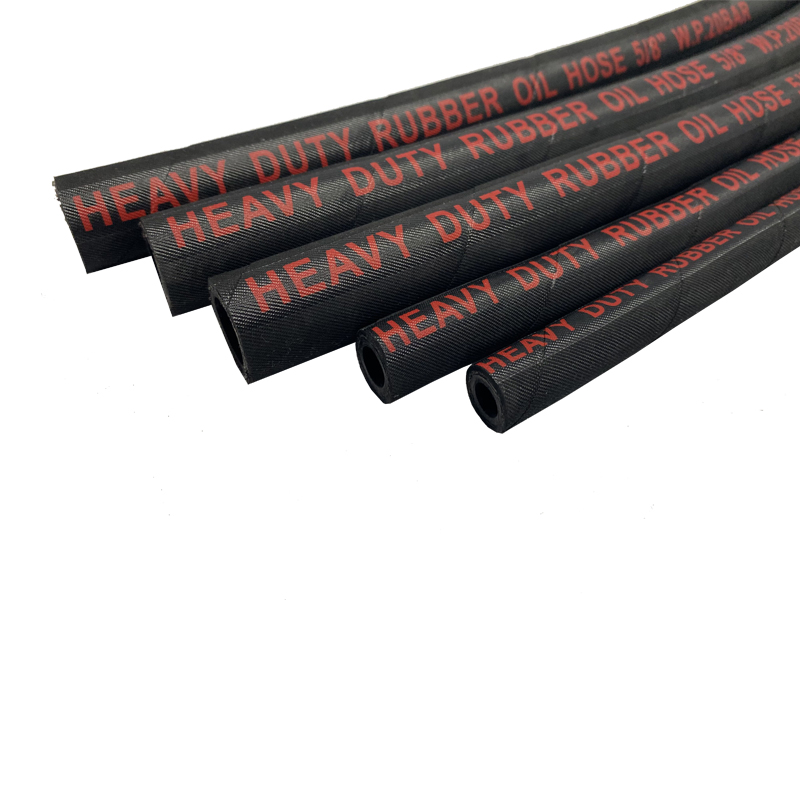
Performance & Engineering
Performance of SS304 braided metal hose is governed by several key engineering principles. Burst pressure, a critical specification, is determined by the combined strength of the core and the braid. Calculations involve tensile strength of the materials, braid angle, and diameter. Fatigue life, the number of pressure cycles the hose can withstand before failure, is a function of stress amplitude, material properties, and operating temperature. Flexibility is dictated by the corrugation pitch and braid construction. Hose selection must consider the operating temperature range, fluid compatibility (avoiding chlorides for optimal 304 SS performance), and potential for external mechanical damage. Environmental resistance encompasses resistance to ozone, UV radiation, and abrasion. Compliance with industry standards, such as SAE J526 (for automotive applications) and EN 1754 (for hydraulic applications), ensures adherence to performance benchmarks and safety requirements. Finite element analysis (FEA) is routinely employed during the design phase to optimize hose geometry and predict stress distribution under various loading conditions. Particular attention is paid to end fitting attachment points, which are often sites of stress concentration and potential failure.
Technical Specifications
| Parameter | Unit | Typical Value (SS304 Braid, 1" Diameter) | Tolerance |
|---|---|---|---|
| Working Pressure | psi | 3000 | ±10% |
| Burst Pressure | psi | 9000 | ±15% |
| Temperature Range | °F | -40 to 350 | N/A |
| Minimum Bend Radius | inches | 6 | ±0.5 |
| Braid Coverage | % | 95 | ±2% |
| Material (Core) | - | 304 Stainless Steel | ASTM A240 |
Failure Mode & Maintenance
Common failure modes in SS304 braided metal hose include fatigue cracking at the braid-core interface, corrosion pitting due to exposure to corrosive fluids or environments, and end fitting failure due to improper installation or over-torqueing. Fatigue cracking initiates at stress concentrations, often exacerbated by vibration or cyclic loading. Corrosion can be localized (pitting) or generalized, depending on the fluid composition and environmental conditions. Failure analysis often involves metallographic examination to identify the root cause of failure. Maintenance procedures should include regular visual inspections for signs of damage (e.g., kinks, abrasions, corrosion), pressure testing to verify integrity, and periodic replacement based on operating conditions and service life. Proper installation, including correct end fitting selection and torqueing, is crucial to preventing premature failure. Avoid sharp bends and excessive axial loading. For systems handling corrosive fluids, consider using 316L stainless steel or alternative materials with enhanced corrosion resistance. Regular cleaning to remove external contaminants can also extend service life.
Industry FAQ
Q: What is the impact of fluid velocity on the service life of SS304 braided hose?
A: Higher fluid velocities can induce erosion corrosion and increased fatigue loading due to fluid-induced vibration. Excessive velocity can accelerate wear on the inner core and potentially damage the braid. Velocity limits should be considered during hose selection and system design.
Q: How does the braid angle affect hose performance?
A: A smaller braid angle generally provides greater flexibility but lower burst pressure. A larger braid angle offers higher burst pressure but reduced flexibility. The optimal braid angle is a compromise based on application requirements.
Q: Can SS304 braided hose be used with hydraulic fluids containing particulate matter?
A: While SS304 offers good abrasion resistance, prolonged exposure to abrasive particles can erode the inner core and reduce hose life. In such applications, filtration is essential to remove particulate matter and prevent premature failure.
Q: What are the proper torque specifications for end fittings?
A: Torque specifications vary depending on the fitting type and hose diameter. Over-torqueing can damage the end fitting or hose core, while under-torqueing can lead to leakage. Refer to the manufacturer's specifications for accurate torque values.
Q: What is the difference between 304 and 316L stainless steel for braided hose applications?
A: 316L contains molybdenum, which significantly enhances resistance to chloride corrosion. 316L is preferred for applications involving saltwater, marine environments, or fluids containing chlorides. 304 is suitable for less corrosive environments.
Conclusion
SS304 braided metal hose provides a robust and reliable solution for fluid transfer in demanding applications. Its superior pressure capability, temperature resilience, and corrosion resistance, coupled with its flexibility, make it a preferred choice over alternative materials like rubber or plastic in numerous industries. However, realizing its full potential requires careful attention to material selection, manufacturing quality, proper installation, and diligent maintenance. Understanding the potential failure modes and adhering to relevant industry standards is paramount to ensuring long-term performance and safety.
Future advancements in this field are likely to focus on developing lighter-weight braid materials, enhancing corrosion resistance through surface treatments, and incorporating sensor technology for real-time monitoring of hose condition. Proactive monitoring and predictive maintenance strategies will play an increasingly important role in extending hose service life and minimizing downtime, ultimately contributing to improved operational efficiency and reduced costs.