


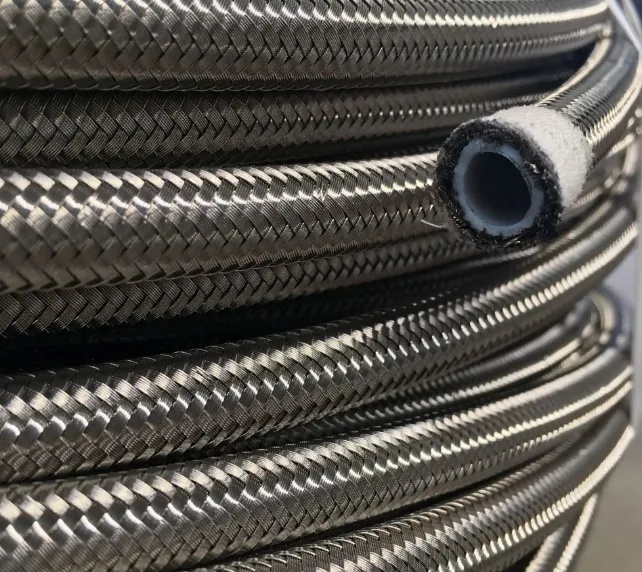
Double braided hose is a reinforced flexible conduit designed for the conveyance of fluids and gases in high-pressure applications. Positioned within the industrial fluid transfer chain, it sits between rigid piping systems and the connection point of equipment, offering a critical bridge for dynamic and complex configurations. Unlike single-braided hose, the double braid construction significantly enhances pressure capacity, burst strength, and resistance to kinking. Its core performance characteristics revolve around pressure containment, flexibility under stress, and resistance to environmental factors. Common applications span hydraulic systems, pneumatic tools, automotive brake lines, chemical transfer, and oil & gas operations. The selection criteria center on fluid compatibility, operating temperature, pressure rating, bend radius, and end fitting requirements. A key pain point in industry lies in selecting the correct hose for specialized fluid applications where material compatibility is crucial to prevent premature failure and system contamination. Furthermore, understanding the limitations of the braid material relative to operational temperatures and chemical exposure is paramount for long-term reliability.
Material Science & Manufacturing
The construction of double braided hose fundamentally relies on the interplay of the inner tube, reinforcement braids, and outer cover materials. Inner tubes are commonly manufactured from synthetic rubbers such as Nitrile (NBR), Ethylene Propylene Diene Monomer (EPDM), Polytetrafluoroethylene (PTFE), or Polyvinyl Chloride (PVC), each chosen for its specific chemical resistance and temperature range. NBR excels in oil-based applications, while EPDM provides superior resistance to weathering and ozone. PTFE is preferred for highly corrosive fluids, and PVC offers a cost-effective solution for general-purpose applications. The core manufacturing of the inner tube involves extrusion, a process where molten polymer is forced through a die to create a seamless tube. Precise temperature control and screw speed are crucial parameters to ensure consistent wall thickness and material uniformity.
The reinforcement braids are typically composed of high-strength steel wire, stainless steel wire, or fiber-reinforced polymers like Aramid. Steel wire offers exceptional strength and durability but is susceptible to corrosion if not adequately protected. Stainless steel provides corrosion resistance at a higher cost. Aramid fibers deliver a high strength-to-weight ratio and are suitable for applications requiring flexibility and reduced weight. Braiding is a complex process involving the interlacing of multiple strands of wire or fiber around the inner tube. Braid angle (typically 30-55 degrees) directly influences the hose’s pressure rating and flexibility; a lower angle provides higher pressure capacity but reduced flexibility, and vice versa. The outer cover, typically a synthetic rubber such as Neoprene or Polyurethane, provides abrasion resistance, weather protection, and chemical compatibility. It's applied via extrusion following the braiding process. Quality control throughout manufacturing emphasizes dimensional accuracy (inner diameter, outer diameter, wall thickness), braid coverage, and adhesion between layers. Post-manufacturing pressure testing to burst pressure is a standard verification step.
Performance & Engineering
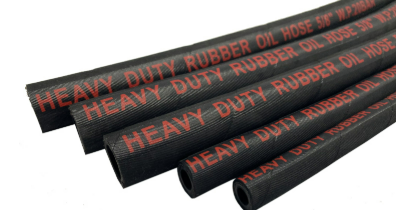
The performance of double braided hose is fundamentally governed by its ability to withstand internal pressure without failure, maintain flexibility under bending stress, and resist environmental degradation. Force analysis focuses on hoop stress within the inner tube, which increases proportionally with internal pressure and tube radius. The reinforcement braids counter this stress, distributing the load and preventing ballooning or bursting. The number of braids (double vs. single) directly impacts this load distribution capacity. Engineering calculations must consider safety factors, typically 4:1 for hydraulic applications, to account for pressure surges, dynamic loads, and material imperfections.
Environmental resistance is critical. Exposure to extreme temperatures, UV radiation, ozone, and corrosive chemicals can significantly degrade the hose materials. Material selection must align with the operating environment. For instance, prolonged exposure to high temperatures can lead to rubber hardening and cracking. Chemical compatibility charts are essential resources for verifying the suitability of the inner tube and outer cover materials for specific fluids. Compliance requirements vary by industry. Automotive applications adhere to SAE standards (e.g., SAE J30R9 for hydraulic hose), while oil & gas operations often require compliance with API standards. Proper end fitting attachment is also critical. Crimping or swaging techniques must be meticulously controlled to ensure a secure and leak-proof connection without damaging the hose reinforcement. Incorrect fitting installation is a common failure point. Bend radius must be maintained within specified limits to avoid kinking and stress concentration, which can lead to premature failure.
Technical Specifications
| Parameter | NBR/Steel Braid | EPDM/Stainless Steel Braid | PTFE/Aramid Braid | PVC/Steel Braid |
|---|---|---|---|---|
| Operating Pressure (PSI) | 3000 | 4500 | 2000 | 2000 |
| Burst Pressure (PSI) | 9000 | 13500 | 6000 | 6000 |
| Temperature Range (°F) | -40 to 212 | -40 to 275 | -100 to 450 | -20 to 150 |
| Inner Tube Material | Nitrile Rubber | Ethylene Propylene Diene Monomer | Polytetrafluoroethylene | Polyvinyl Chloride |
| Reinforcement Braid Material | Steel Wire | Stainless Steel Wire | Aramid Fiber | Steel Wire |
| Outer Cover Material | Neoprene | Neoprene | Polyurethane | PVC |
Failure Mode & Maintenance
Failure modes in double braided hose are diverse and often stem from a combination of factors. Fatigue cracking of the braid wires is a common occurrence, particularly under cyclical pressure loading. This is exacerbated by corrosion in environments lacking adequate protection. Delamination, the separation of layers (inner tube, braid, outer cover), can occur due to poor adhesion or thermal expansion mismatches. Degradation of the rubber compounds due to UV exposure, ozone attack, or chemical incompatibility leads to hardening, cracking, and loss of flexibility. Oxidation of the steel braid, especially in chloride-containing environments, can significantly reduce its strength. Kinking, caused by excessive bending beyond the hose’s minimum bend radius, can damage the reinforcement and lead to localized failures. Pinholes in the inner tube, often caused by abrasion from within or chemical attack, result in leakage.
Preventive maintenance is crucial. Regular visual inspections for cracks, abrasions, swelling, and discoloration are paramount. Pressure testing should be conducted periodically to verify the hose’s integrity. Proper storage is essential; hoses should be stored in a cool, dry place away from direct sunlight and ozone sources. Avoid sharp bends and excessive tension during installation. When handling corrosive fluids, ensure the hose materials are fully compatible. For steel braided hoses operating in corrosive environments, consider applying a protective coating or utilizing stainless steel braiding. If a hose shows signs of damage, it should be removed from service immediately and replaced. Repairing damaged hoses is generally not recommended as it compromises the structural integrity. Proper disposal, following local regulations, is essential.
Industry FAQ
Q: What is the primary difference between single and double braided hose in terms of performance?
A: Double braided hose offers significantly higher pressure ratings and improved resistance to kinking and abrasion compared to single braided hose. The additional braid layer provides greater reinforcement and distributes stress more effectively, resulting in a more robust and durable product. However, it generally exhibits slightly reduced flexibility.
Q: How do I determine the correct hose material for a specific chemical application?
A: Consult chemical compatibility charts provided by hose manufacturers. These charts outline the resistance of various hose materials (NBR, EPDM, PTFE, etc.) to different chemicals. Incorrect material selection can lead to rapid degradation and hose failure. Always err on the side of caution and choose a material with confirmed compatibility.
Q: What is the impact of braid angle on hose performance?
A: A lower braid angle (closer to 30 degrees) typically results in a higher pressure rating, but reduced flexibility. A higher braid angle (closer to 55 degrees) offers increased flexibility, but lower pressure capacity. The optimal angle depends on the application's specific requirements.
Q: How can I prevent corrosion of steel braided hoses?
A: For hoses operating in corrosive environments, consider using stainless steel braiding or applying a protective coating to the steel braid. Regular inspection for signs of corrosion is also crucial. Proper maintenance and cleaning can help mitigate the effects of corrosion.
Q: What are the key considerations for end fitting attachment?
A: Ensure the end fittings are properly sized and compatible with the hose. Utilize the correct crimping or swaging technique recommended by the manufacturer. Avoid over-crimping, which can damage the hose reinforcement, or under-crimping, which can lead to leakage. Always conduct a leak test after installation.
Conclusion
Double braided hose represents a critical component in countless industrial fluid transfer applications, providing a reliable and robust solution for high-pressure environments. Its performance is deeply intertwined with the materials science governing its construction – the careful selection of inner tube polymers, reinforcement braid materials, and outer cover compounds. Understanding the nuances of manufacturing processes, particularly braid angle control and layer adhesion, is essential for ensuring consistent quality and optimal performance.
Future developments in double braided hose technology will likely focus on enhanced material science, specifically the development of lighter-weight, higher-strength reinforcement materials and more chemically resistant polymers. Increased emphasis on smart hose technology, incorporating sensors for pressure monitoring and leak detection, is also anticipated. Proper selection, installation, and maintenance, guided by a thorough understanding of the technical specifications and potential failure modes, remain paramount to maximizing the service life and ensuring the safe and efficient operation of these critical industrial components.