


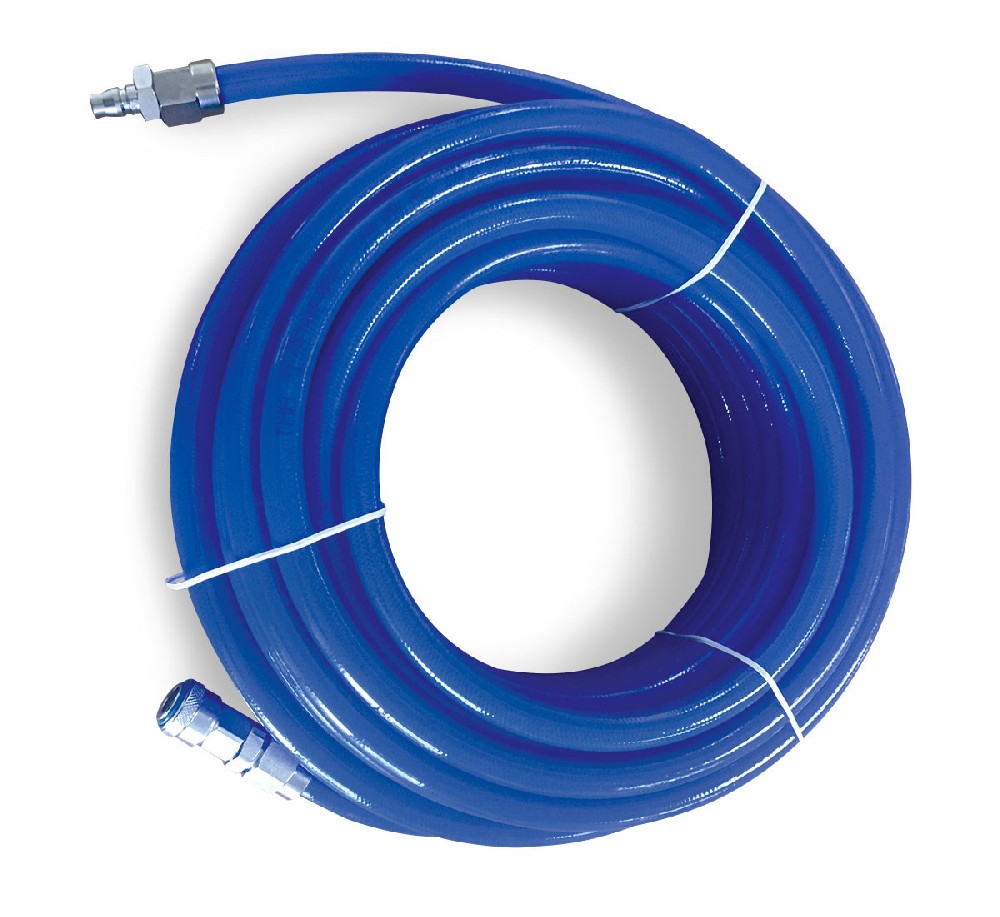
Braided air hose constitutes a critical component in pneumatic systems across diverse industrial applications, ranging from automotive repair and manufacturing to construction and aerospace. It functions as a flexible conduit for compressed air, delivering power and control to pneumatic tools, machinery, and automated processes. Distinguished by its construction – typically an inner tube (often synthetic rubber) reinforced with one or more layers of high-tensile strength braiding (typically polyester or steel wire) – this hose is engineered to withstand high pressures, extreme temperatures, and abrasive conditions. Compared to non-reinforced rubber hoses, braided air hose offers significantly improved burst strength, kink resistance, and longevity, addressing key pain points of reliability and operational safety. Understanding its material properties, manufacturing intricacies, performance characteristics, and potential failure modes is crucial for proper selection, installation, maintenance, and ensuring the integrity of pneumatic systems. This guide provides a comprehensive technical overview of braided air hose, targeting engineers, procurement managers, and maintenance personnel seeking in-depth knowledge of this essential industrial product.
Material Science & Manufacturing
The performance of braided air hose is intrinsically linked to the properties of its constituent materials and the precision of its manufacturing process. The inner tube is commonly composed of synthetic rubbers like Nitrile Butadiene Rubber (NBR), Styrene Butadiene Rubber (SBR), or Polyurethane (PU). NBR exhibits excellent resistance to oils, fuels, and abrasion, making it ideal for automotive applications. SBR provides good abrasion resistance and flexibility at a lower cost. PU offers superior resistance to hydrolysis and cracking, particularly in high-humidity environments, but is generally more expensive. The reinforcement braid is typically polyester, nylon, or steel wire. Polyester provides high tensile strength and dimensional stability. Nylon offers good flexibility and abrasion resistance. Steel wire offers the highest burst pressure capability, essential for heavy-duty applications.
Manufacturing begins with the extrusion of the inner tube to the required dimensions and wall thickness. Precise temperature control is paramount during extrusion to ensure consistent material properties and prevent degradation. Following extrusion, the reinforcement braid is applied through a braiding machine. The braid angle – the angle at which the yarns are interwoven – directly influences the hose’s flexibility and burst pressure. Lower braid angles typically result in increased flexibility but reduced burst strength, and vice versa. After braiding, a cover layer (often EPDM or PVC) is extruded to provide environmental protection, abrasion resistance, and color-coding for identification. Key manufacturing parameters include extrusion temperature, braid tension, and cover thickness. Post-manufacturing, hoses undergo pressure testing to verify burst strength and leak testing to confirm integrity. The quality of the bonding between the layers is critical, often achieved through vulcanization or adhesive bonding, and is a frequent point of failure if not adequately controlled.

Performance & Engineering
The engineering performance of braided air hose is defined by its ability to withstand internal pressure, external forces, and environmental conditions. Burst pressure, measured in PSI or bar, is the maximum pressure the hose can withstand before failure. This is dictated primarily by the type and number of reinforcement layers. Working pressure, significantly lower than burst pressure, is the maximum pressure recommended for continuous operation, incorporating a safety factor. Hose flexibility is critical for ease of handling and routing, especially in confined spaces. It’s influenced by the braid angle, material flexibility, and hose diameter. Kink resistance, the ability to maintain flow when bent sharply, is vital to prevent interruptions in pneumatic systems. Steel wire braiding provides superior kink resistance compared to polyester.
Environmental resistance encompasses temperature range, chemical compatibility, and UV resistance. NBR tubes have limited resistance to ozone and weathering, requiring the use of UV-resistant cover materials. PU tubes offer better resistance to hydrolysis and cracking. Chemical compatibility is critical; exposure to incompatible fluids can cause swelling, degradation, and eventual failure. For applications involving oil mist, NBR is typically preferred. Force analysis involves evaluating the hose’s ability to withstand tensile loads, bending moments, and external impacts. Proper hose routing and support are essential to minimize stress concentrations and prevent premature failure. Compliance requirements vary by industry and region, with standards such as SAE J517 and EN 853 defining performance criteria and testing procedures.
Technical Specifications
| Parameter | NBR with Polyester Braid | EPDM with Steel Wire Braid | PU with Polyester Braid | PVC with Nylon Braid |
|---|---|---|---|---|
| Working Pressure (PSI) | 300 | 600 | 200 | 250 |
| Burst Pressure (PSI) | 900 | 1800 | 600 | 750 |
| Temperature Range (°F) | -40 to 212 | -40 to 250 | -67 to 176 | -20 to 158 |
| Inner Diameter (inches) | 1/4, 3/8, 1/2 | 3/8, 1/2, 3/4 | 1/8, 1/4, 3/8 | 1/4, 3/8, 1/2 |
| Outer Diameter (inches) | 0.625 | 0.75 | 0.4375 | 0.5625 |
| Material Compatibility | Oil, Fuel, Abrasion | High Temp, Weathering | Hydrolysis, Cracking | General Purpose |
Failure Mode & Maintenance
Braided air hose is susceptible to several failure modes. Abrasion damage to the cover layer can expose the braid, leading to corrosion and eventual rupture. Kink fatigue, caused by repeated bending at sharp angles, weakens the reinforcement and can cause cracking. Over-pressurization exceeds the hose's working pressure, leading to catastrophic failure. Chemical attack by incompatible fluids causes swelling, degradation, and loss of flexibility. Thermal degradation occurs due to prolonged exposure to extreme temperatures. Fatigue cracking can initiate at stress concentration points, such as fittings or areas of repeated bending. Delamination – the separation of layers – weakens the hose and reduces its burst pressure.
Preventive maintenance is critical to prolonging hose life. Regular visual inspections should identify abrasion, kinks, cracks, and leaks. Pressure testing should be performed periodically to verify integrity. Proper hose routing and support minimize stress concentrations. Avoid over-pressurization by using pressure regulators and relief valves. Store hoses in a cool, dry place away from direct sunlight and harsh chemicals. When replacing a hose, ensure the new hose is compatible with the application and meets or exceeds the original specifications. Damaged hoses should be immediately removed from service and replaced. Fittings should be inspected for corrosion and proper sealing.
Industry FAQ
Q: What is the primary difference between polyester and steel wire reinforced braided air hose, and when should I specify each?
A: Polyester braid offers a good balance of flexibility and strength at a lower cost. It’s suitable for general-purpose pneumatic applications where high burst pressure and extreme kink resistance aren’t critical. Steel wire braid provides significantly higher burst pressure and superior kink resistance. Specify steel wire for applications involving high-pressure systems, heavy-duty tools, or frequent bending and flexing, such as construction or mining equipment.
Q: How does the braid angle affect the hose’s performance?
A: A lower braid angle generally increases flexibility but reduces burst pressure. A higher braid angle increases burst pressure but reduces flexibility. The optimal braid angle is a compromise between these two properties, tailored to the specific application requirements. Manufacturers carefully control braid angle to achieve desired performance characteristics.
Q: What are the key considerations for chemical compatibility when selecting a braided air hose?
A: Identify all fluids the hose will be exposed to, including compressed air, lubricants, and potential contaminants. NBR is generally resistant to oils and fuels, while PU offers better resistance to hydrolysis. PVC is susceptible to degradation from certain chemicals. Consult a chemical compatibility chart or the hose manufacturer’s specifications to ensure compatibility.
Q: What are the common causes of premature hose failure and how can they be prevented?
A: Common causes include abrasion, kink fatigue, over-pressurization, and chemical attack. Prevent abrasion with proper routing and shielding. Minimize kink fatigue by avoiding sharp bends and providing adequate support. Use pressure regulators and relief valves to prevent over-pressurization. Select hoses compatible with all fluids. Regular inspections can identify and address potential issues before failure occurs.
Q: What is the significance of the SAE J517 standard for braided air hose?
A: SAE J517 is a widely recognized standard that defines performance requirements and testing procedures for hydraulic hose, and is often referenced for air hose as well. It specifies requirements for burst pressure, working pressure, temperature range, and chemical compatibility. Adherence to SAE J517 ensures the hose meets minimum safety and performance criteria.
Conclusion
Braided air hose represents a sophisticated engineering product vital to the reliable operation of countless pneumatic systems. Its performance hinges on a complex interplay of material science, precise manufacturing techniques, and adherence to rigorous industry standards. A thorough understanding of its capabilities, limitations, and potential failure modes is essential for informed selection, proper installation, and effective maintenance. By prioritizing these factors, users can maximize hose lifespan, minimize downtime, and ensure the safety and efficiency of their pneumatic operations.
Looking forward, advancements in materials science, such as the development of novel synthetic rubbers and high-strength fiber braids, will continue to drive improvements in hose performance. Furthermore, the integration of smart sensor technology could enable real-time monitoring of hose condition, providing proactive alerts for potential failures and optimizing maintenance schedules. Investing in quality braided air hose and implementing a robust maintenance program are critical for long-term cost savings and operational excellence.